
Created: 2026.08.13. 10:55
The National Youth Council of Hungary and the Hungarian Youth Conference held the NITxMIK Summer University for the eleventh time, with this year’s event hosted by Széchenyi István University. One of the Carpathian Basin’s leading free youth festivals brought together several hundred young people aged 18–35 from Hungary and Hungarian communities abroad in Győr, where discussions focused on public affairs, political engagement and some of the most important issues affecting young people.
The National Youth Council of Hungary (NIT) is an independent and open umbrella organisation established on the model of similar organisations in the European Union. Its role is to represent the interests of youth organisations and NGOs working with young people in Hungary. Its primary objectives are to help shape youth policy, mentor young people and foster community building. Established in 2012, the organisation currently has nearly one hundred member organisations and also represents Hungarian youth at the international level. The Hungarian Youth Conference (MIK) operates according to similar principles and has been working since 1999 to strengthen ties between young people in Hungary and Hungarian communities beyond the country’s borders, build partnerships among Hungarian communities, and create opportunities for them to connect.
The two organisations recently held the 11th NITxMIK Summer University, hosted this year by Széchenyi István University. The three-day festival, which attracted several hundred young people, featured panel discussions, workshops and interactive professional programmes, providing participants with opportunities for dialogue, exchanging experiences and exploring ideas together.
At the opening ceremony held on the central campus of Széchenyi István University, Dr Eszter Lukács, Vice-President for International Affairs and Strategic Relations at the University, stressed the great importance of ensuring that politics is receptive to the perspectives of young people. “The forum focuses on key topics such as entrepreneurship development, the impact of social media, mental health, young people’s participation in public life, and the role of women in society. Added to this is the drafting of the National Youth Strategy, in which the young people present here play a vital role. Through their involvement, a truly democratic strategy—accepted by all—can be created,” she explained. She added that the summer university provides an informal setting free from rigid constraints, with a strong emphasis on community building – an approach that also reflects the way Széchenyi István University operates.
“At all times, we keep the interests of our students at the forefront, and we continuously renew our organisation with their needs in mind. We firmly believe that our students are the heart and soul of our University,” she emphasised. She added that, alongside high-quality education and research, the University places particular importance on cooperation with civil society organisations, political actors and society at large. Hosting the Summer University is therefore also a significant manifestation of the University’s third-mission activities.
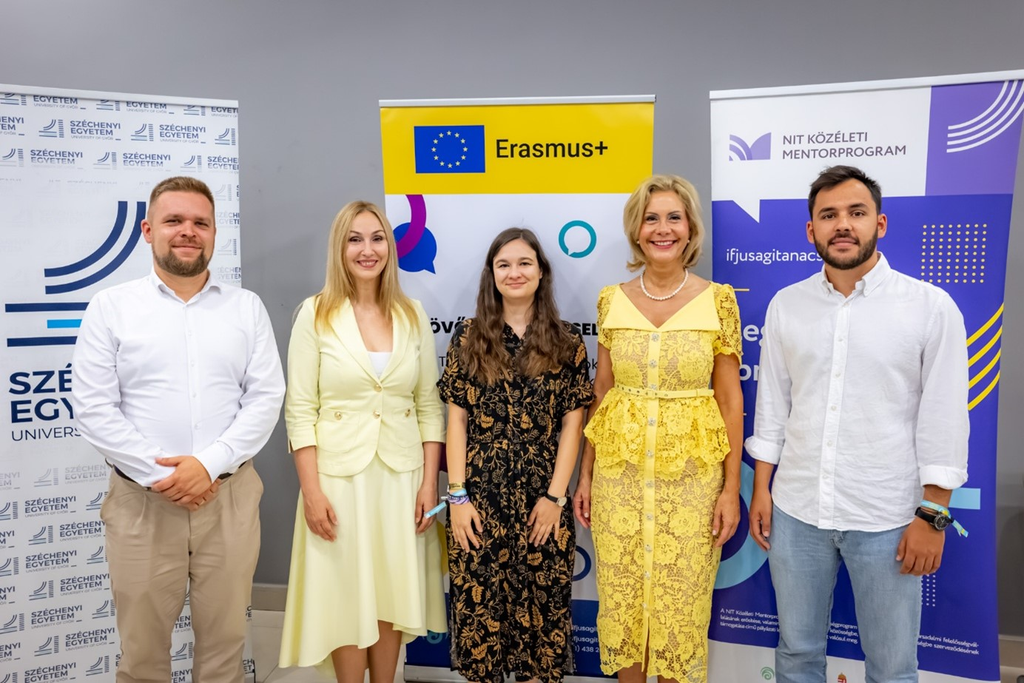
The opening ceremony of the Summer University was attended by Bence Pintér, Mayor of Győr; Judit Diószegi, Member of Parliament; Virág Sövegjártó, President of the National Youth Council of Hungary (NIT); Dr Eszter Lukács, Vice-President for International Affairs and Strategic Relations at Széchenyi István University; and Ádám Turi, President of the Hungarian Youth Conference (MIK). (Photo: András Adorján)
In his welcoming remarks, Bence Pintér, Mayor of Győr, emphasised that youth councils are not merely administrative organisations, but effective forums that represent the independent voice of young people and enable their concerns and ideas to reach decision-makers.
“This can only be achieved by an open, grassroots community where pluralism is a core value, and where everyone finds a place regardless of their background or where they come from. It is important to engage consciously with public affairs from a young age, especially in the age of algorithms, disinformation and artificial intelligence, when textbook knowledge alone is no longer sufficient. Critical thinking, a broad general education and dialogue is needed—one focused on constructive joint efforts and seeking consensus, rather than division,” he stressed.
In his view, bringing about change requires action, but if there is openness to learning, the courage to take responsibility and a genuine commitment to meaningful dialogue, then everything needed for success is within our reach.
According to Judit Diószegi, Member of Parliament, the event’s motto aptly sums up the essence of the free youth festival: countries may have borders, but conversations do not.
“ The primary spice that gives straight talk its true flavor is preparation. Firm statements gain validity from broad knowledge, acquired expertise and critical thinking – this is what makes them credible,” she pointed out. “In representing young people, we bear responsibility for ourselves and for one another. The strength and security of a community never stem from constant agreement, but rather from its members looking out for one another, taking responsibility for their ideas and focusing on opportunities for development.”
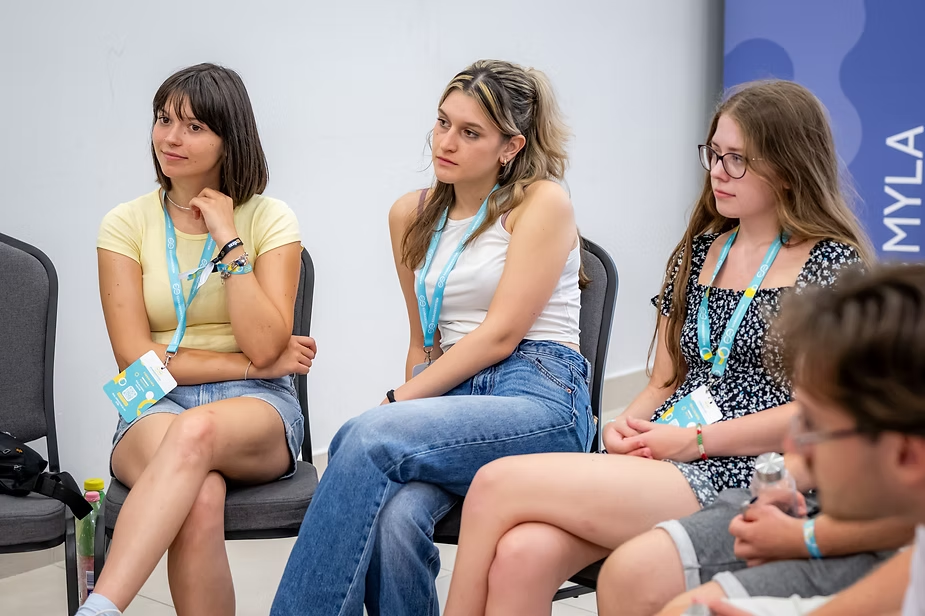
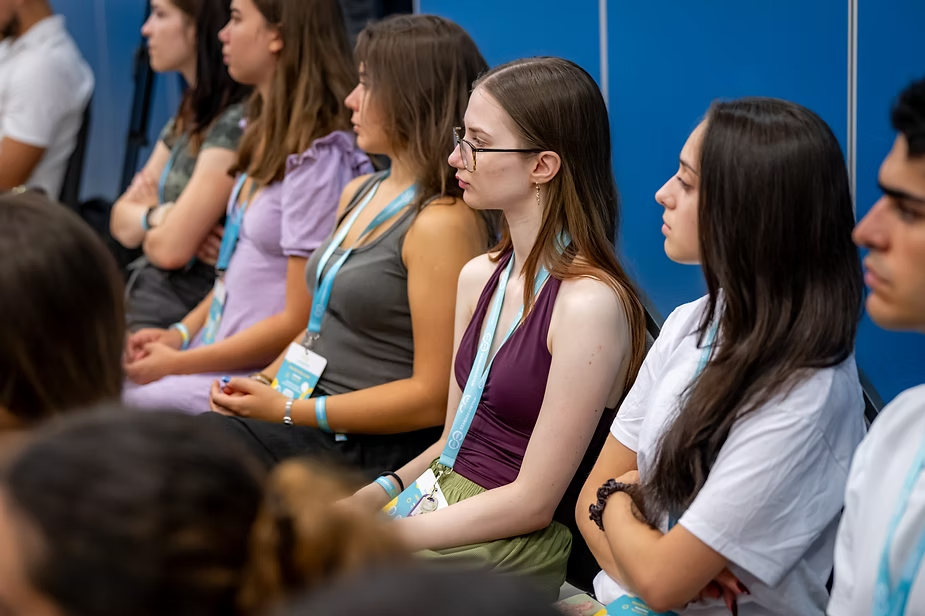
Several hundred young people from Hungary and Hungarian communities beyond the country’s borders came to Győr for the three-day event. (Photos: András Adorján)
MIK President Ádám Turi noted that this year’s highlights included a field trip to Dunajská Streda, Slovakia, offering a broader national policy perspective.
“What you need to know about our organisation is that what NIT represents within Hungary, MIK represents for Hungarian communities beyond the country’s borders. We currently have 56 member organisations across ten regions in eight countries. We meet twice a year, once in Hungary and once outside the country, and our General Assembly can only conclude once the final provisions have been unanimously adopted by all participants. Our role is to connect those who care about Hungarian young people, wherever they may live in the world,” he said.
Virág Sövegjártó, President of the National Youth Council of Hungary (NIT), emphasised in her speech that they were particularly pleased that the event had found a home at Széchenyi István University, a venue that symbolises knowledge, innovation and confidence in the future.
“The greatest value of a summer university lies not only in its lectures, but also in the conversations that take place in the corridors, over a shared lunch or during an evening programme. These encounters can later develop into collaborations, friendships or even shared causes. This is one of the reasons why this event is particularly important to the Council. We believe that young people should not only be given the opportunity to participate in public life, but also genuine space to ask questions, debate, share their ideas with one another and shape the future,” she stressed. She added that the diversity of the programme is a value that strengthens dialogue, as we can only truly understand one another if we also listen to those who think differently.
One of the highlights of the event was the Youth Dialogue, which gave young people the opportunity to put their questions directly to politicians, creating genuine dialogue between the younger generation and decision-makers. Participants had the opportunity to ask questions of, among others, Gergely Karácsony, Mayor of Budapest; Dóra Dúró, Deputy Speaker of the National Assembly; Péter Kajner, Deputy State Secretary for Climate Policy; István Mohácsy, President of Fidelitas; and András Néher, Member of Parliament.
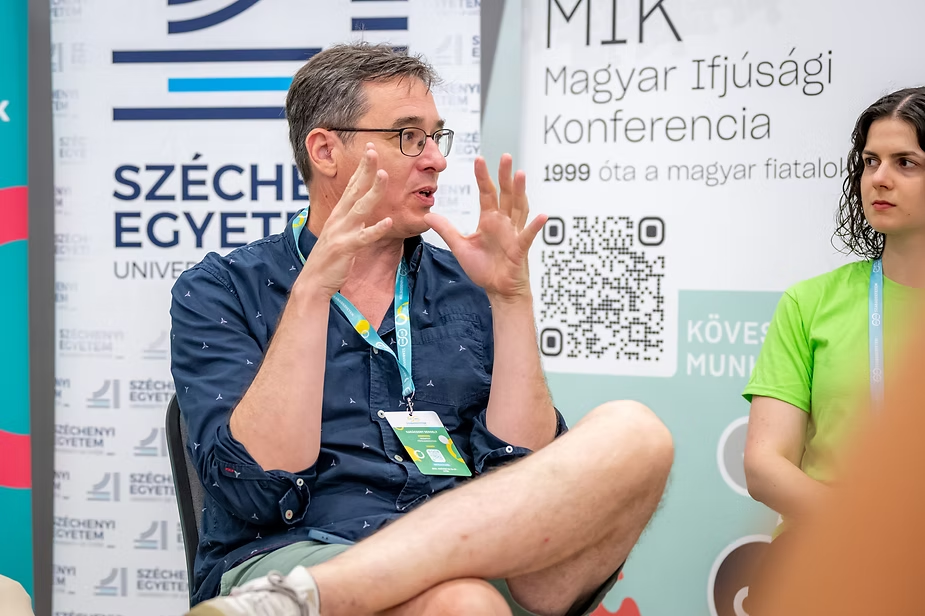
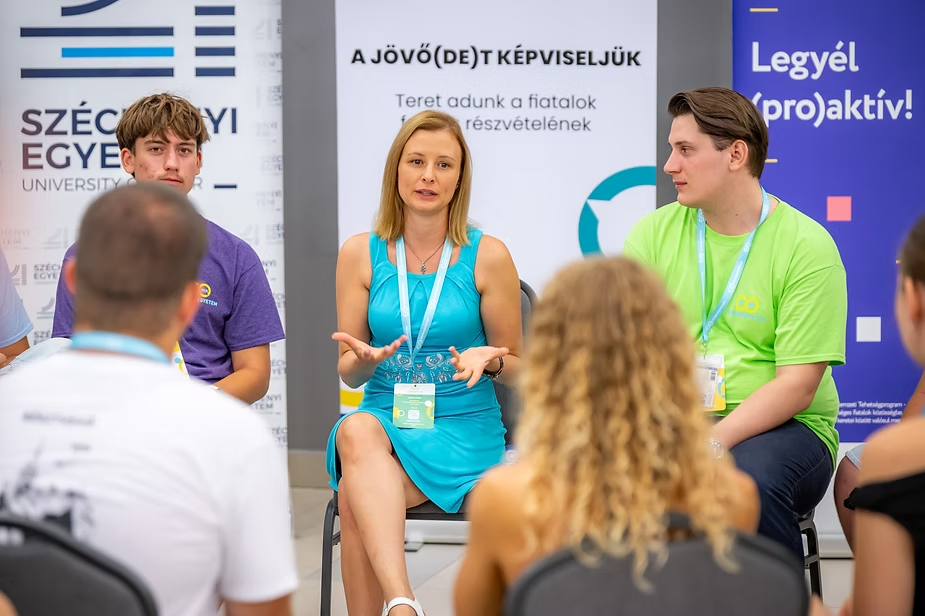
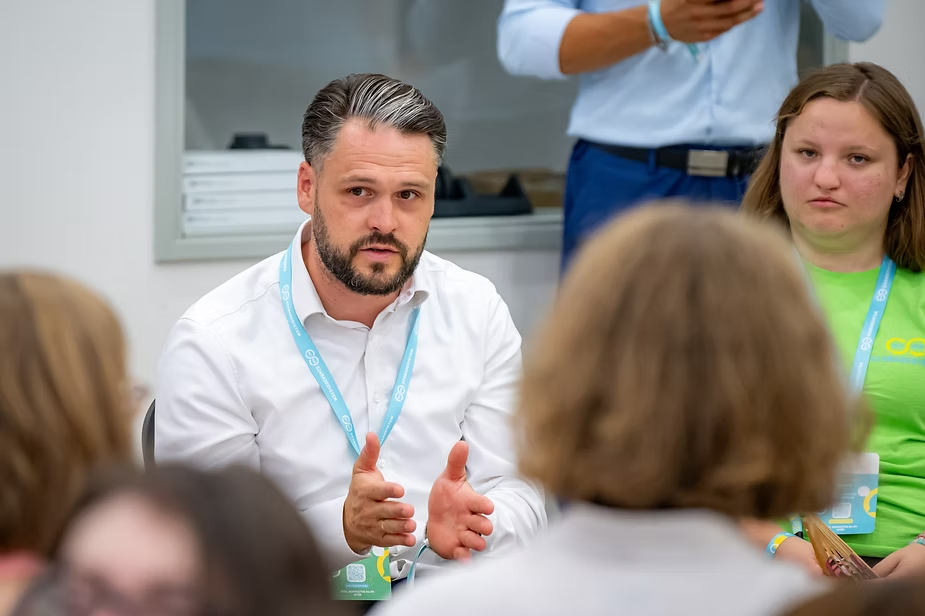
The Summer University’s Youth Dialogue programme proved extremely popular among young people, as participants had the opportunity to engage in discussions with political decision-makers at the national level. (Photos: András Adorján)