
Created: 2026.02.23. 09:27
The University hosted the first stop of this year’s MIT LinQ Catalyst Europe program, which focuses on medical technology innovations. The institution hosted the professional event for the third time, during which young researchers from six countries began working together with their experienced mentors.
Based on the LinQ Catalyst methodology of MIT (Massachusetts Institute of Technology)—one of the world’s best universities—the Catalyst Europe program has commenced for the third time at Széchenyi István University, aiming to generate and support medical technology research projects. Through the initiative, highly usable healthcare innovations based on real needs are born, serving the development of medical science and the well-being of society. Additionally, this program builds the capacity of European countries to drive innovation in the coming decades.
Széchenyi University is a strategic partner and also the hub for the European programme, which was launched again in 2026. In the coming years, another twelve researchers—including two PhD students from Széchenyi—and twelve mentors will collaborate to develop the best possible innovations together. The Győr-based institution hosted the project week held in mid-January, which served as the first stage of the initiative, creating opportunities for the formation of research groups and the exploration of ideas.
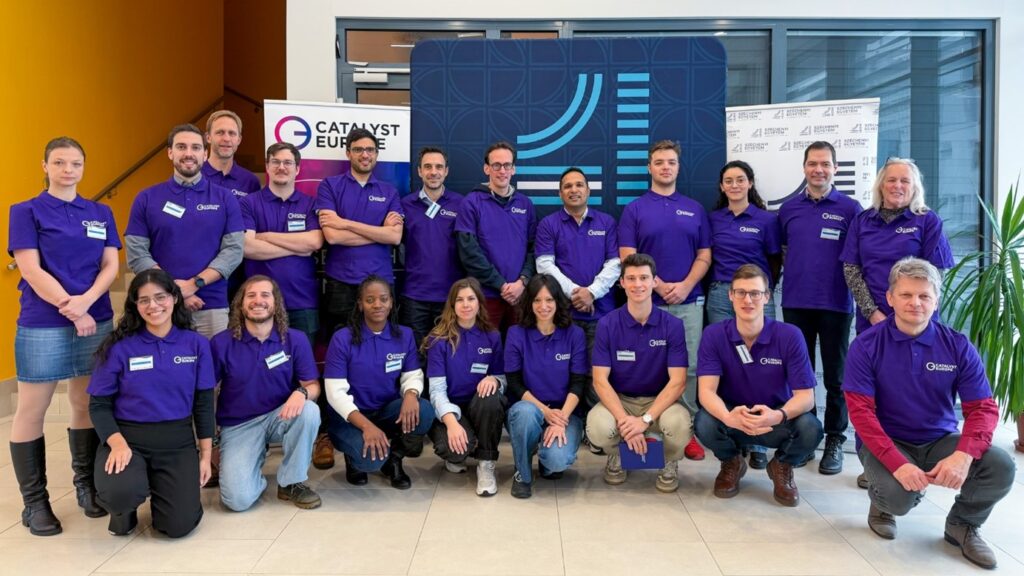
In the MIT LinQ Catalyst Europe programme, young researchers and mentors work together to realise their medical technology ideas. Part of the 2026 class is visible in the photograph.
At the opening of the event, Péter Németh, Scientific Secretary of Széchenyi István University and Head of the HUN-REN University Centre of International Excellence, stated that medical technology is one of the institution’s strategic areas of development. „We have been providing training in the field of health sciences since 1996, for thirty years. Our research and development activities in this field are coordinated by our MedTech and Sport Competence Centre, and in 2024, we established the market-based UniMedical Center, which provides private healthcare services. Parallel to this, our MedTech Campus is being built, where future-oriented research and development will be the focus,” he detailed.
Péter Németh emphasised that the Catalyst Europe initiative fits perfectly into this process. „The success of the program is well demonstrated by the fact that ten researchers from the first class are currently working on the implementation of three innovation projects and the publication of scientific results in international research networks, while nine from the second class were able to progress to the next phase of the process,” he revealed.
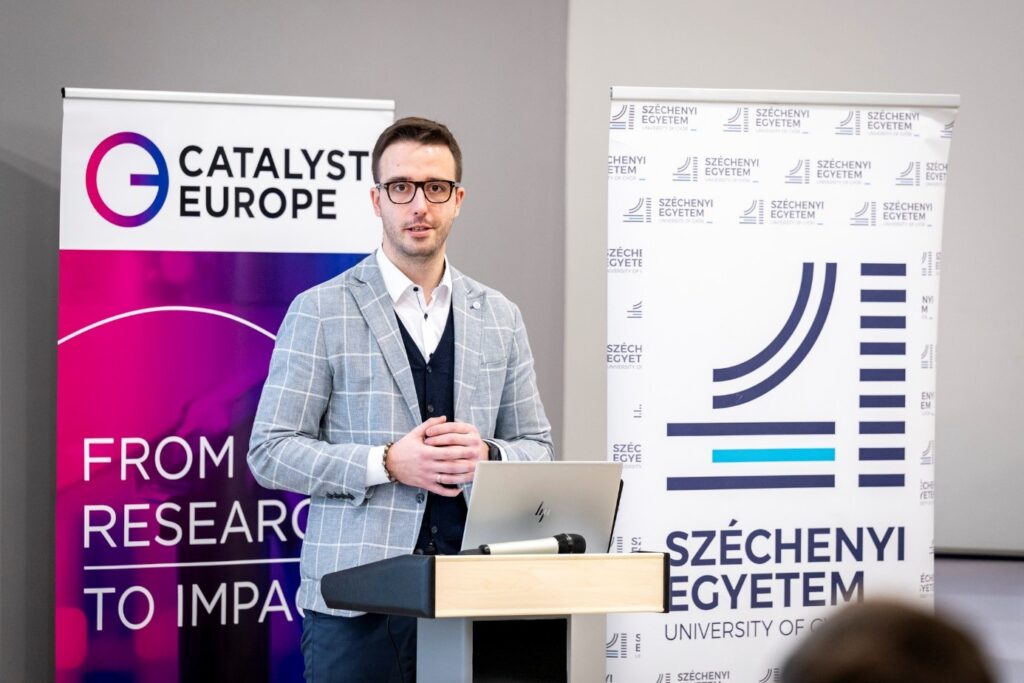
Péter Németh, Scientific Secretary of Széchenyi University, head of the HUN-REN University Centre for International Excellence (Photo: András Adorján)
Professor Martha Gray, Director of MIT LinQ and leader of the Catalyst program, said in her welcoming speech that the aim of the initiative is to support research groups that provide answers to real healthcare problems. „The methodology is well-structured yet flexibly adapts to the diverse needs formulated in medicine. Its advantage is that it allows for the exchange of ideas between experts from many countries and different fields, and manages diverse ideas in a well-designed process,” she underlined. She highlighted that she is grateful to Széchenyi University for the excellent cooperation and the partnership established with MIT, which helps the birth of scientific results that can be utilised in practice.
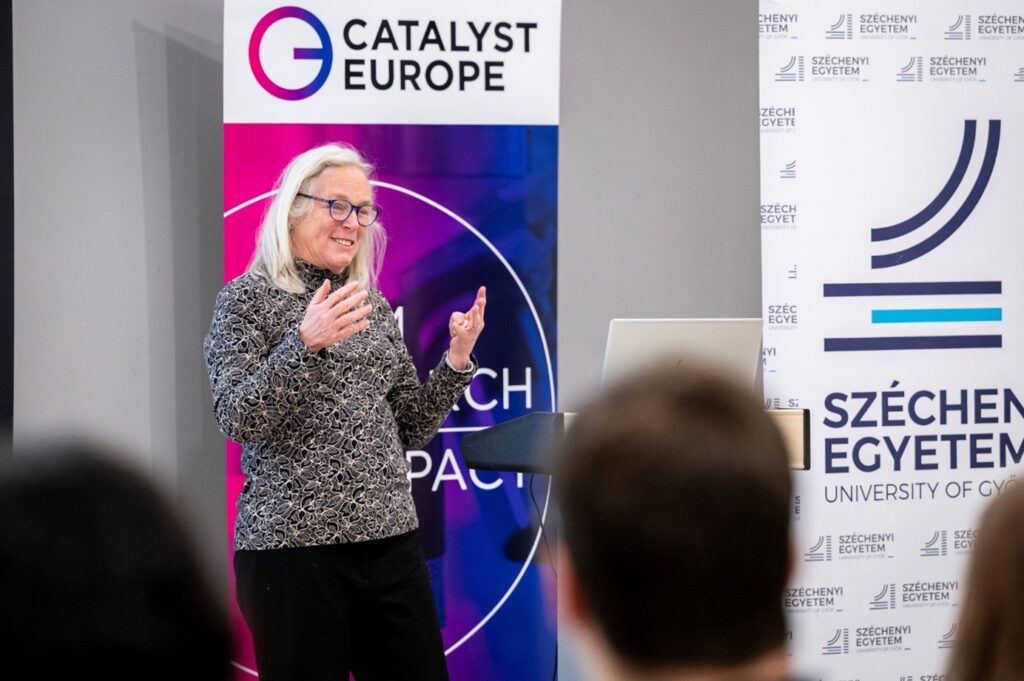
Professor Martha Gray, Director of MIT LinQ and leader of the Catalyst program (Photo: András Adorján)
Young researchers from Spain, Portugal, Luxembourg, Greece, the United Kingdom, and Hungary represent numerous fields of medicine, and are assisted by experienced international mentors—from the United States, Germany, Belgium, Spain, and Luxembourg—during the development of their innovation projects. Alongside them, Hungarian experts also support the work, including Dr Péter Törzsök, Vice-Dean of the Faculty of Health and Sport Sciences at Széchenyi István University.