
Created: 2026.01.14. 12:42
As part of its deliberate efforts to expand international relations, Széchenyi István University hosted a delegation from Xuzhou University of Technology in China. The aim of the meeting was to explore potential directions for educational and research cooperation, with a particular focus on engineering, technology, and sustainability.
A strategic objective of Széchenyi István University is to strengthen its research and development activities and global presence through an extensive network of international partnerships. One of the key directions of its internationalization strategy—aligned with Hungary’s economic policy goals—is the expansion of Asian, and particularly Chinese, higher education and research relations. In this spirit, the Győr-based institution recently welcomed a delegation from Xuzhou University of Technology for professional consultations.
At the beginning of the programme, the Chinese institution presented its profile and development priorities, which was followed by an overview of Széchenyi István University’s educational, research and international activities. During the discussions, the two sides reviewed areas in which long-term cooperation opportunities could emerge.
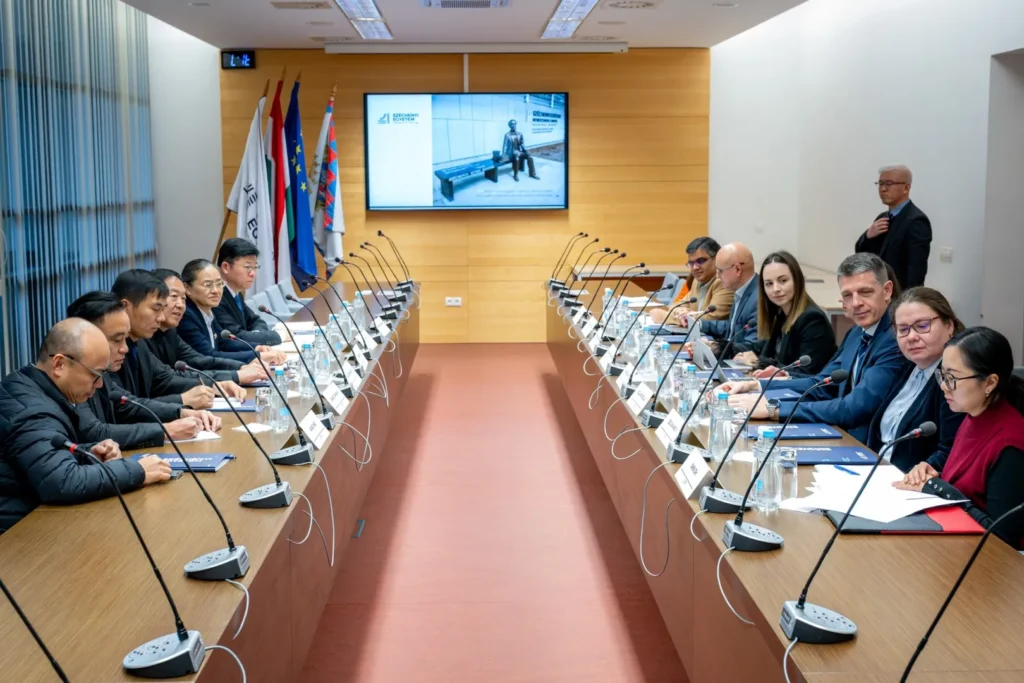
On behalf of the Chinese delegation, Jiang Hui, Vice President of Xuzhou University of Technology, emphasized that several encouraging results have already been achieved recently in building relations between the two institutions. Among these, she mentioned that Chinese students had participated in the Audi Development Camp associated with Széchenyi István University, and their delegation had already visited the Győr campus last year for professional talks, during which a Memorandum of Understanding was signed. “These experiences have confirmed for us that it is worth moving forward, and we see the current meeting as the next step on the path toward future cooperation,” she said. She added that the strengths of their university—renewable energy, wastewater treatment, food development, as well as engineering and technological education—fit well with the profile of Széchenyi István University.

Jiang Hui, Vice President of Xuzhou University of Technology, during discussions on future cooperation opportunities at Széchenyi István University (Photo: András Adorján)
The vice president also highlighted that their institution has 20 faculties, 24,000 students, and several nationally recognized academic programmes, while placing strong emphasis on cooperation with industry, government, and local authorities. “We are open to student mobility, joint research, and the organization of joint international conferences and online professional events, particularly in the fields of green development and food safety,” she added.
Representing Széchenyi István University, Dr Majid Movahedi Rad, Vice Dean of the Faculty of Architecture, Civil Engineering and Transport Sciences, emphasized that significant synergies can be identified between the two institutions across several technical and engineering fields.
“Civil engineering and architectural research, sustainable design, and engineering applications of artificial intelligence are areas where we see strong potential,” he said, underlining that Széchenyi István University’s strong international network and close ties with industry can provide a solid foundation for future joint professional work.
During the meeting, the guests also learned about Széchenyi István University’s international education portfolio. The institution currently offers dual-degree programmes with five foreign partners, and in addition to bachelor’s, master’s, and undivided master’s programmes, it operates doctoral schools in four academic fields, thereby strengthening its research capacity and global presence.
The international visibility of Széchenyi István University is further supported by its results in the Times Higher Education and Quacquarelli Symonds rankings, which provide important feedback for international partners.
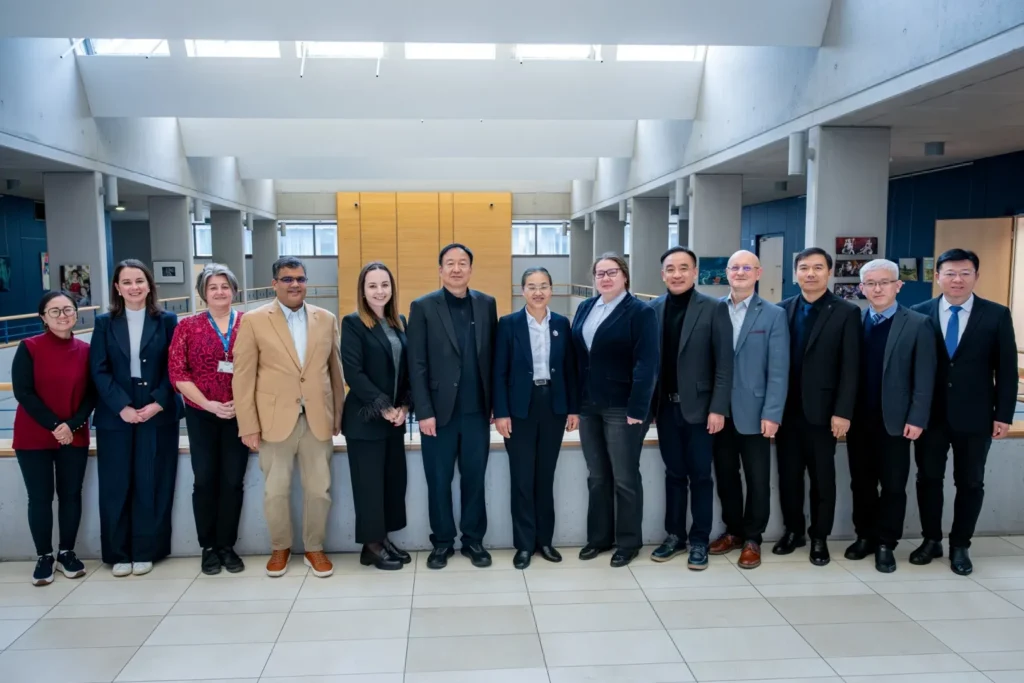
The meeting marked an important milestone in future professional cooperation (Photo: András Adorján)