
Created: 2026.01.29. 13:42
The latest achievements in sports medicine, sports science and digitalisation were presented at the conference entitled SPEED 2026 – Sport with a Health-Conscious and Digital Approach, recently organised by Széchenyi István University and the Medical Committee of the Hungarian Football Federation (MLSZ). At the forum, Hungarian and international researchers, as well as practising professionals, sought answers to the most important questions concerning safe sport, rehabilitation and prevention. As part of the programme, the UEFA Get Trained, Save Lives initiative was introduced, strengthening preparedness for life-saving interventions in the world of sport.
The international conference SPEED 2026 – Sport in a health-conscious and digital way was held recently in Győr and was jointly organised by the MLSZ Medical Committee and Széchenyi István University. Over the two-day event, Hungarian and international experts presented the latest results in medicine, sports science and digitalisation, with particular emphasis on prevention, rehabilitation and the promotion of lifelong, safe physical activity.
The event was opened by Ádám Schmidt, State Secretary responsible for sport, who spoke about the strategic importance of sport and the growing role of sports science. “Today, what matters most is not who trains more, but how recovery and regeneration take place, and what kind of sports science and sports medicine background supports the sustainable development of performance,” he said. He emphasised that the strategic importance of sport is reflected not only in competitive results, but also in health preservation. He pointed out that every forint invested in sport pays off many times over in healthcare, as regular physical activity contributes to disease prevention and a better quality of life.
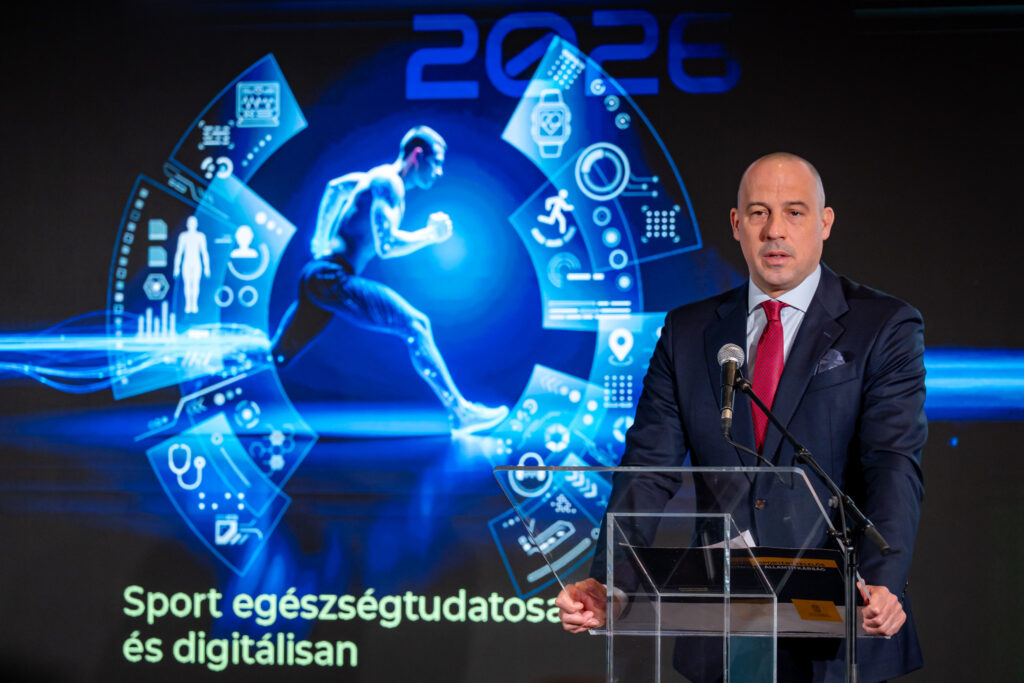
Ádám Schmidt, State Secretary responsible for sport, also noted in his opening remarks that daily physical education, the development of school sports facilities and nationwide programmes such as the Swimming the Nation Programme lay the long-term foundations for a health-conscious lifestyle and the strengthening of sports culture (Photo: András Adorján)
A decisive role in shaping the conference programme and defining its main themes was played by Dr Zsolt Szelid, Head of the Department of Sports Medicine and Digital Health Sciences at the Faculty of Health and Sports Sciences of Széchenyi István University and President of the MLSZ Medical Committee. “Special attention was given to rehabilitation following cardiovascular and neurological diseases and to supporting return to sport, as well as to the role of smart devices, artificial intelligence and data-driven solutions in optimising recovery and performance,” he explained.
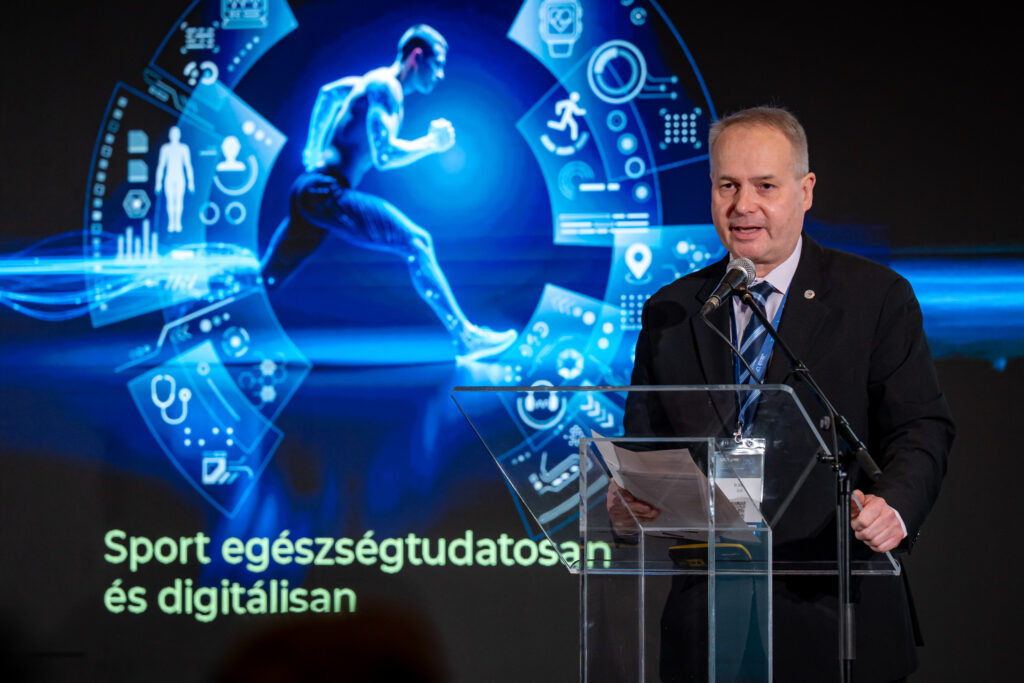
Dr Zsolt Szelid, Head of the Department of Sports Medicine and Digital Health Sciences at the Faculty of Health and Sports Sciences of Széchenyi István University, President of the MLSZ Medical Committee, lead organiser of the SPEED 2026 conference (Photo: András Adorján)
The international speakers included Dr Nicole Avena, Visiting Professor at Princeton University and Associate Professor at Mount Sinai School of Medicine in New York, who studies the links between sports nutrition and brain function. “My research focuses on how the foods we consume affect brain function, mood, decision-making and health, and how all this influences sports performance and recovery. The special value of this conference lay in the rare opportunity, in an international and interdisciplinary environment, to bring together researchers, clinical professionals, educators and students in one space. This created a unique opportunity to initiate new collaborations,” she said.
She also emphasised that she finds the approach that jointly examines sports medicine, nutritional science and the application of artificial intelligence (AI) extremely timely and unique. As she put it, digital and AI-based solutions are likely to play an increasingly important role in individual-level counselling, rehabilitation and health preservation in the future, not only for elite athletes but also for the wider population.
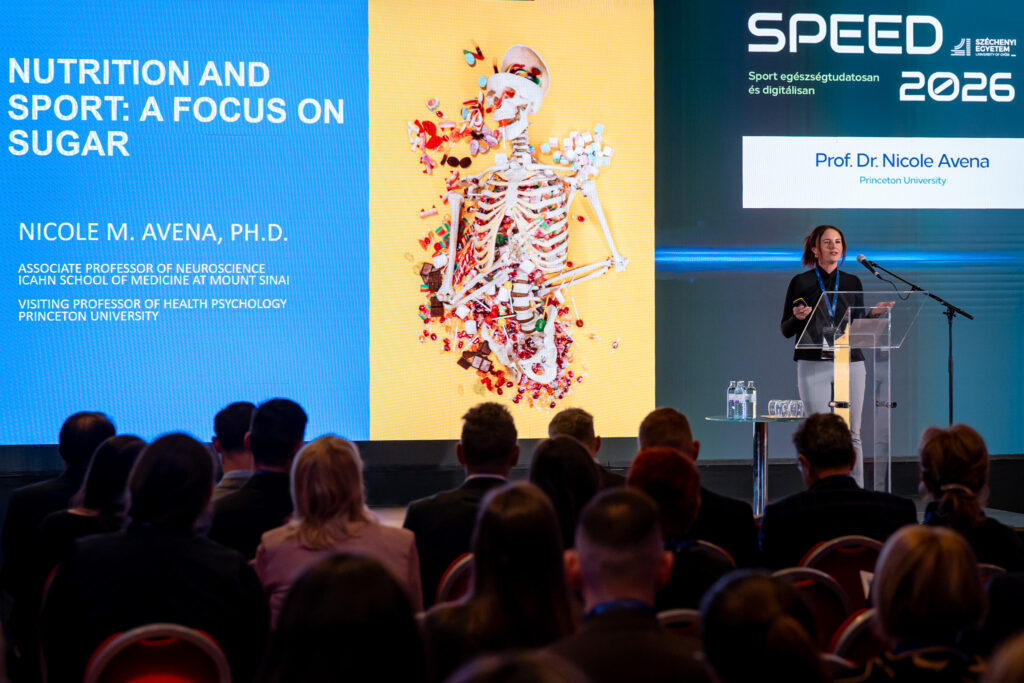
Dr Nicole Avena, Associate Professor at Mount Sinai School of Medicine in New York and Visiting Professor at Princeton University, gave a presentation at the SPEED 2026 conference on the effects of sugar consumption on performance and health (Photo: András Adorján)
As part of the conference, the European Football Association (UEFA) initiative Get Trained, Save Lives was launched in Hungary. Its aim is to raise awareness through the world of football of the importance of resuscitation and defibrillator use, and to provide practical knowledge for responding to sudden cardiac arrest. The MLSZ and the entire Hungarian football healthcare sector will join the programme, as announced by Dr Zsolt Szelid at the event.
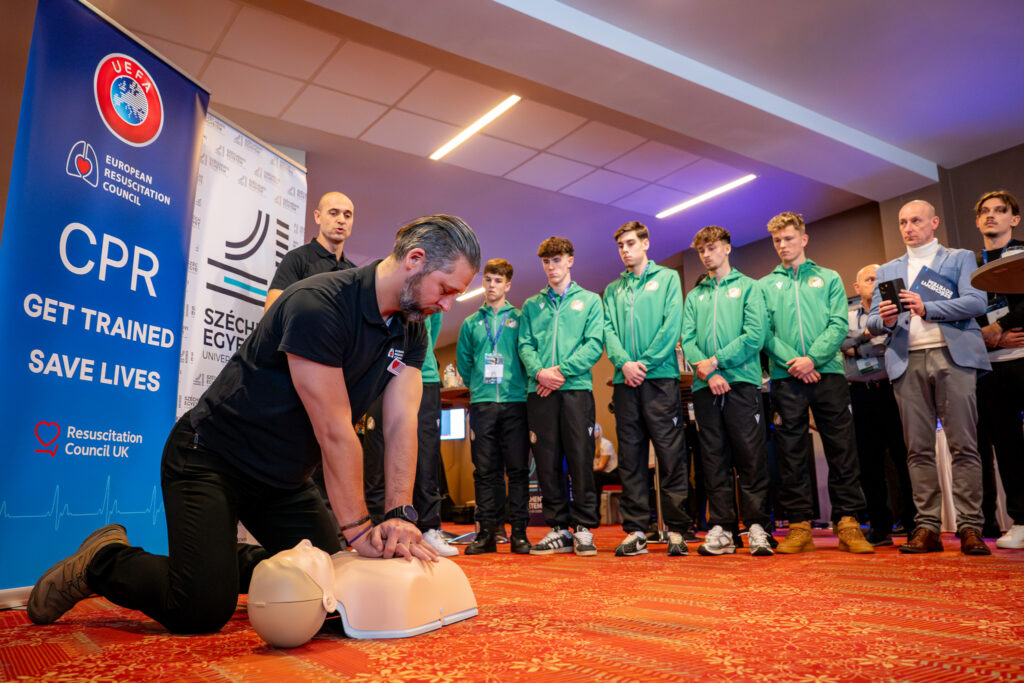
At the presentation of the UEFA Get Trained, Save Lives initiative, a resuscitation exercise was held, illustrating the importance of immediate intervention on sports fields and in everyday life. Young footballers from ETO FC also took part in the programme (Photo: András Adorján)
“In cases of sudden cardiac arrest, the first minutes are decisive, so it is crucial that there are people on the pitch, in the stands or even in supporter zones who can intervene immediately and professionally. Football’s reach is enormous, offering an exceptional opportunity to encourage masses to take part in practical training. The campaign’s message has so far reached more than one hundred million people, and tens of thousands have learned the basics of resuscitation – this truly demonstrates the social power of sport,” emphasised Dr Evert Verhagen, UEFA’s Chief Scientific Advisor.
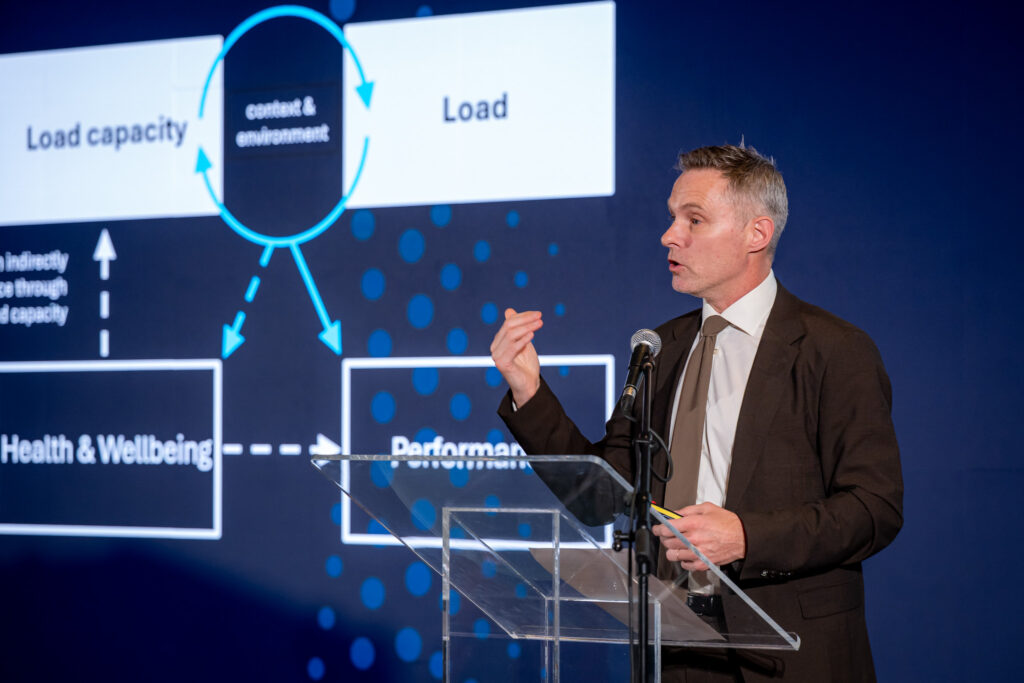
Dr Evert Verhagen, UEFA’s Chief Scientific Advisor (Photo: András Adorján)