
Created: 2026.06.04. 09:00
The Budapest Innovation and Training Centre of Széchenyi István University recently hosted another stage of the professional event series focusing on medical technology innovations, organised with the support of the University and based on the LinQ Catalyst methodology of the Massachusetts Institute of Technology (MIT). In the latest phase of the Catalyst Europe programme, teams consisting of young mentees and experienced mentors worked on preparing their research plans.
Implemented in strategic partnership with Széchenyi István University, the MIT LinQ Catalyst Europe programme supports the generation and development of medical technology research ideas using the methodology of one of the world’s leading universities, the Massachusetts Institute of Technology (MIT) in the United States. Through this initiative, practical healthcare innovations are developed in response to real needs, contributing to advances in medicine and the well-being of society.
The third cohort of the programme began in January this year on the main campus of Széchenyi István University, where twelve mentees and twelve mentors started working together on projects. The work continued in Luxembourg in April, and most recently the University’s Budapest Innovation and Training Centre hosted a two-day workshop during which the mentees further developed their projects. Two Hungarian mentors also joined the programme, including Dr Péter Törzsök, Vice-Dean for International Affairs at the Faculty of Health and Sport Sciences of Széchenyi István University.
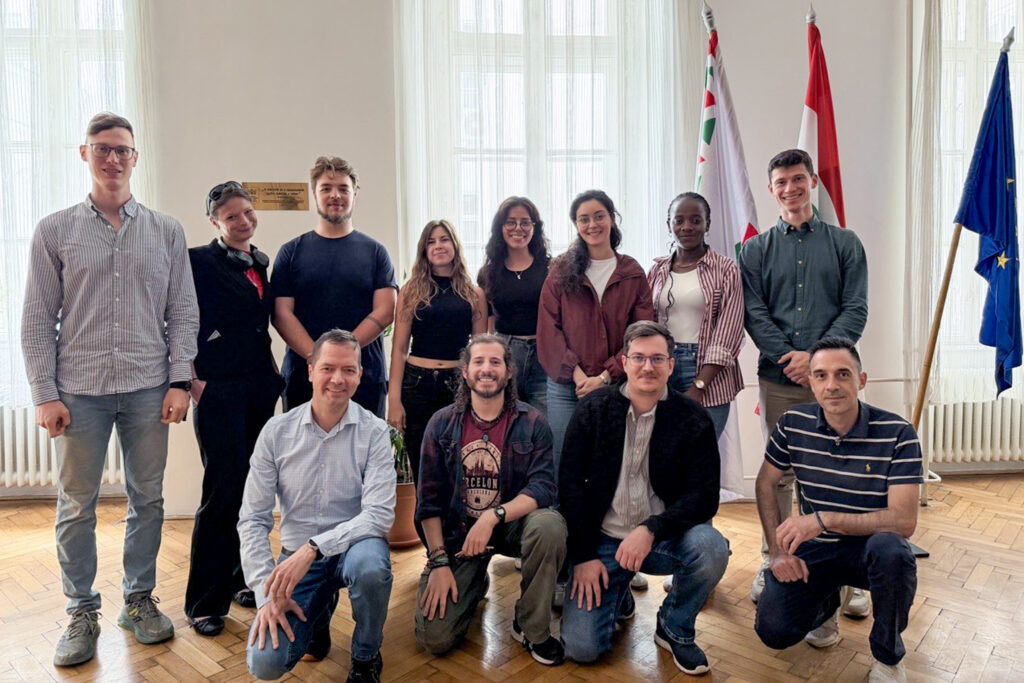
The latest stage of the MIT LinQ Catalyst Europe programme was hosted by the Budapest Innovation and Training Centre of Széchenyi István University
“During this meeting, participants worked on various projects and prepared the foundations of their research plans. They arrived with six project ideas, four of which were selected. As a result, we will be addressing topics such as autism, weight loss and childbirth in the future. Our most important objective at this stage is to pass on to the mentees the way of thinking required to build a research project,” summarised Dr Péter Törzsök.
He explained that once the plans are completed, the mentor team evaluates them together, assessing whether each project is at an early, mature or fully developed stage. “Based on this assessment, projects are allowed to proceed to the second phase, which may last several years depending on how successfully the teams are able to achieve their objectives,” he added.
Dr Péter Törzsök also highlighted that the uniqueness of Catalyst Europe lies in its interdisciplinary approach, bringing together perspectives from different scientific fields. “One of the programme’s greatest strengths is that participants with very diverse professional backgrounds work together,” he stated. “The young participants can learn from experts who hold internationally recognised patents, while as mentors we ourselves learn a great deal from the innovative thinking of our mentees.”
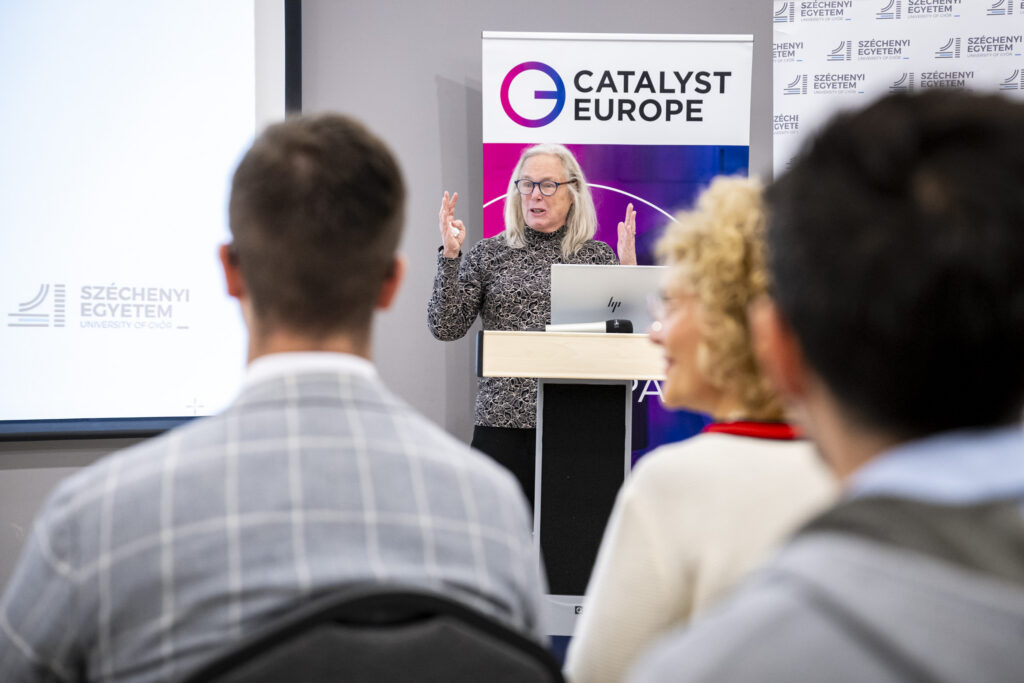
The Catalyst Europe programme, operating on the basis of the MIT LinQ Catalyst methodology, has been implemented for years in partnership with Széchenyi István University. The photograph shows Professor Martha Gray, Director of MIT LinQ and Head of the Catalyst Programme, at this year’s project launch event in January
(Photo: Gergely Nagy).