
Created: 2026.07.02. 10:57
The graphic design, architecture, and product design programmes launched in 2021 at the Faculty of Arts of Széchenyi István University have since gained nationwide popularity: this year, the third cohort graduated from the undergraduate programmes of the Design Campus, while the first cohort completed master’s studies. An exhibition featuring the graduates’ works was also opened in the atrium of the university’s Győr Innovation Park.
The university launched its design programmes five years ago, and since 2024 they have been housed in the Győr Innovation Park. Students from the widely popular graphic design, architecture, and product design programmes have achieved significant national and international successes in recent years, and another group has now received their degrees. To mark the conclusion of their studies, the graduates presented their work to the public in an exhibition, followed a few days later by a formal graduation ceremony attended by lecturers and representatives of the profession.
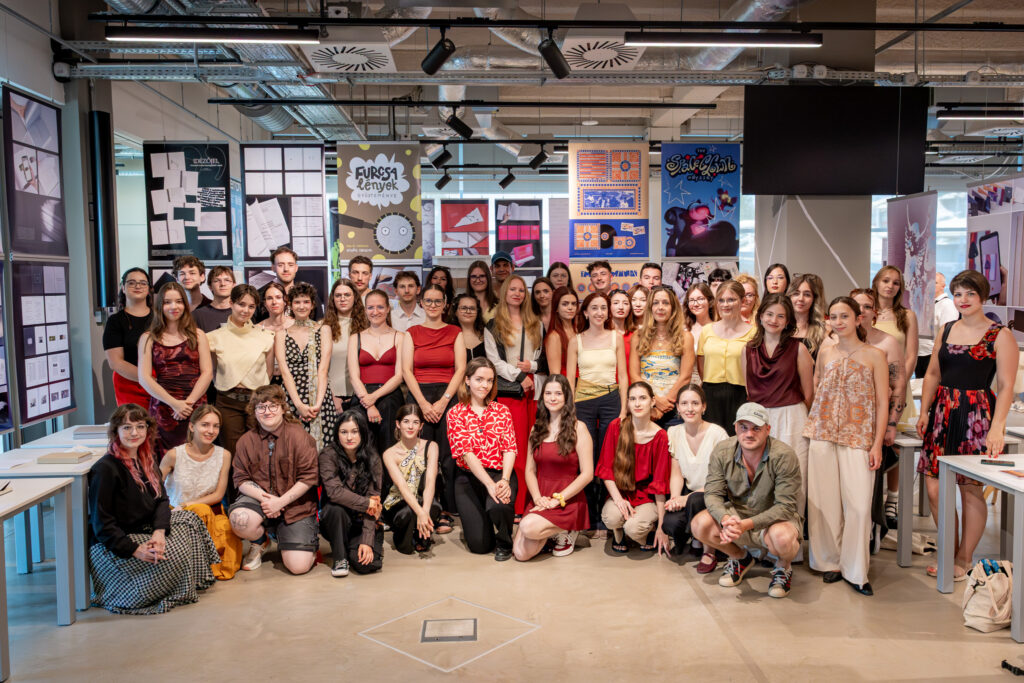
A group of graduated design students at the Faculty of Arts (Photo: András Adorján)
At the opening of the exhibition, Dr Imre Tolnai, a graphic artist, stated that designers today bear one of the greatest responsibilities, as they shape our environment and therefore significantly influence our quality of life. “Competition and the pace of development in industry and technology are so intense that the three pillars of the creative industries—spatial, object, and visual design—have come into the spotlight in the 21st century. The city of rivers, Győr, can be proud of one of the country’s most dynamic universities, which has risen to the challenge by establishing one of the fastest-growing design programmes in the Vienna–Budapest–Bratislava triangle.,” he said. He added that the former biscuit factory building in Győr has been transformed into an impressive innovation park through architectural innovation, where students of the third undergraduate and first master’s cohorts have now graduated.
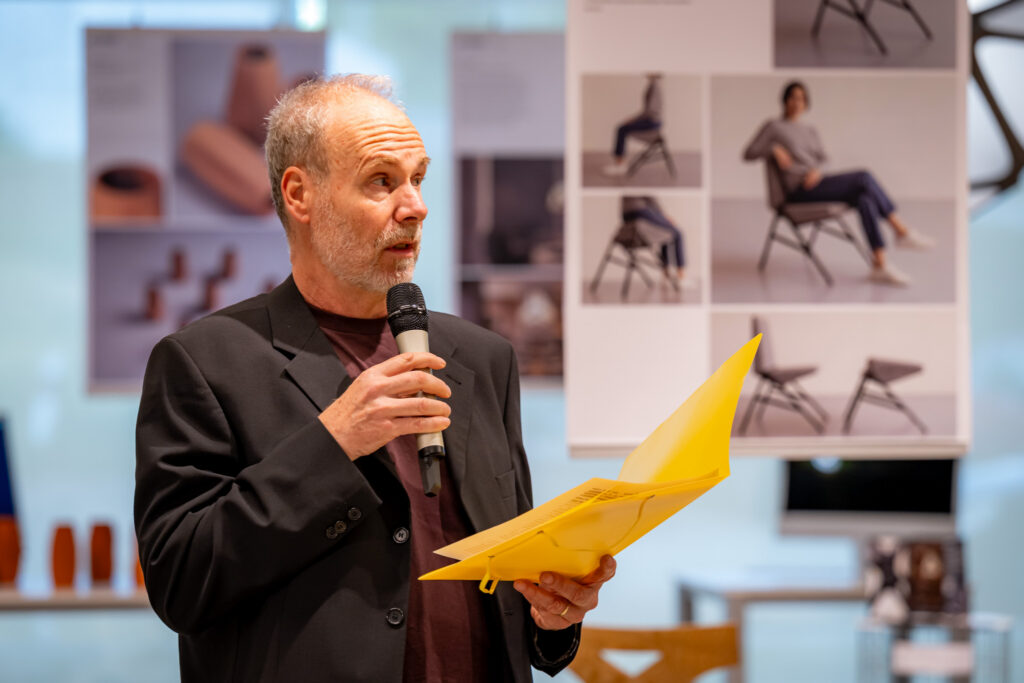
The exhibition was opened by Dr Imre Tolnai (Photo: András Adorján)
“A talented and promising group: their work has already been marked by numerous achievements during their studies. They have won awards, for example, at the National Scientific Students’ Associations Conference of the Arts and other competitions. The graduates of the Design Campus approach the world with open eyes as thoughtful and empathetic creators; their design thinking is characterised by a commitment to sustainability, an ecological perspective, and rationality. Their works combine professional ethics with refined taste, inventive graphic and formal solutions, depth, and an innovative mindset, while also retaining a sense of lightness in the best sense of the word,” he elaborated.
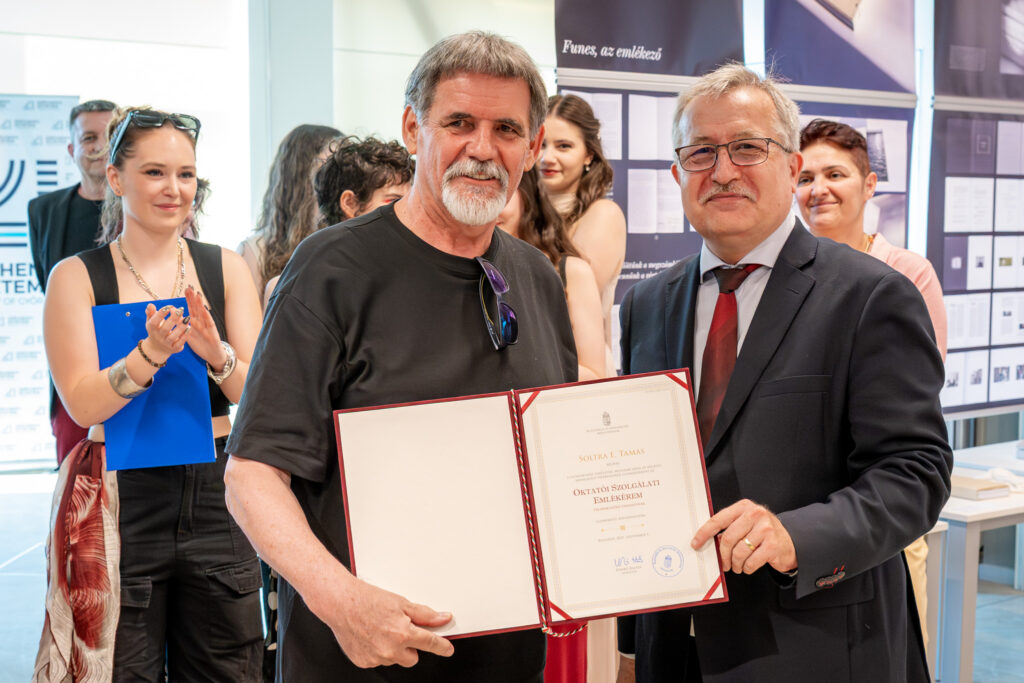
At the event, sculptor and medal artist Tamás E. Soltra, a lecturer at the Design Campus, received the Educator Service Memorial Medal in recognition of his outstanding long-standing work in higher education. The award was presented by Dr Csaba Hontvári, Dean of the Faculty of Design and Performance Arts (Photo: András Adorján)
Ferenc Kassai, Head of the Department of Graphic Design, noted that enrolment in design programmes continues to grow, partly because students who completed their undergraduate degrees at the university are now applying for master’s programmes. “These five years have been sufficient to generate strong regional interest. In addition, we have numerous projects carried out jointly with the city and with industrial partners,” he explained. He also revealed that the latest achievement of the graphic design programme is winning the only student prize at the Tipozóna biennial, organised with the participation of 13 universities from six countries. He emphasised that the value of the graduation exhibition lies in giving students the opportunity to present their work while also seeing that of their peers. “This is not a competitive exhibition but a celebration of a truly collaborative and evolving community,” he added.
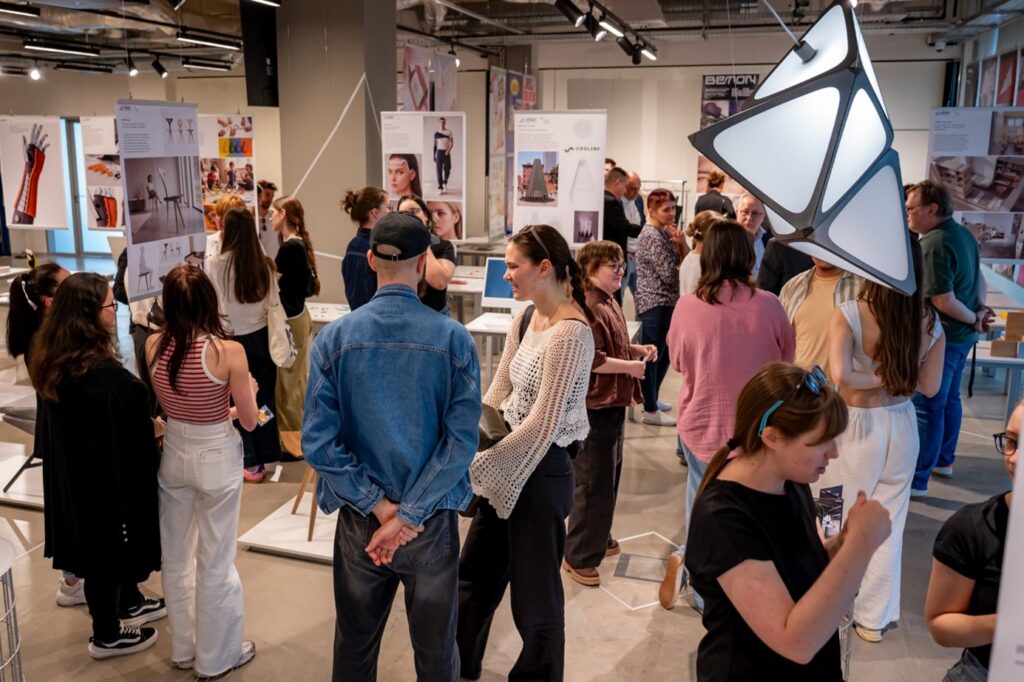
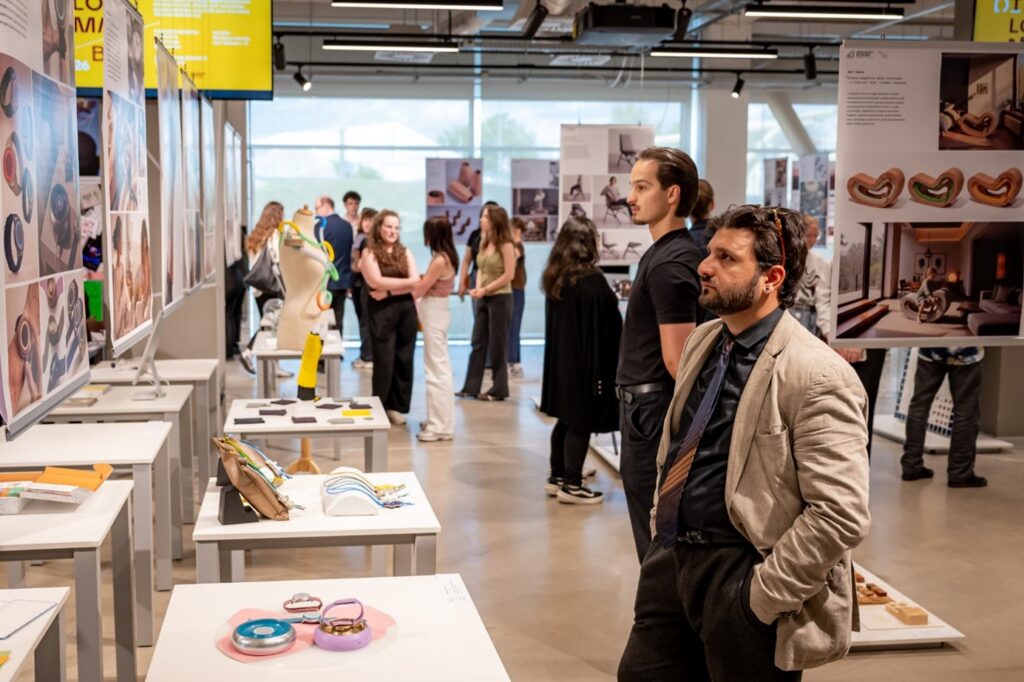
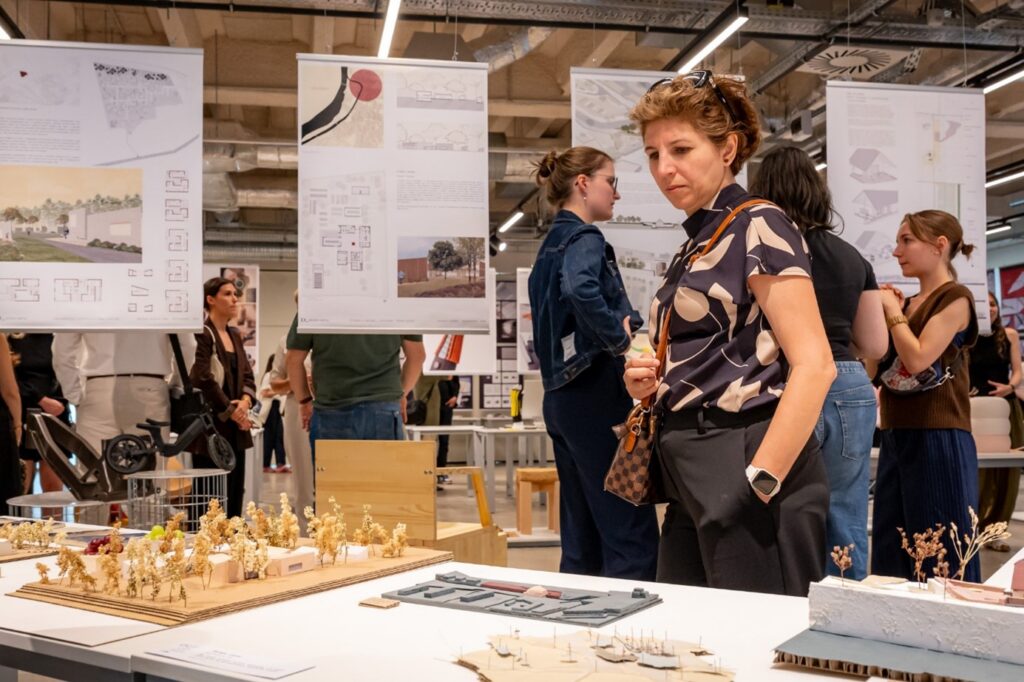
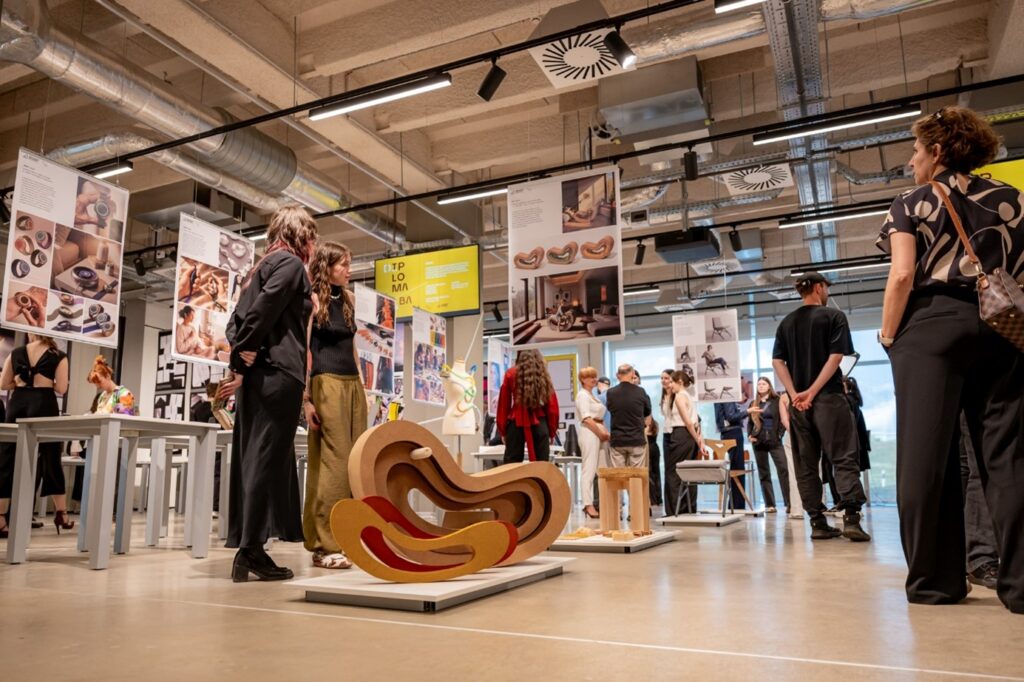
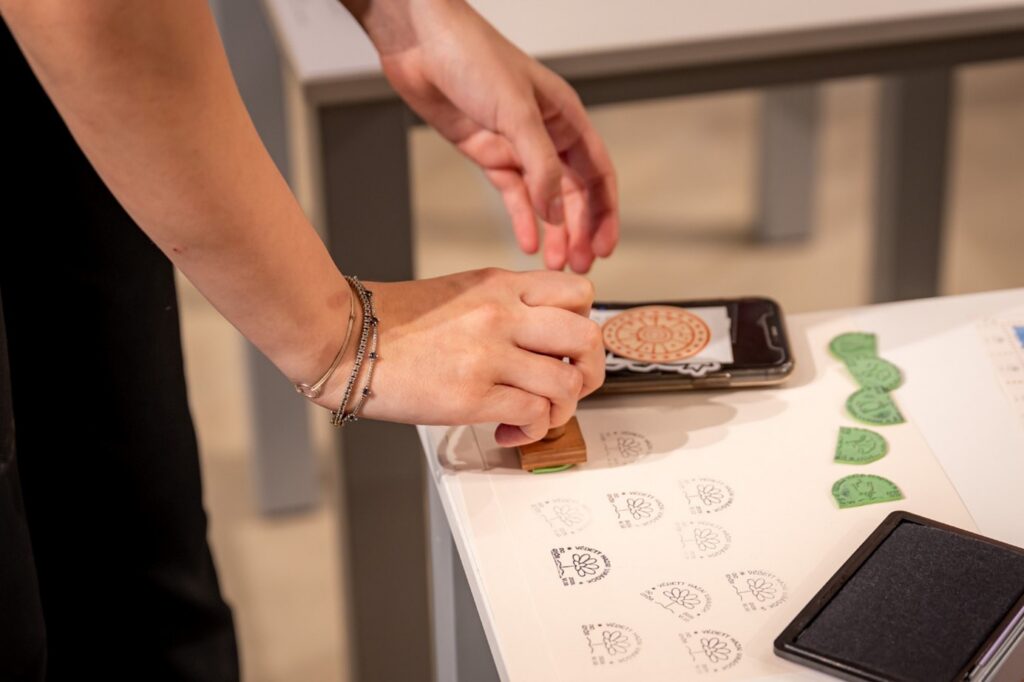
Gallery from the exhibition (photos: András Adorján)