
Created: 2026.04.22. 14:37
Take students from different universities, assign them into mixed teams at random, give them three days to solve a problem set by an industrial company, and present the solution to a jury of academics – this is what the International Student Conference on Mechanical Engineering at Széchenyi István University is about. However, the event is always much more than a simple competition: it connects companies with students, offers insight into real projects, and at the same time forges a genuine community.
There is a strong demand from companies to involve students in their projects, while students are eager to participate if they can gain experience from real industrial challenges. Based on this recognition, the International Student Conference on Mechanical Engineering (GSZNHK) was established at Széchenyi István University several years ago. Within its framework, participants must solve a complex technical problem in randomly selected teams in just a few days.
“Companies participating in the conference can assess students’ knowledge first-hand while they are solving tasks, thus gaining an overview of the future engineering workforce. In some cases, they even offer internships or full-time positions. It is also important for companies that they receive practical solutions to their problems, many of which are later incorporated into their processes,” noted Levente Hajdu, the chief coordinator of the event.
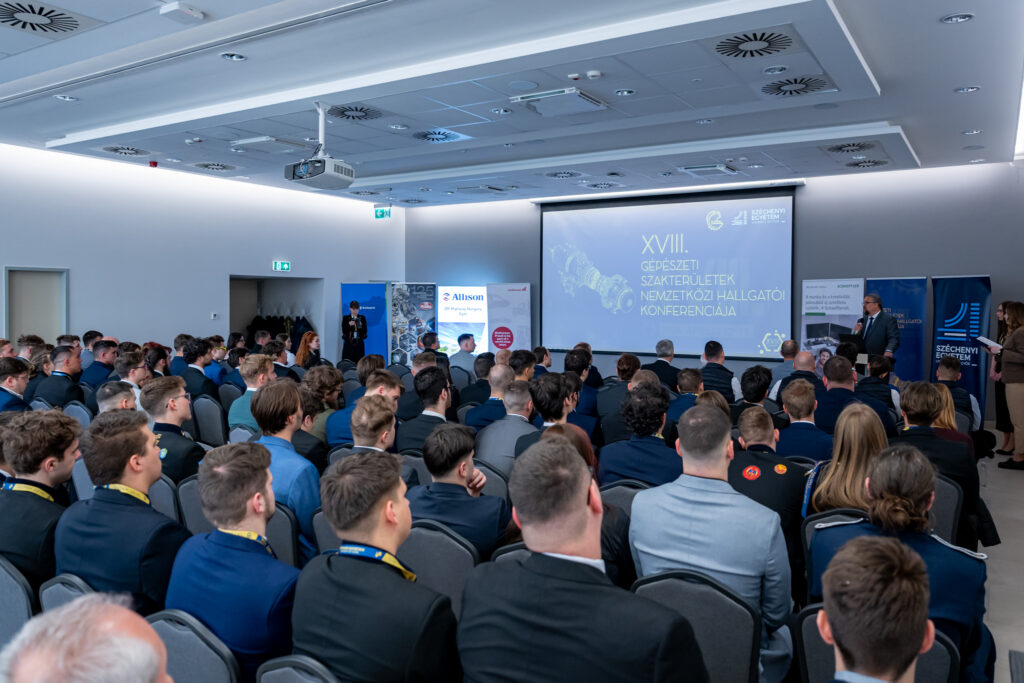
This year’s novelty was that electrical engineering students were also able to take part in the conference (Photo: András Adorján)
This year, seven sponsoring task providers joined the event: Allison Off-Highway Hungary Ltd., Motherson, Rába Automotive Holding Plc., Robert Bosch Ltd., Schaeffler Savaria Ltd., the Automotive Industry Research Centre operating under the auspices of Széchenyi István University, and the Hungarian Defence Forces.
A total of nine teams were formed from the 69 participating students. In addition to the host institution in Győr, participants came from the University of Miskolc, John von Neumann University in Kecskemét, the University of Nyíregyháza, Óbuda University, the University of Pécs, and the University of Szeged. They were joined by students from four institutions beyond Hungary’s borders: the Technical University of Cluj-Napoca, the Slovak University of Technology in Bratislava, the Slovak University of Agriculture in Nitra, and the Subotica Tech – College of Applied Sciences.
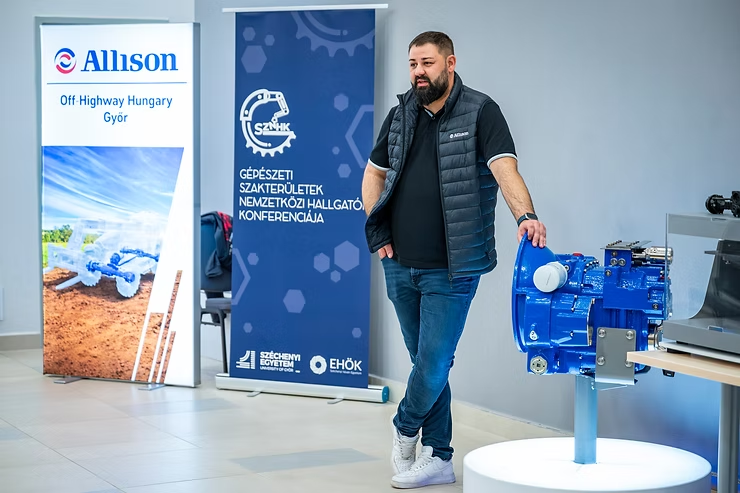
Some representatives of the companies providing the tasks were themselves students of Széchenyi István University. Pictured: Ádám Horváth, an employee of Allison and former chief organiser of the conference (Photo: Gergely Nagy)
The companies defined the tasks in such a way that they were sufficiently challenging yet still achievable. In some cases, students had to design an entirely new product (or machine), while in others the goal was to automate or optimise an existing process. The Hungarian Defence Forces invited participants to develop an ammunition testing procedure that is fast, cost-effective, and feasible even under battlefield conditions.
“If the amount of gunpowder in a cartridge is even slightly more or less than ideal, it will detonate earlier or later, which can be critical for the trajectory of the projectile. Our task was to filter out faulty ammunition,” explained Kristóf Konyha, a student from the University of Miskolc, adding that they developed several ideas to solve the challenge.
Solving the tasks required a wide range of competencies. For example, Gábor Kovács, a student from the University of Nyíregyháza, participated as the only IT specialist in the field, yet still found his place within his team. “It was a great advantage that I had studied engineering drawing and automation, so the project was not entirely unfamiliar. I supported the team by performing calculations using software, and I was also able to harness artificial intelligence,” he said.
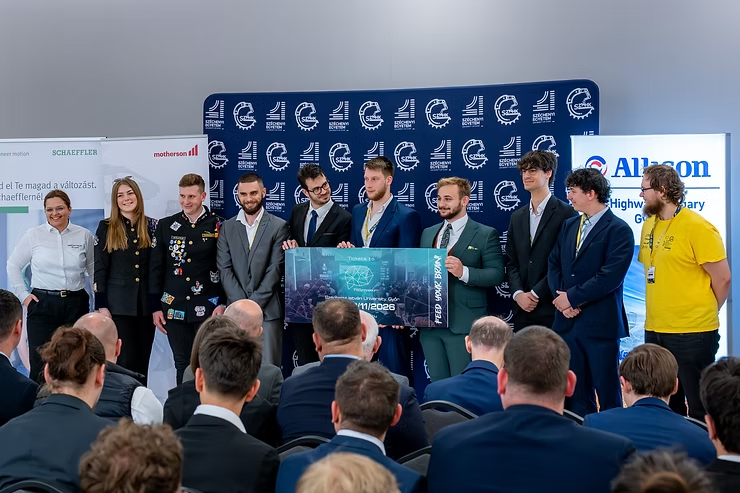
The team of the Automotive Industry Research Centre of Széchenyi István University received the special prize of the Formula Student Symposium (Photo: András Adorján)
At the same time, the conference is at least as much about community building as it is about individual professional development. There is no other student event in the country where Hungarian-speaking mechanical engineering, mechatronics, vehicle engineering – and now also electrical engineering – students from across the Carpathian Basin can meet, so the initiative from Győr fills a significant gap.
“A major advantage of GSZNHK is that the organisers have combined problem-solving and community building in a way that creates an ideal balance between the two,” emphasised Máté Bartók from Óbuda University. “I wanted to come last year, and this year I finally managed. The conference has a great reputation at our university – it’s no coincidence that nearly twenty of us came. We were drawn by the atmosphere, the great company, and the excellent organisation.”
GALLERY:
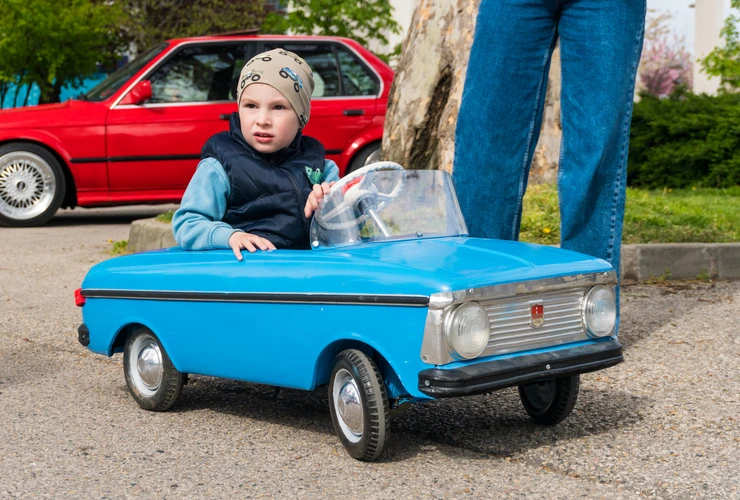
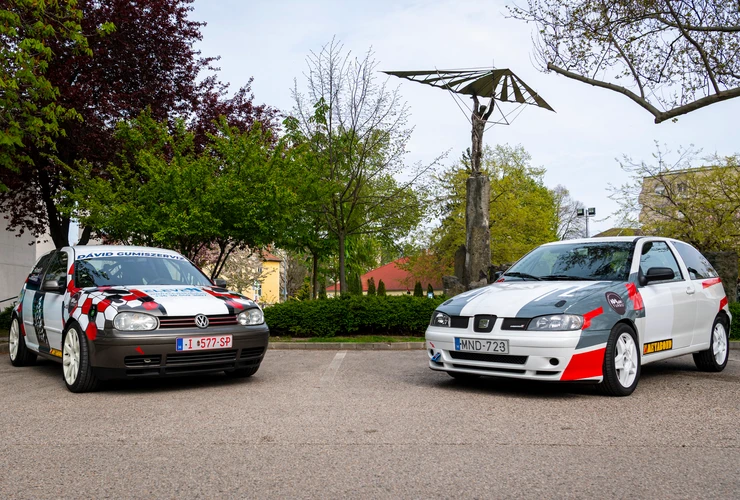
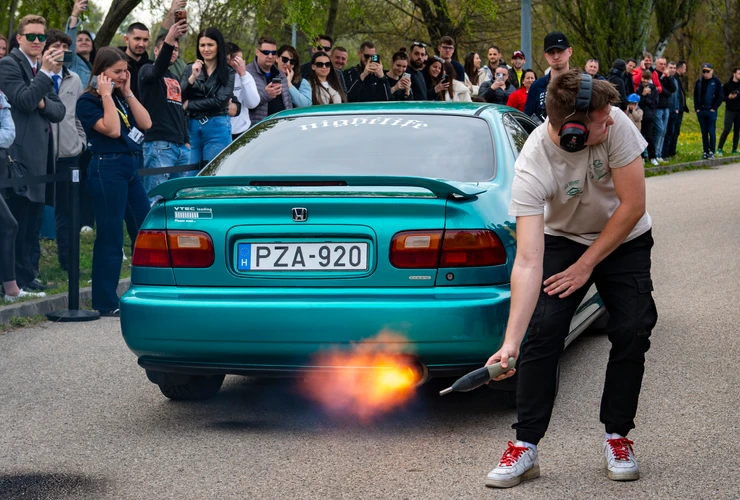
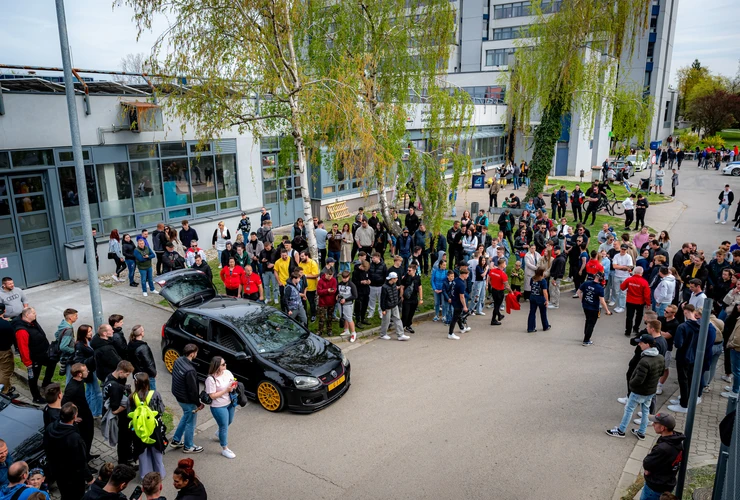
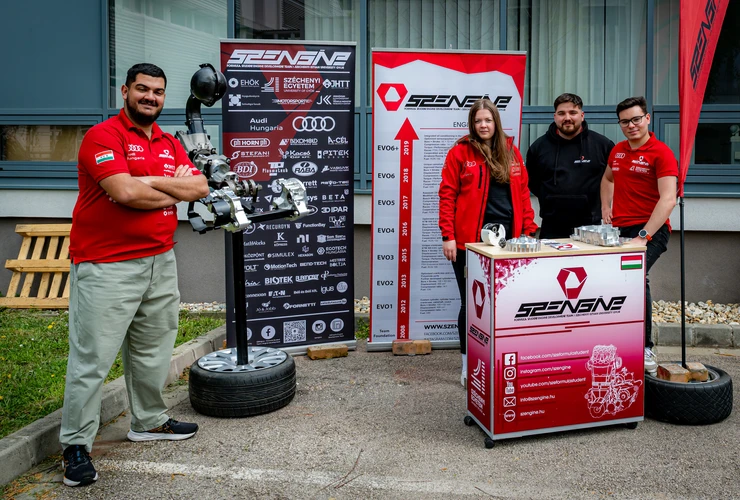
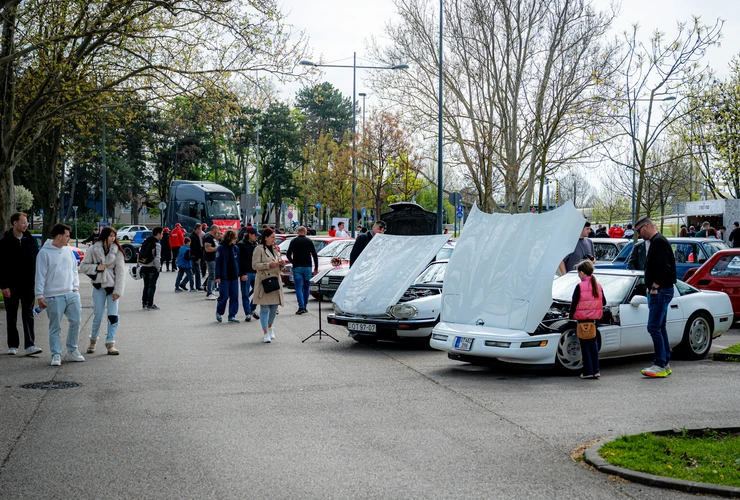
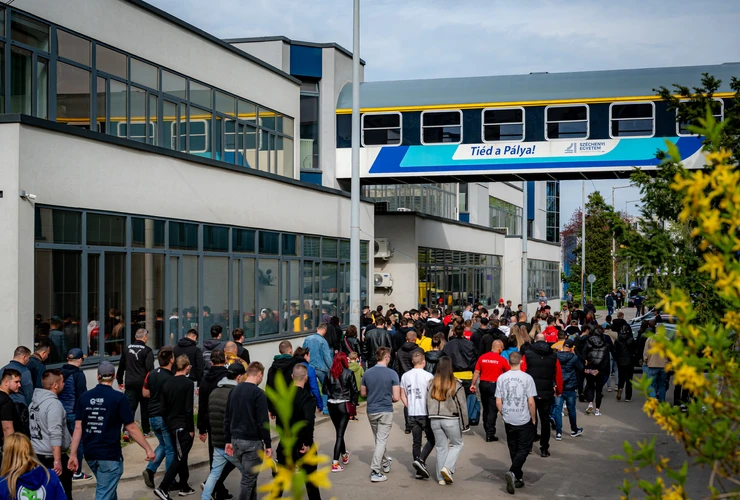
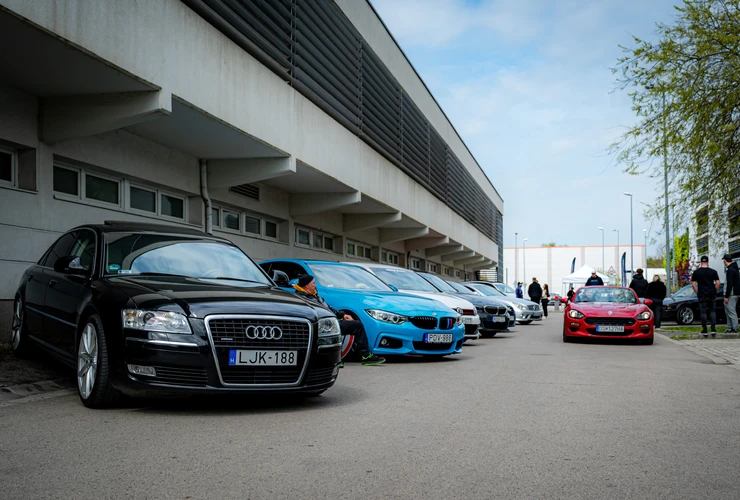
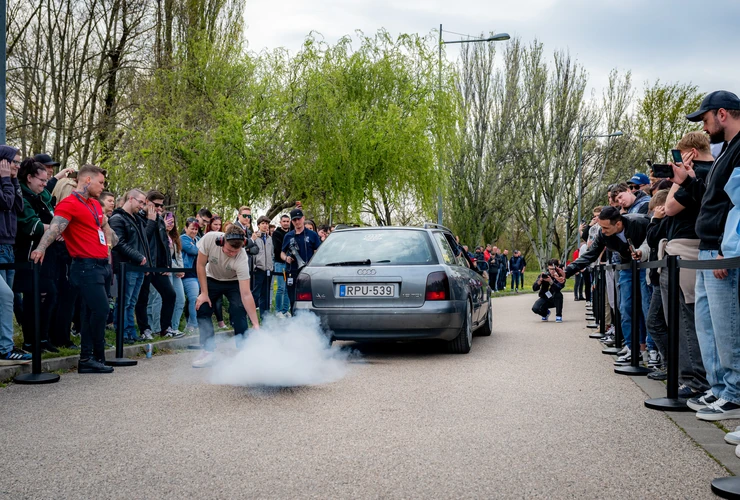

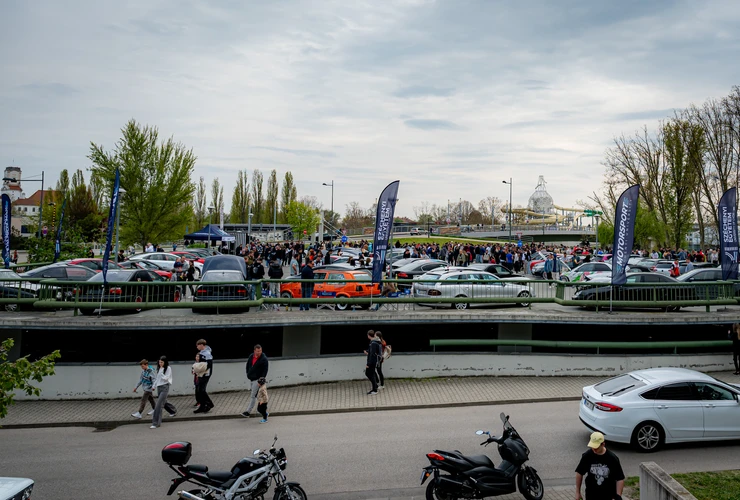
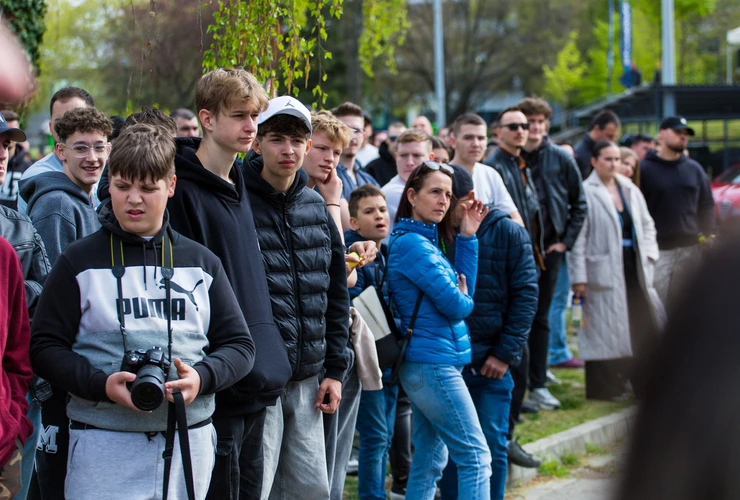
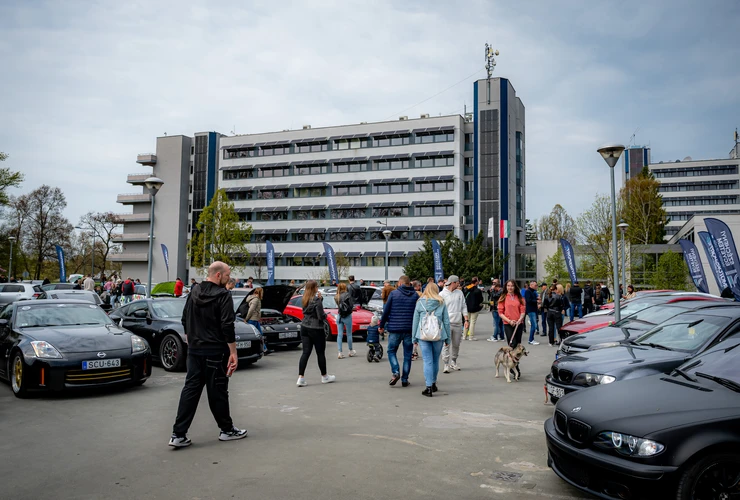
The car meet and exhibition preceding the conference has grown into a popular family event in the city (Photos: András Adorján, Gergely Nagy, Márton Ódor)