Created: 2026.10.02. 08:45
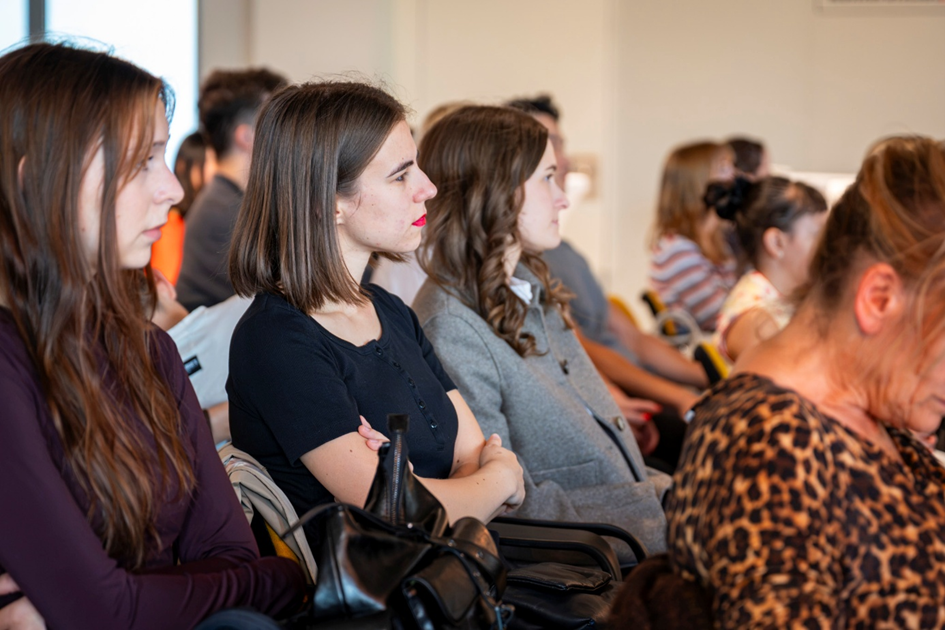
Promoting the Chinese language and culture is a core mission of the Confucius Institute at Széchenyi István University. A recent Mid-Autumn Festival celebration at the University’s Győr Innovation Park brought Chinese traditions closer to participants through traditional musical performances and a range of cultural and creative programmes.
Inaugurated on the Győr campus this January, the Confucius Institute—built on a partnership with Jiaxing University— places particular emphasis on promoting Chinese culture alongside language teaching. Its programmes aim to engage not only the University community, but also local educational institutions, corporate partners, and the wider regional population. True to this mission, the institute recently hosted the Mid-Autumn Festival, one of China’s most significant traditional celebrations, alongside expanding language courses designed for diverse audiences. More than 130 people have enrolled in the autumn courses, resulting in 15 distinct groups across various proficiency levels. Course offerings will expand further in the near future, introducing specialised Chinese language training for technical fields.
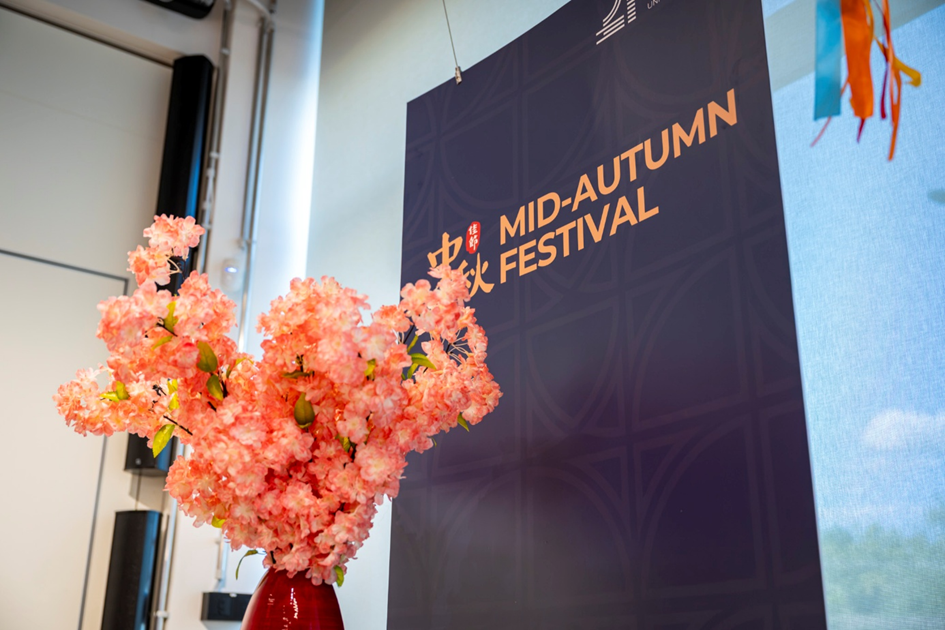
Széchenyi István University’s second Mid-Autumn Festival celebration this year was organized under the auspices of the Confucius Institute on 25 September at the University’s Győr Innovation Park (Photo: Máté Dudás).
„Our goal is for language and culture to serve as a new point of connection that strengthens educational and scientific cooperation, bringing together the students, academic staff and communities of our respective universities. It is equally important that our institute’s activities extend beyond the campus. We aspire to become an open community and cultural hub for Győr and the surrounding region. We want to do more than just teach Chinese culture—we want to make it tangible and experiential. The Mid-Autumn Festival marks the opening of our autumn cultural event series, which will be followed in the coming months by lectures, a film club, calligraphy workshops, and further programmes,” emphasised Réka Orosz-Barczi, Hungarian Director of the Confucius Institute.
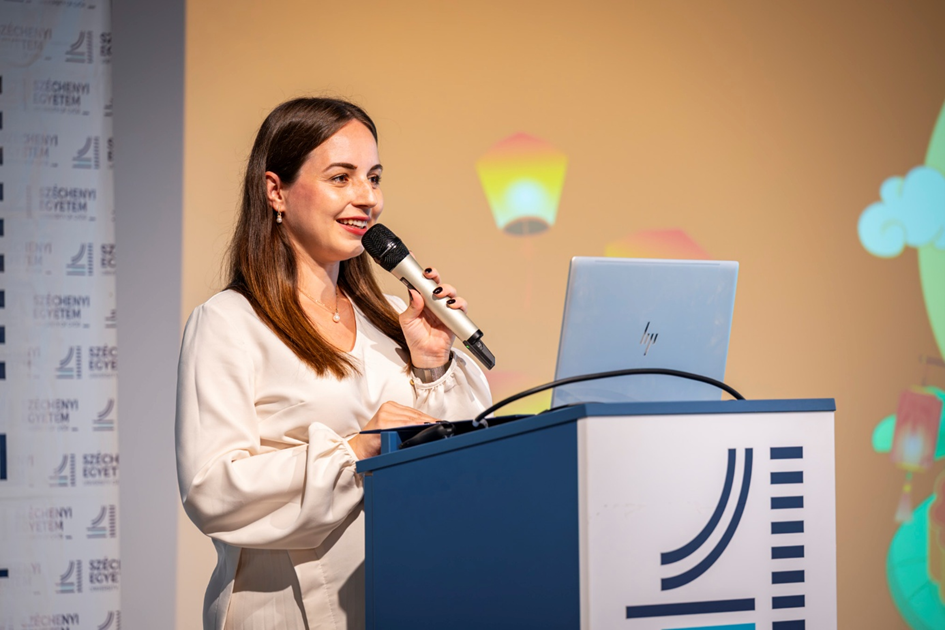
Réka Orosz-Barczi, Hungarian Director of the Confucius Institute at Széchenyi István University during the Mid-Autumn Festival (Photo: Máté Dudás).
In his welcoming address, Chinese Director Dr Yu Fengping highlighted the institute’s role as an intercultural bridge and emphasised the potential for deeper cooperation between the two universities.
„The Confucius Institute is much more than a place to learn a language. It is a window through which two cultures can get to know and understand each other more deeply, and a garden where the friendship between our two peoples is carefully nurtured. We look forward to further strengthening cooperation between Széchenyi István University and Jiaxing University in student and staff exchange programmes, joint research, and double degree programmes,” he stated.
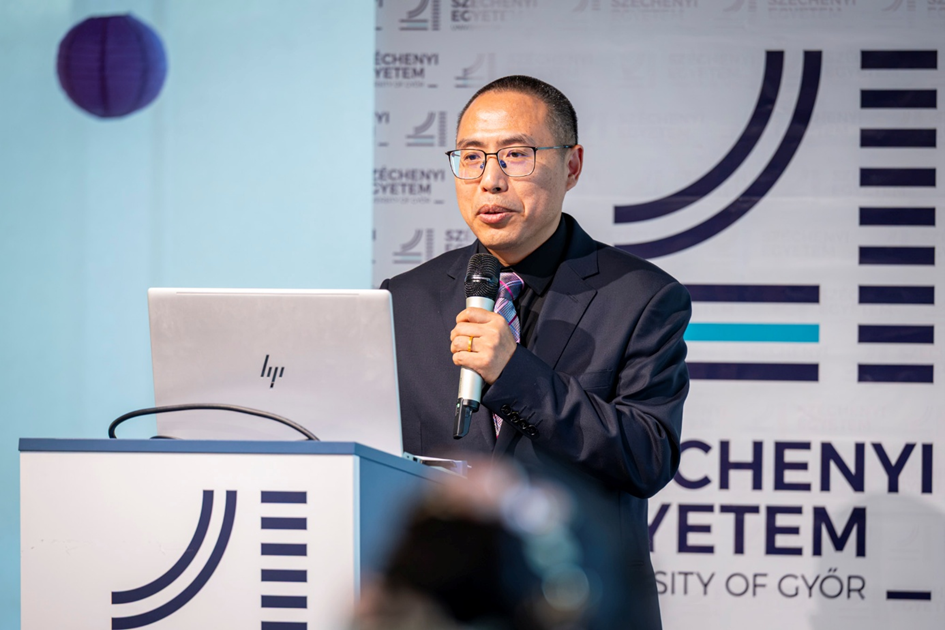
Dr Yu Fengping, Chinese Director of the Confucius Institute at Széchenyi István University, emphasised the importance of intercultural dialogue and university cooperation in his opening remarks (Photo: Máté Dudás).
During the event, Dr Huang Zhe, a Chinese language instructor at the institute, delivered a presentation on the history and traditions of the Mid-Autumn Festival. Her talk covered mooncake traditions, lanterns, lantern riddles, and moon-gazing customs.
„The Moon Festival is one of China’s most important traditional holidays. The full moon symbolises family unity. It is not just about mooncakes and lanterns, but about a simple desire: to be together with the people who matter most. Whether we are in China or Hungary, no matter the distance, we look up at the same full moon, and it connects us,” she noted.
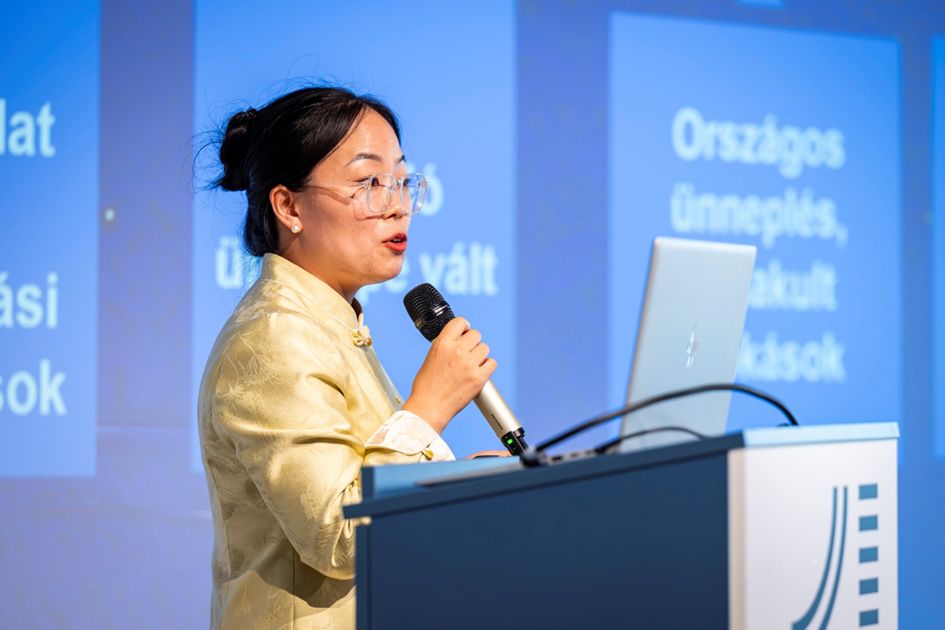
Dr Huang Zhe, Chinese language instructor at the Confucius Institute of Széchenyi István University, presents the history and traditions of the Mid-Autumn Festival (Photo: Máté Dudás).
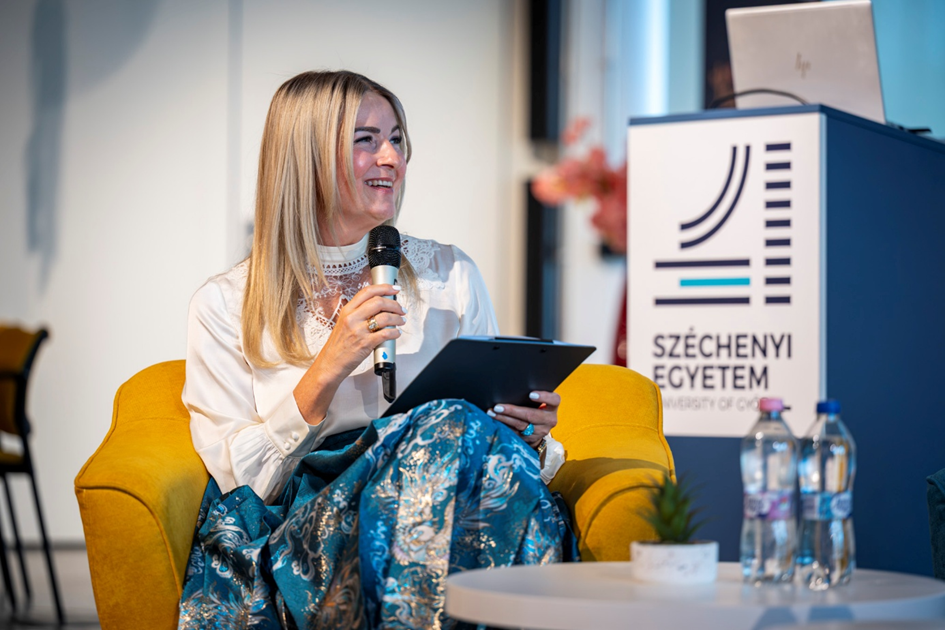
As part of the programme, a roundtable discussion titled „Chinese Language and Culture Through Personal Experiences” allowed participants to share their own stories. Traditional music and poetry also featured prominently in the afternoon lineup: following an instrumental performance, international students from China at Széchenyi István University and the institute’s language instructors staged a choral poetry reading.
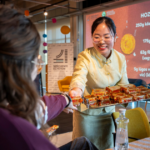
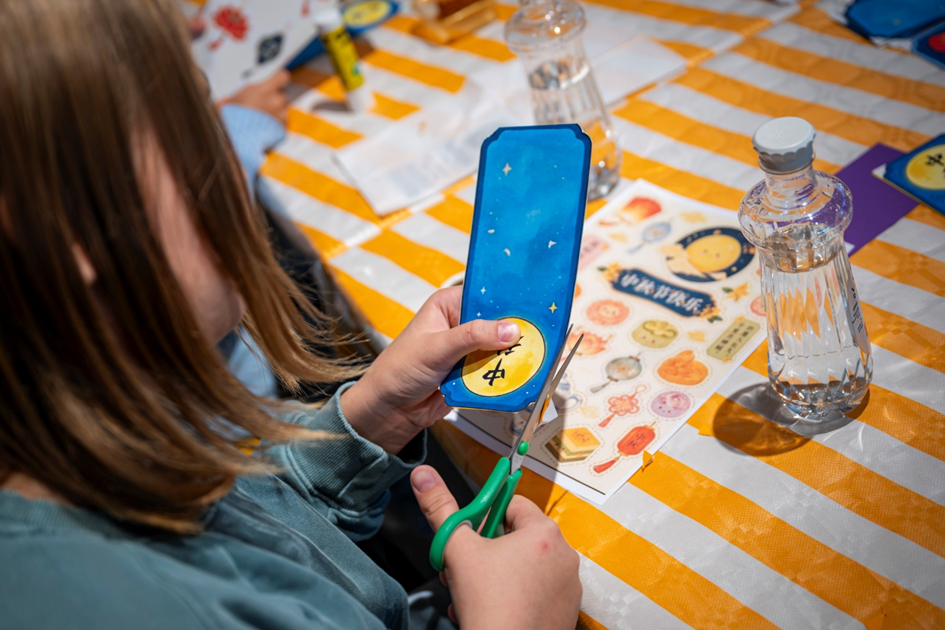
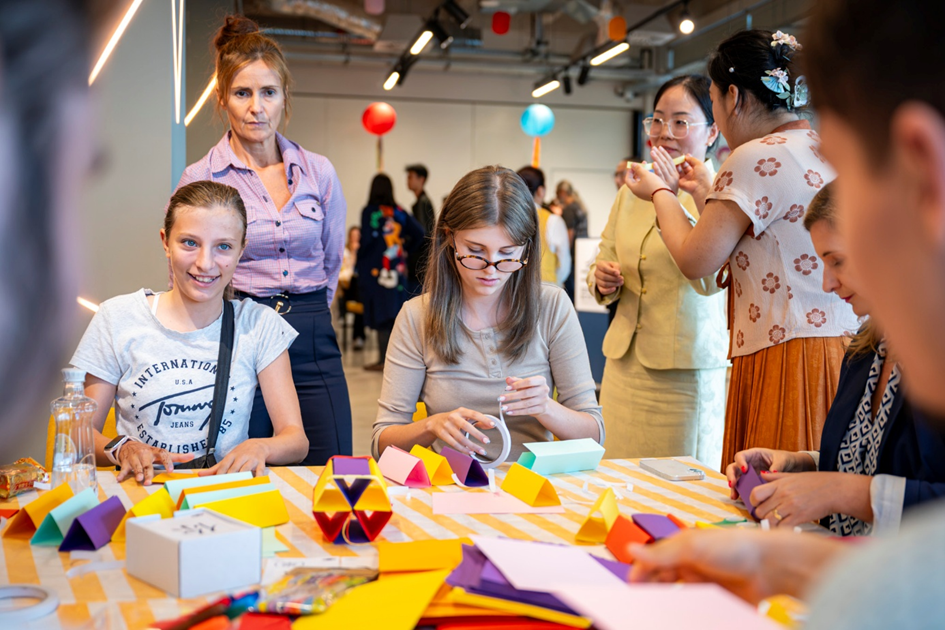
Visitors were also able to actively participate by tasting traditional mooncakes and crafting their own lanterns and Mid-Autumn-themed bookmarks. Keeping families in mind, organisers provided a dedicated children’s corner featuring colouring activities and playful toy mooncake-making for the youngest attendees.
Gallery: