
Created: 2025.12.15. 12:20
A conference titled “Behavioural Addictions Symposium: Artificial Intelligence (AI) and Beyond” was recently held in Istanbul, jointly organised by the Turkish non-profit organisation Green Crescent (Yeşilay) and Eötvös Loránd University (ELTE) in Budapest. The event provided the first international platform dedicated to the topic of AI addiction. Dr Attila Szabó, Professor at Széchenyi István University – who is listed among the top two per cent of the world’s most cited researchers based on both annual and career-long impact, as measured by the Stanford lists – served as a plenary speaker at the prestigious conference, further strengthening the scientific visibility of the institution in Győr.
Green Crescent (Yeşilay) is one of Turkey’s most prominent public health organisations, working for around 105 years on issues related to alcohol, tobacco, gambling, internet and behavioural addictions. The country’s largest addiction-prevention organisation recently held an international conference with the aim of examining new forms of behavioural and digital addictions from a global perspective, with special emphasis on the use of artificial intelligence. Dr Attila Szabó, Professor at ELTE and Széchenyi István University, was invited as a plenary speaker to the programme jointly organised with Eötvös Loránd University.
The first international forum dedicated to the relationship between artificial intelligence and addiction focused on problematic behavioural addictions such as AI-use, pornography-use, eating behaviour, gambling addiction, internet gaming disorder, compulsive sexual behaviour in the context of trauma, smartphone addiction and even exercise addiction. A key theme of the symposium was the addictive mechanisms of digital technologies and the public health risks associated with them.
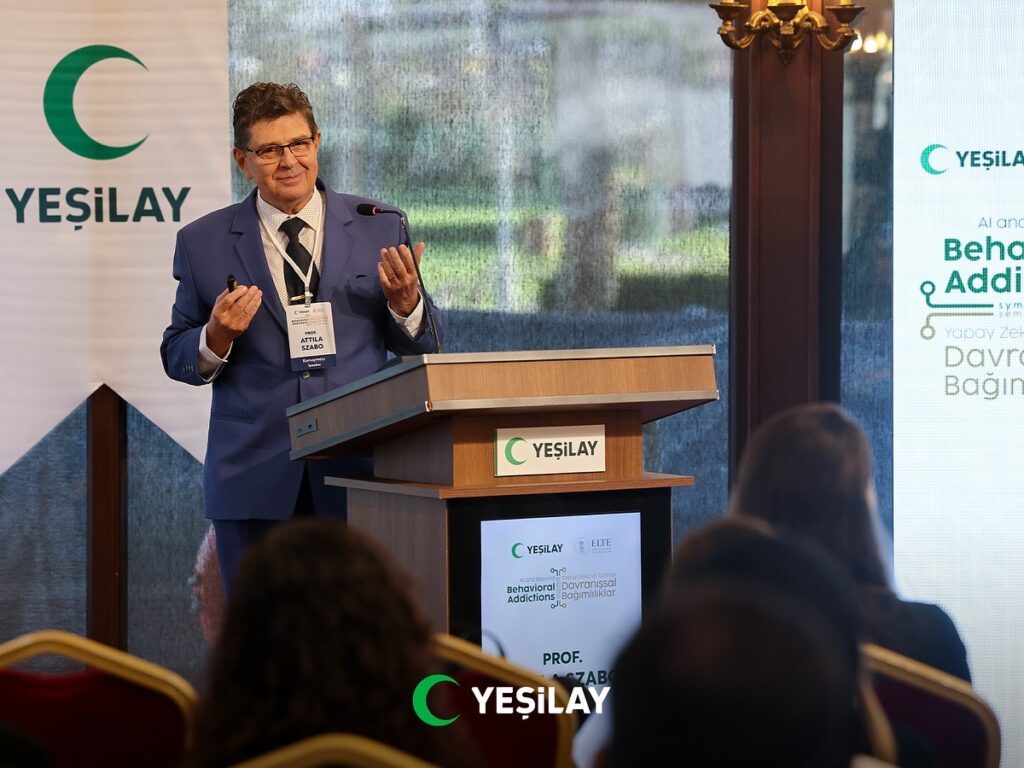
In his plenary lecture, Dr Attila Szabó, a recognised expert in the field, pointed out that users are not drawn to the technology itself, but to the personalised, rewarding and emotionally engaging experiences made possible by artificial intelligence. He explained that problematic use of technology can activate mechanisms similar to those involved in other behavioural addictions, such as unpredictable rewards, the illusion of social connection, escapism, or the overactivation of dopamine-driven reward circuits. The researcher also addressed how the symptoms of excessive use can be recognised: increasing time and mental preoccupation may be accompanied by social and work-related difficulties, as well as signs of “withdrawal” when AI use is restricted. He emphasised that excessive use of artificial intelligence can easily develop into a behavioural addiction, making prevention, education and research in this area particularly important.
Representing Green Crescent at the event were President Dr Mehmet Dinç, Vice President Prof Dr Muhammed Tayyib Kadak and Board Member Dr Ayşe Sena Sezgin. In addition, members of the scientific council, numerous addiction specialists and researchers, as well as distinguished representatives of Turkish and international higher education institutions, enhanced the quality of the programme.