
Created: 2026.04.27. 08:42
Within the framework of an international collaboration, the objectives and achievements to date of the GreenTech Plus European Union project were presented at the Albert Kázmér Faculty of Agricultural and Food Sciences of Széchenyi István University. The programme, implemented with the participation of Austrian and Hungarian partners, focuses on how sustainability and digitalisation considerations can be simultaneously integrated in agriculture and related sectors.
A key objective of Széchenyi István University is to promote environmental sustainability, which is also reflected in its education, research and development activities. This ambition is further strengthened by the international cooperation under which the GreenTech Plus project has been launched at the Albert Kázmér Faculty of Mosonmagyaróvár. Co-financed by the Interreg VI-A Austria–Hungary Programme 2021–2027, the initiative aims to support the dissemination of sustainable and advanced technological solutions in the border region, as well as the development of the knowledge required for their application in agriculture, the food industry and related sectors. Austrian and Hungarian partners are involved in the implementation, including Pannon Novum, as well as, on the Austrian side, the BFI Wien adult education centre in Vienna and the University of Applied Sciences Burgenland.

Domestic and international experts, researchers and students also took part in the opening conference of GreenTech Plus (Photo: Gergely Nagy)
The opening conference was hosted in recent days by the Mosonmagyaróvár-based Albert Kázmér Faculty of Agricultural and Food Sciences of Széchenyi István University. Dr Tamás Tóth, Dean and Research Professor, noted that their activities focus, among other areas, on precision agriculture, agricultural digitalisation and sustainability. “Such international initiatives provide an opportunity for education, research and practice to be more closely interconnected,” he emphasised.
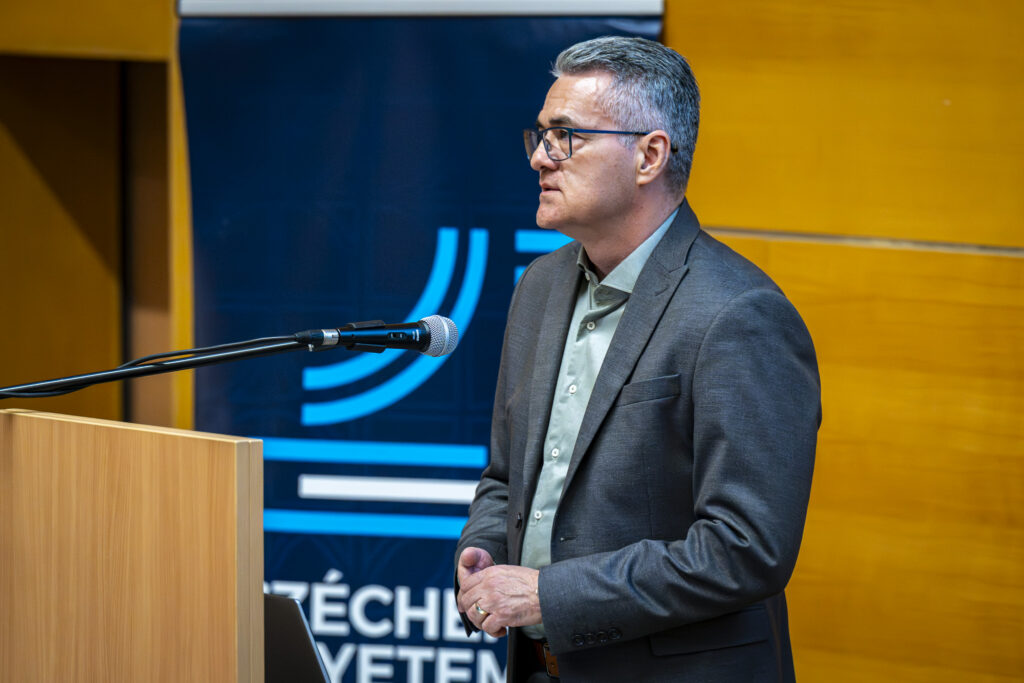
At the event, Dr Tamás Tóth, Research Professor and Dean of the Albert Kázmér Faculty of Agricultural and Food Sciences at Széchenyi István University, welcomed participants and presented the Faculty’s educational and research directions (Photo: Gergely Nagy)
The professional content of the project was presented by Dr Gergely Teschner, Associate Professor at the Department of Biological Systems and Precision Technology. “Technological solutions alone are not sufficient: the coordination of different systems and the development of the necessary competences are equally important tasks. To this end, training programmes, mentoring processes and professional consultations are being implemented to support the practical application of advanced solutions,” he underlined.
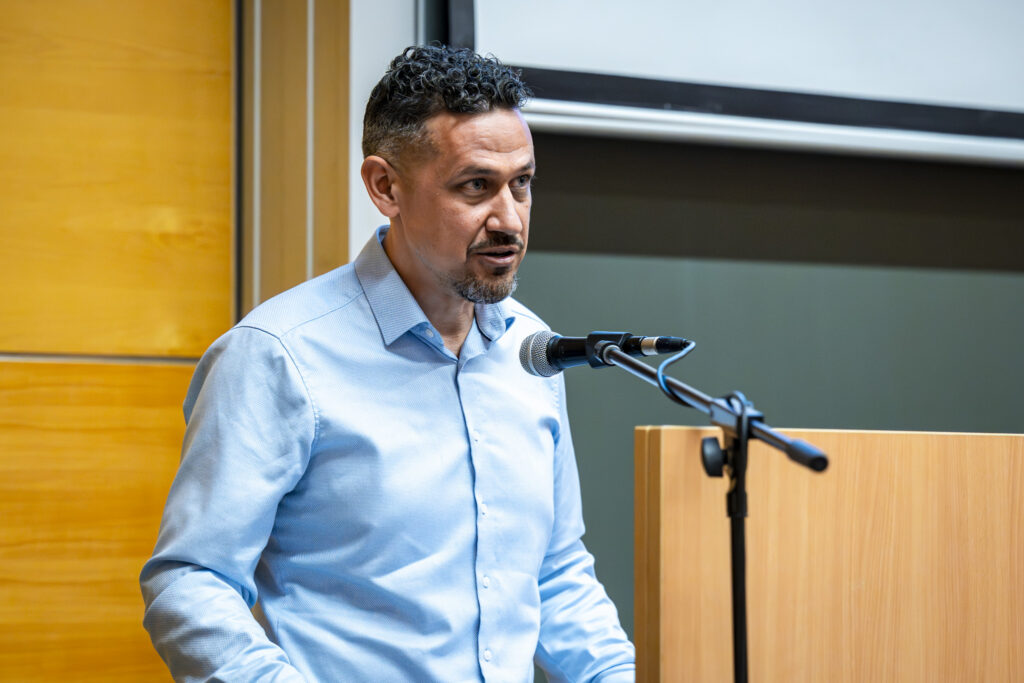
Dr Gergely Teschner, Associate Professor at the Department of Biological Systems and Precision Technology of the Albert Kázmér Faculty of Agricultural and Food Sciences, presented the main elements of the initiative and the planned development directions as the project’s professional lead. (Photo: Gergely Nagy)
As part of the initiative, a multilingual online platform will also be developed to facilitate the sharing of training materials, digital tools and best practices, while also providing networking opportunities for stakeholders. In addition, a central component is the establishment of a cross-border so-called Living Lab on the Austrian side, which will function as a testing and development site. At this location, the latest technological solutions will be tested in real-world environments – including in the fields of artificial intelligence, robotics, and drone- and sensor-based systems – while researchers, educators and industry stakeholders work together on their application. Within the framework of the project, an implementation framework document and action plan will also be developed, providing guidance for the application of sustainable and advanced solutions, as well as mapping financing and partnership opportunities.
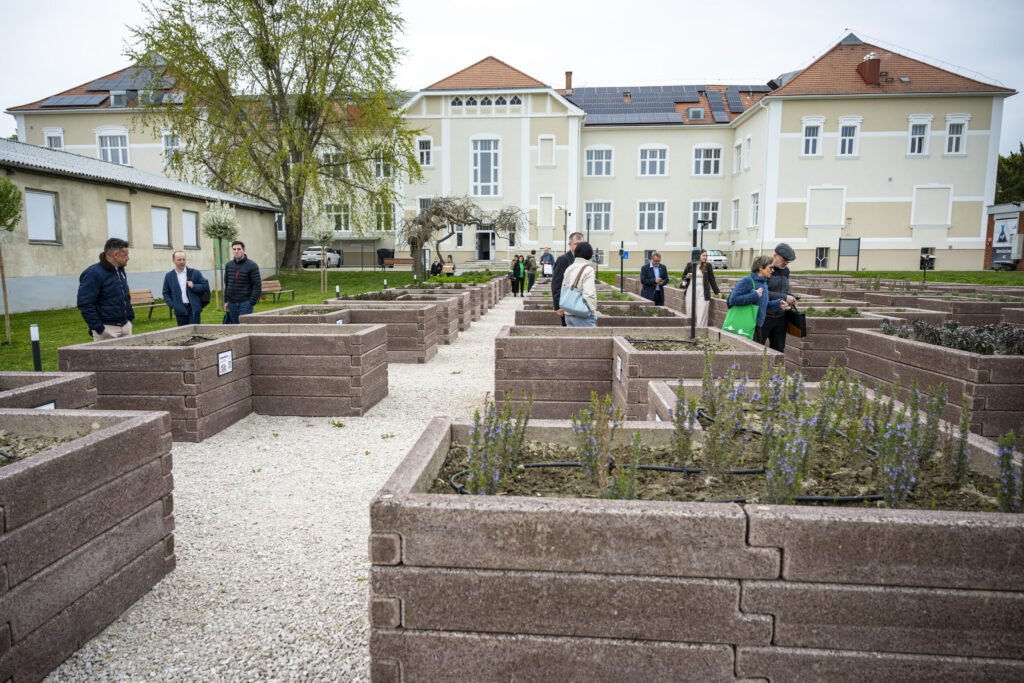
Participants of the opening event also visited the smart garden of the Albert Kázmér Faculty of Agricultural and Food Sciences at Széchenyi István University, which supports practice-oriented education and research in the field of precision agriculture (Photo: Gergely Nagy)