Created: 2025.12.12. 10:32
Kapu Tibor, research astronaut, and his trained research astronaut colleague, Gyula Cserényi, personally visited Széchenyi István University, where they shared their mission experiences with more than a thousand young people. They emphasised that the institution, which is increasingly connected to space research, was an excellent venue for the meeting.
This year was of historic significance for Hungary’s space activities, as in the summer, a Hungarian astronaut returned to space for the first time in 45 years as part of the HUNOR (Hungarian to Orbit) Astronaut Programme. Tibor Kapu spent eighteen days on the International Space Station, where he tested space research instruments and carried out numerous experiments. One of these was linked to Széchenyi István University: during the programme held on 9 July at the Mobilis Interactive Experience Centre, sixteen primary and secondary school pupils were able to ask him questions via live radio contact. “Over the past months I have been asked countless questions, but the most creative ones were undoubtedly asked by the students here,” the astronaut recalled.

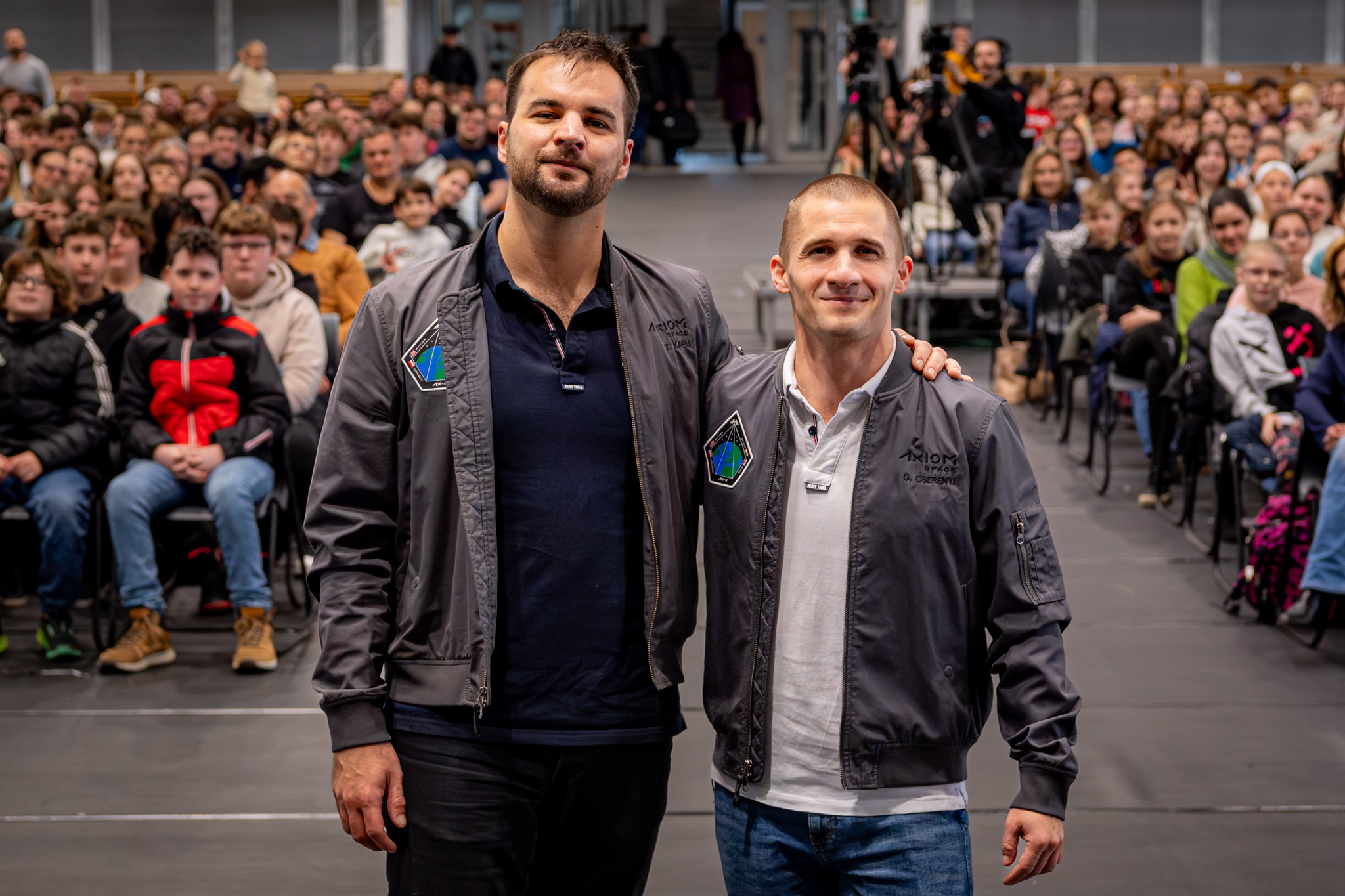
Kapu Tibor and Gyula Cserényi, research astronauts, at Széchenyi István University. (Photo: András Adorján)
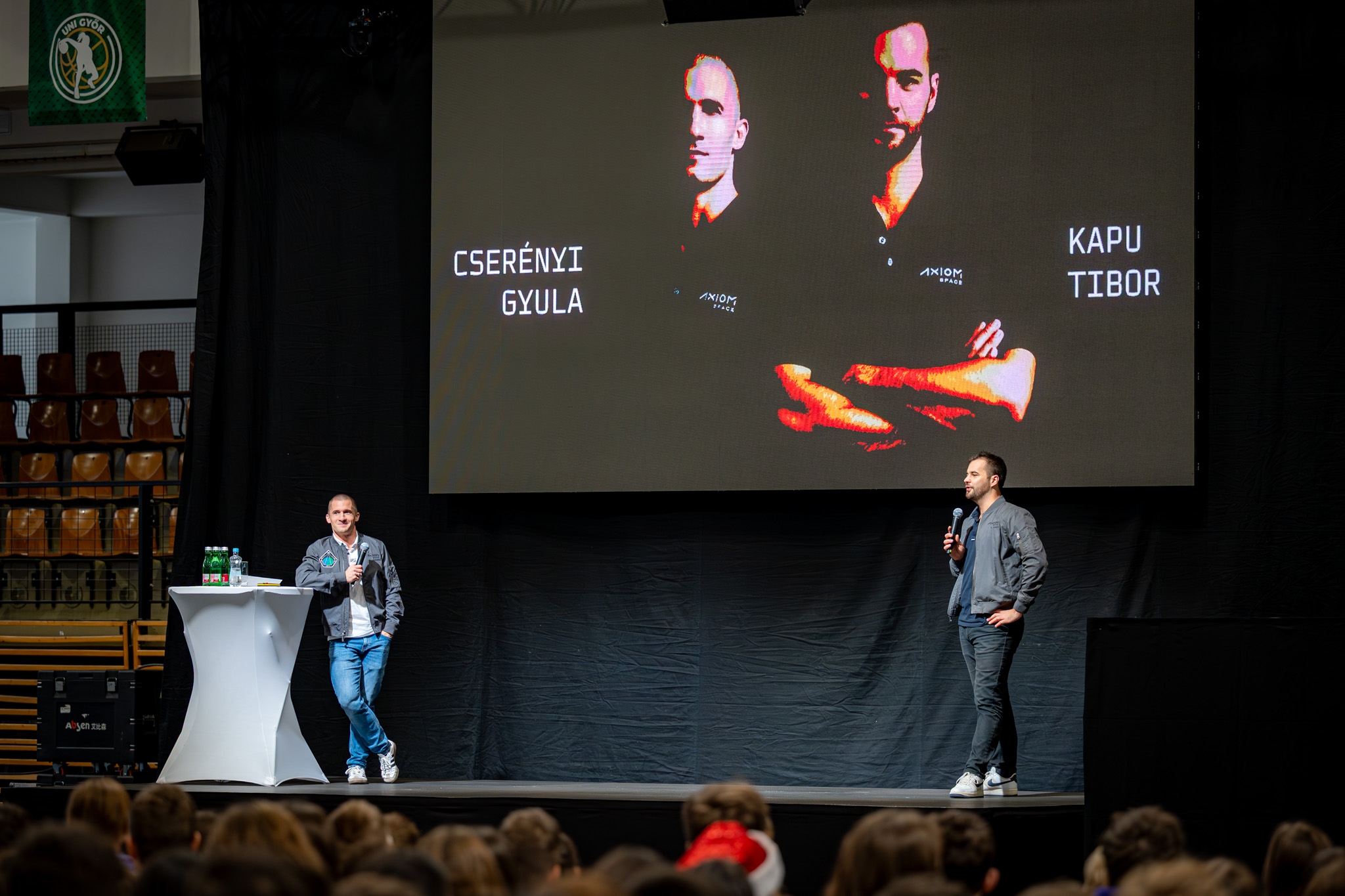
Exactly five months later, on 9 December, Tibor Kapu and his trained research astronaut colleague Gyula Cserényi visited the institution in Győr in person, where they met around one and a half thousand primary school pupils, secondary school and University students, first at the University Sports Hall in the morning and then at Mobilis in the afternoon. In their presentation, they reflected on their training period and the spaceflight itself. “We spent nearly three years back in the school desk, and our studies were complemented with a huge amount of training. We had to acquire many different skills and perform well in extreme situations,” explained Gyula Cserényi. Tibor Kapu added that they had to learn to divide their attention in order to carry out several tasks simultaneously. In their talk, they spoke about the physical load experienced during acceleration, aerobatic exercises, land and water survival training, and the simulation of weightlessness. They also recalled a six-day exercise during which they were placed in an unknown location, hermetically sealed off from the outside world, with decreasing amounts of food and sleep to prove their psychological resilience.

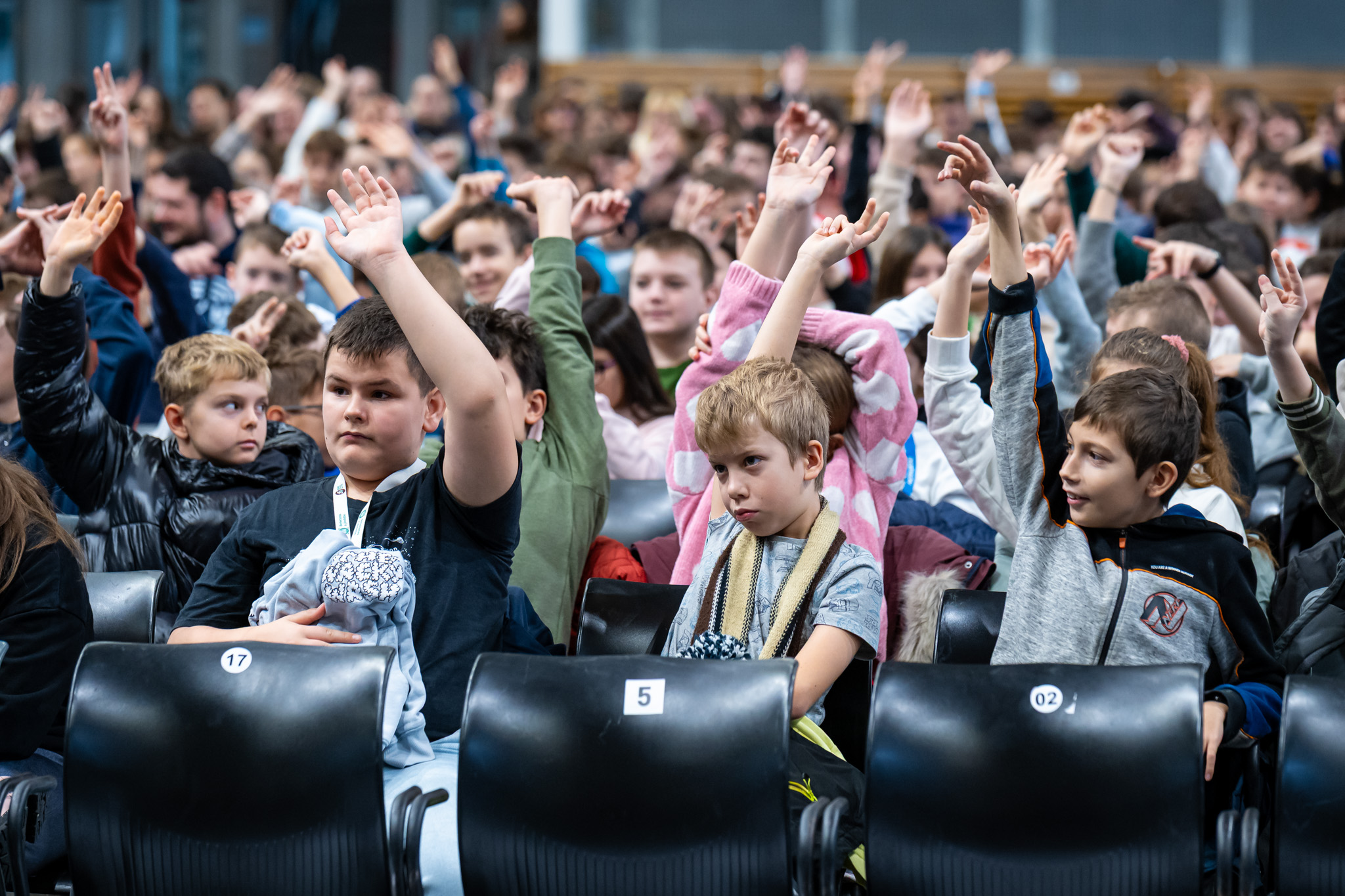
Around 1,200 young people listened to the astronauts’ presentation in the University Sports Hall (Photo: András Adorján)
“After our selection, we spent a year in the United States, where the training of NASA, SpaceX and Axiom Space taught us how to eat, sleep and move on the International Space Station, how we travel there from Earth and how we return,” said Gyula Cserényi. Tibor Kapu recalled the longer-than-planned quarantine and then the moments of launch. “The rocket is a 70-metre-high tower that burns 400 tonnes of fuel in the minutes of lift-off. Meanwhile, we were sitting inside a small cabin, experiencing incredible forces and effects. It took more than a day to reach the space station, which is a laboratory orbiting Earth, and where I carried out 25 different Hungarian experiments,” he noted. He recalled several of these, including when he grew peppers, radishes and wheat in space.

In the afternoon, the Mobilis Interactive Experience Centre also filled with visitors eager to hear the conversation with the two research astronauts (Photo: Máté Dudás)
The astronaut shared many personal experiences with the audience, such as that sleeping in space is as comfortable as being surrounded by a perfect memory-foam mattress. “When you’re floating, you don’t need shoes. I especially enjoyed that I didn’t have to wear shoes for twenty days,” he said jokingly. He then used his own videos and photographs to show how he ate and moved in space, and what Earth and Hungary look like from an altitude of 400 kilometres. “The space station orbits the planet in 90 minutes, so we see the night-time and daytime Earth for 45 minutes each, a total of 16 times in 24 hours,” he explained, highlighting the uniqueness of the space perspective.
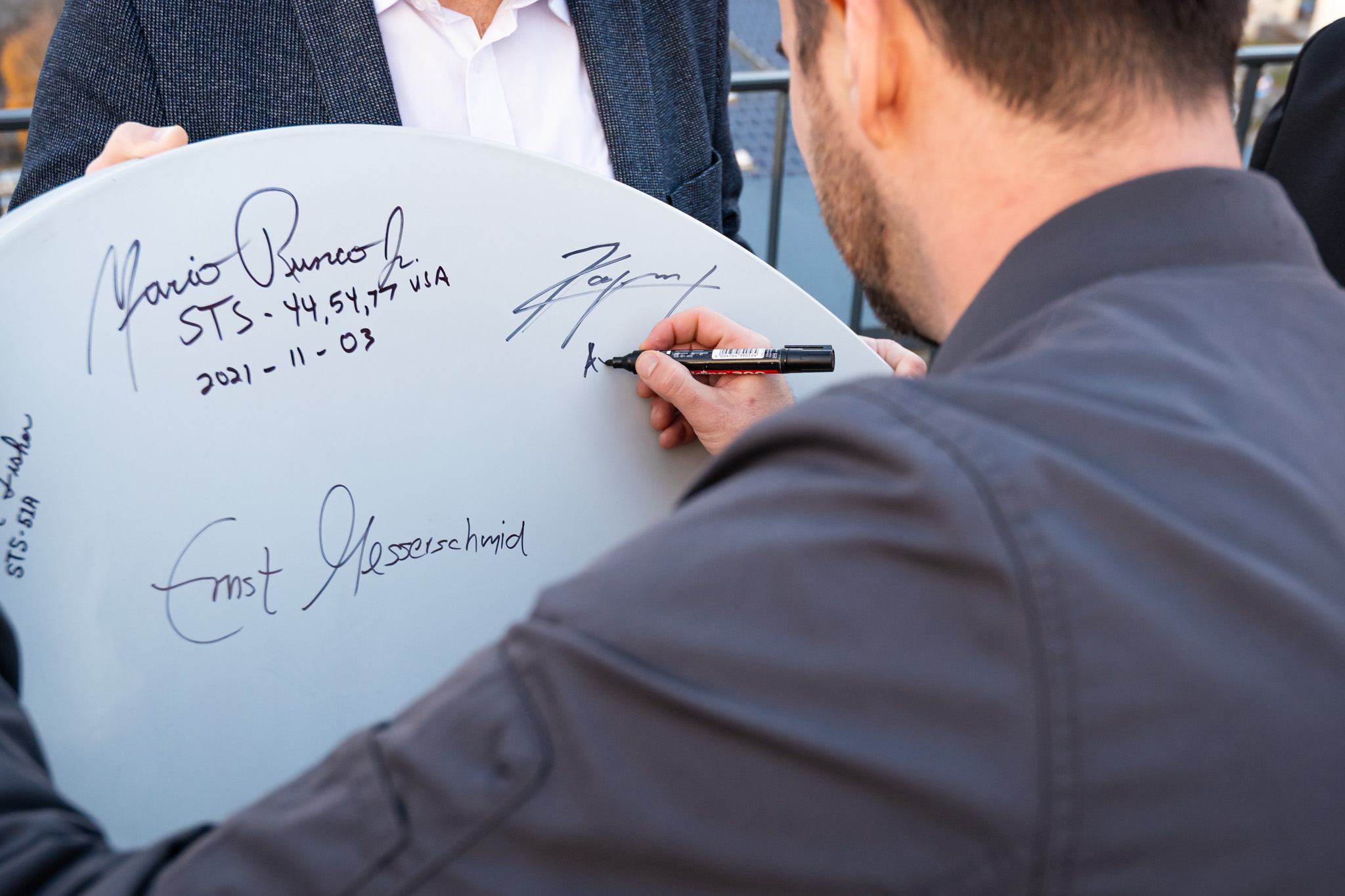
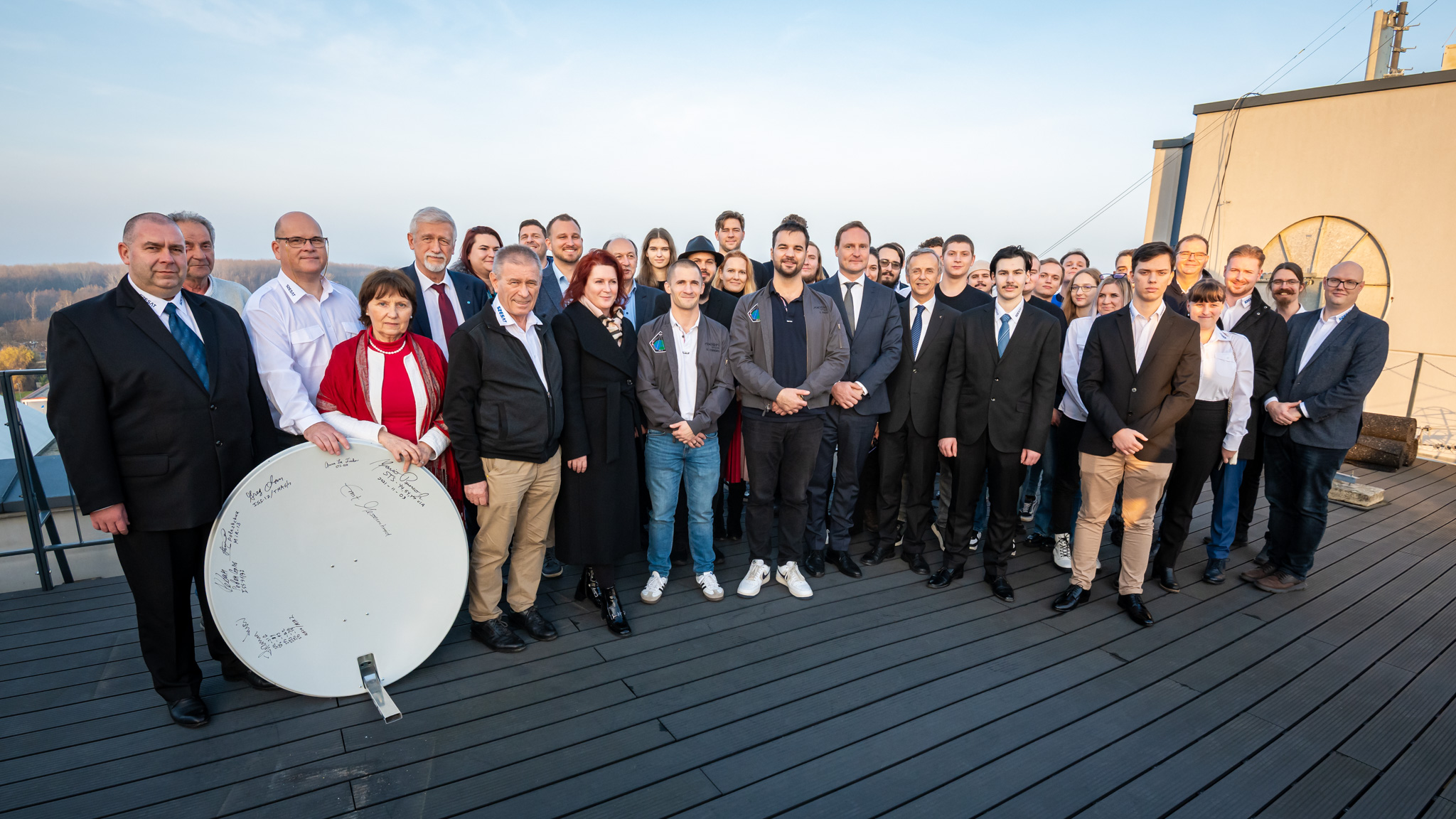
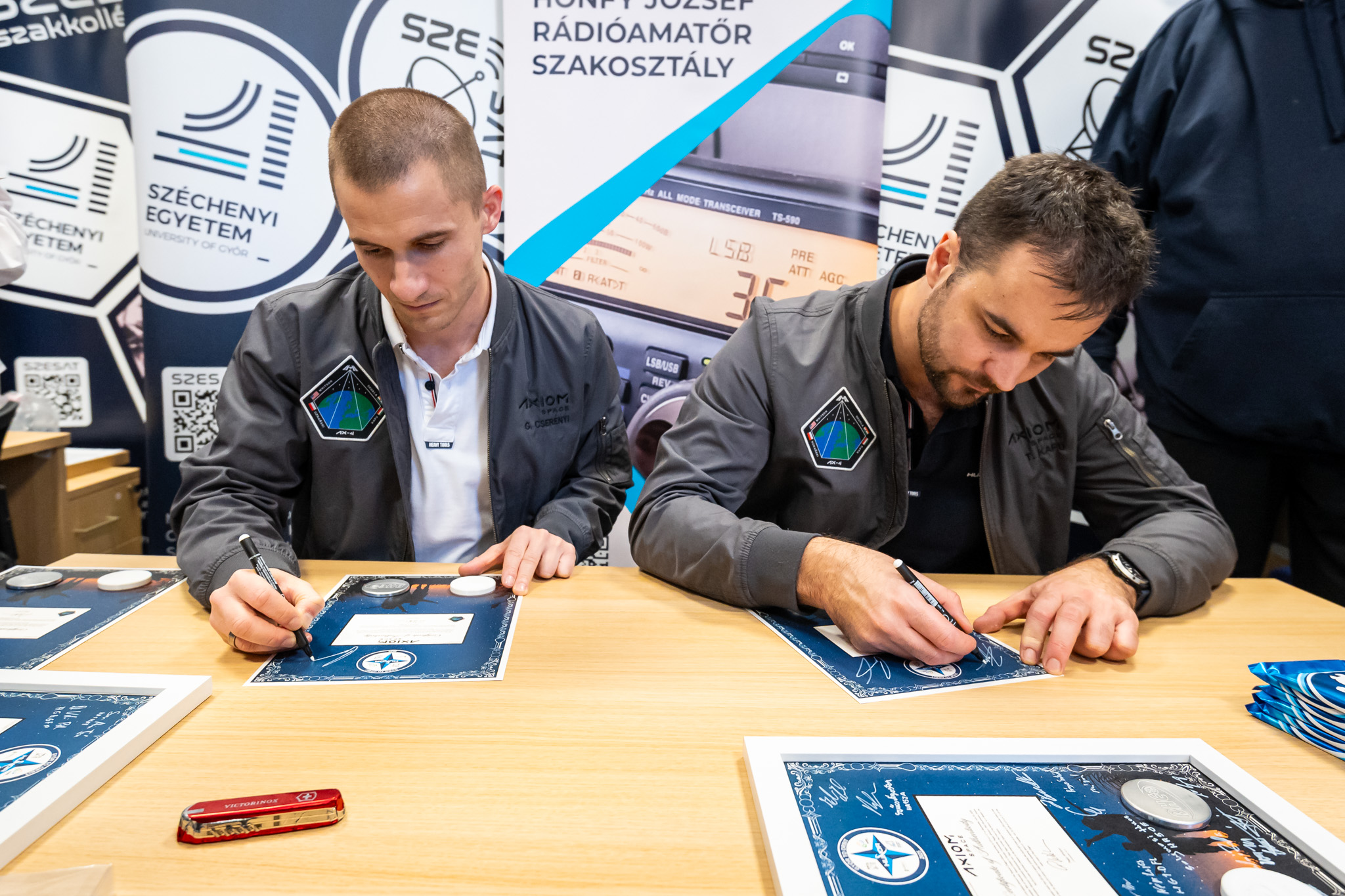
Tibor Kapu and Gyula Cserényi also visited the Space Telecommunications Laboratory of Széchenyi István University, where they signed an antenna that has already been signed by several astronauts (Photo: Máté Dudás)
Following the presentation, Tibor Kapu stated that Széchenyi István University was an excellent venue for the meeting, as space research is gaining increasing emphasis at this technology-focused institution. He added that students interested in this field would be in good hands if they chose the university in Győr, as they could take an active role in projects such as the space equipment development of the SZESAT College for Advanced Studies. Notably, the twin satellite developed by students from Győr recently entered Earth orbit as part of the Hunity programme, led by the Budapest University of Technology and Economics.
“Space-related research covers almost every field of science—from law, through engineering and technological development, to psychology and even space economics. As the University of Győr embraces many areas of science, students can approach questions related to space from various directions according to their professional interests. I encourage young people to boldly engage with these topics, which will significantly shape our future,” the astronaut concluded.
Gallery (Photos: András Adorján, Máté Dudás):