
Created: 2025.11.26. 14:52
Dr Gábor Kecskés, Associate Professor, and Dr Gábor Sulyok, lecturers of the Deák Ferenc Faculty of Law and Political Sciences at Széchenyi István University, have recently been elected as members of the scientific committees on space law and artificial intelligence of the International Law Association, a London-based scholarly society with a long tradition.
The International Law Association (ILA) was founded in Brussels in 1873 to promote the study, development and respect of international law. Over the decades it has grown into a global organisation with more than sixty national branches and around five thousand members. Two lecturers of the Department of International Law and European Law at Széchenyi István University were recently invited to join newly established specialist committees, following a nomination by the Hungarian branch, one of the oldest branches of the association, founded in 1923. Dr Gábor Kecskés has become a member of the committee dealing with artificial intelligence and technology law, while Dr Gábor Sulyok has joined the committee focusing on the legal aspects of reducing space debris. Both fields are strategic priorities for the Győr-based institution, which actively promotes interdisciplinary research in these areas.
According to Dr Gábor Kecskés, the committee on artificial intelligence offers an opportunity to discuss the legal implications of AI-related issues that affect states and the broader international community, as well as to develop various recommendations. As a researcher and lecturer, this provides him with a unique opportunity to contribute to shaping the regulation of rapidly advancing technology. “Our University is at the forefront of innovation, and I am particularly interested in technological developments and the regulation of artificial intelligence in general. Based on my professional experience of recent years, I am firmly convinced that the regulatory tasks ahead of us can be carried out in a more realistic and effective way through mutual understanding and cooperation between scientific disciplines,” he noted.
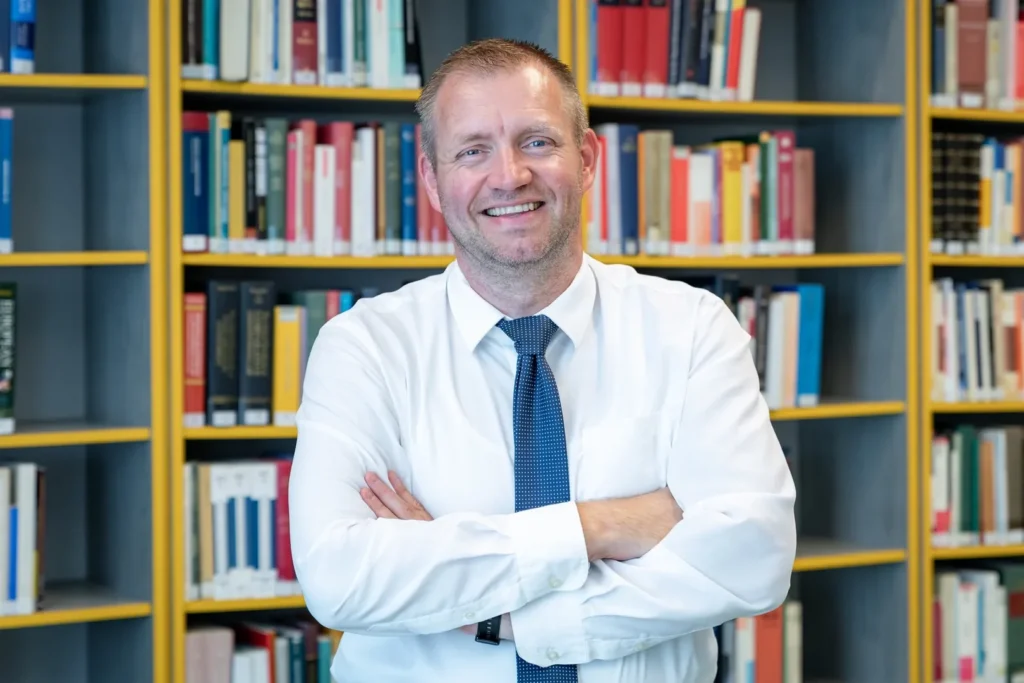
According to Dr Gábor Sulyok, the exploration and use of outer space is essential for the development of human civilisation, yet the amount of space debris poses a serious threat to the sustainability of such activities. Addressing the issue requires urgent and multifaceted international cooperation; therefore, he is encouraged that one of the most prestigious scientific societies in international law now assigns particular importance to this problem. “If, as a member of the committee on reducing space debris, I can contribute in any way to international efforts, I will consider it a major achievement of my academic career. It is particularly reassuring that I can carry out my committee work as a lecturer at a forward-thinking university where a dedicated interdisciplinary research centre has been established to study the technical and legal aspects of space activities,” he stressed.
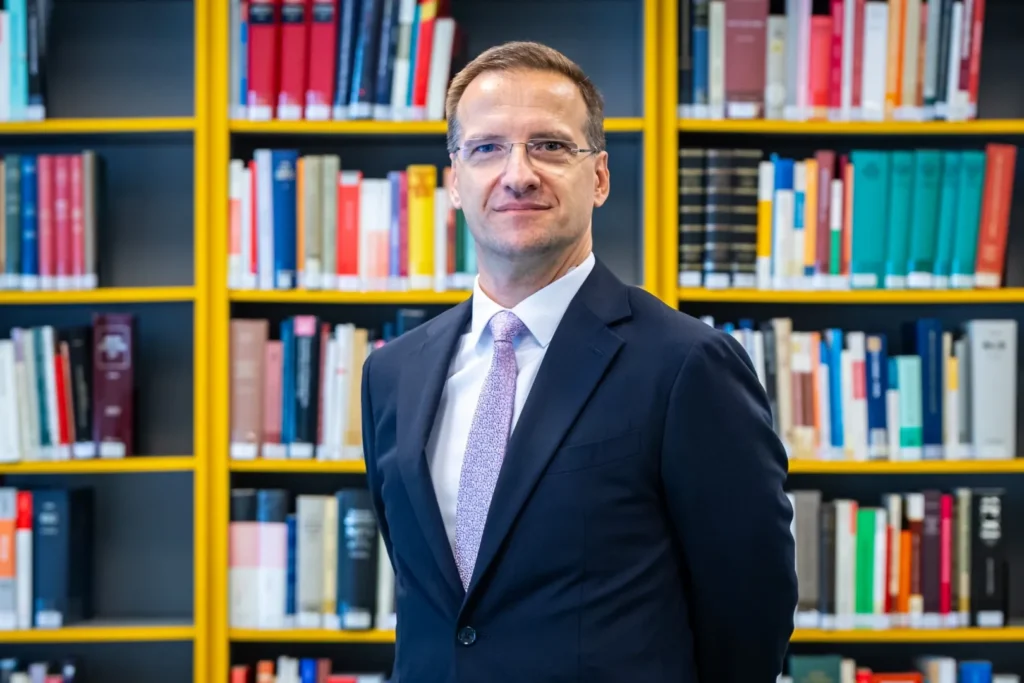
The International Law Association, as a non-governmental organisation, holds consultative status with numerous specialised agencies of the United Nations. In achieving its scholarly objectives, a key role is played by its scientific committees, which focus on topical issues of international law and prepare reports and recommendations for the association and the international academic community.