
Created: 2026.09.11. 21:03
Alongside diplomacy, education, science, culture and the arts also play a crucial role in building peace – this was the central theme of the international conference took place at the Hungarian Academy of Sciences on 7 September. At the event, held in connection with the UN’s International Day of Peace on 21 September, Széchenyi István University was represented by Professor Eszter Lukács, the university’s Vice-President for International Affairs and Strategic Relations and a member of the Executive Board of the United Nations Association of Hungary. International students from the university also took part in the forum.
The United Nations Association of Hungary, the University of Public Service, the Hungarian National Commission for UNESCO, the Institute for Cultural Diplomacy in Berlin, the Hungarian Academy of Sciences and Women4Diplomacy International organised the large-scale conference entitled “UNESCO’s ‘Path to Peace’ Programme: Dialogue and Action for Tolerance and Intercultural Understanding”. The event centred on the theme of this year’s UN International Day of Peace: „Invest in Peace: For Everyone, Everywhere, Every Day.”
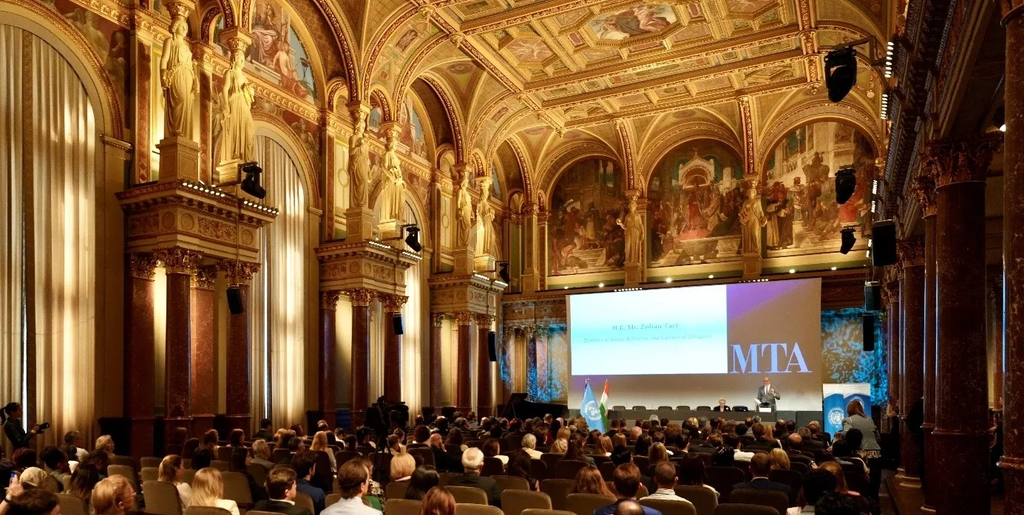
The international conference was held in the ceremonial hall of the Hungarian Academy of Sciences.
The participants were welcomed by Ambassador Katalin Bogyay, President of the United Nations Association of Hungary and the Hungarian National Commission for UNESCO. She was recently elected President of the World Federation of United Nations Associations. The new President of the organisation, which brings together national UN associations from more than a hundred countries, has close professional ties to Széchenyi István University: last year, the University recognised her work by awarding her an honorary doctorate. In recent years, she has taken part in numerous joint programmes linked to UN values, sustainability and international dialogue.
In her speech, Katalin Bogyay emphasised the importance of preventive diplomacy, noting that most conflicts stem from mutual misunderstandings between the parties, which is why meaningful dialogue and listening to the other side are needed before tensions escalate. She also spoke about the importance she attaches to involving young people – including university students – in her work and ensuring that their voices are heard within the work of the UN.
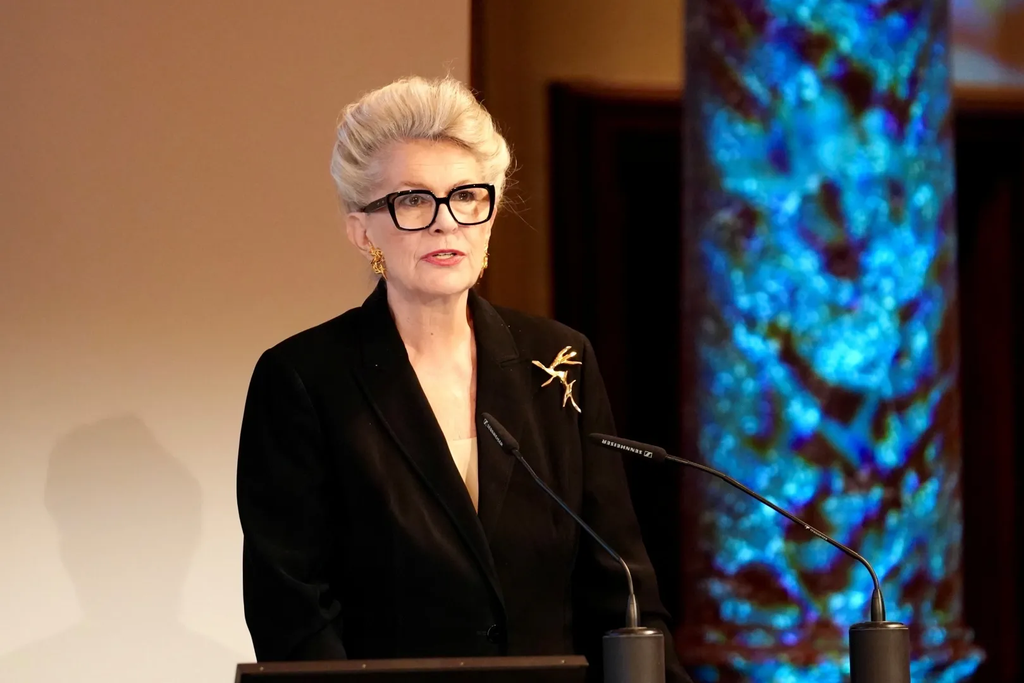
Ambassador Katalin Bogyay, President of the United Nations Association of Hungary and the Hungarian National Commission for UNESCO, and Honorary Doctor of Széchenyi István University
In his opening address, Mihály Pósfai, President of the Hungarian Academy of Sciences, highlighted that peace is not merely the absence of war, but a state built through law, culture and education. He emphasised that whilst science cannot negotiate a ceasefire, it can help uncover the facts, expose manipulation, maintain channels of cooperation, and help societies to base their decisions on knowledge rather than fear. In this sense, scientific cooperation is itself a form of peacemaking.
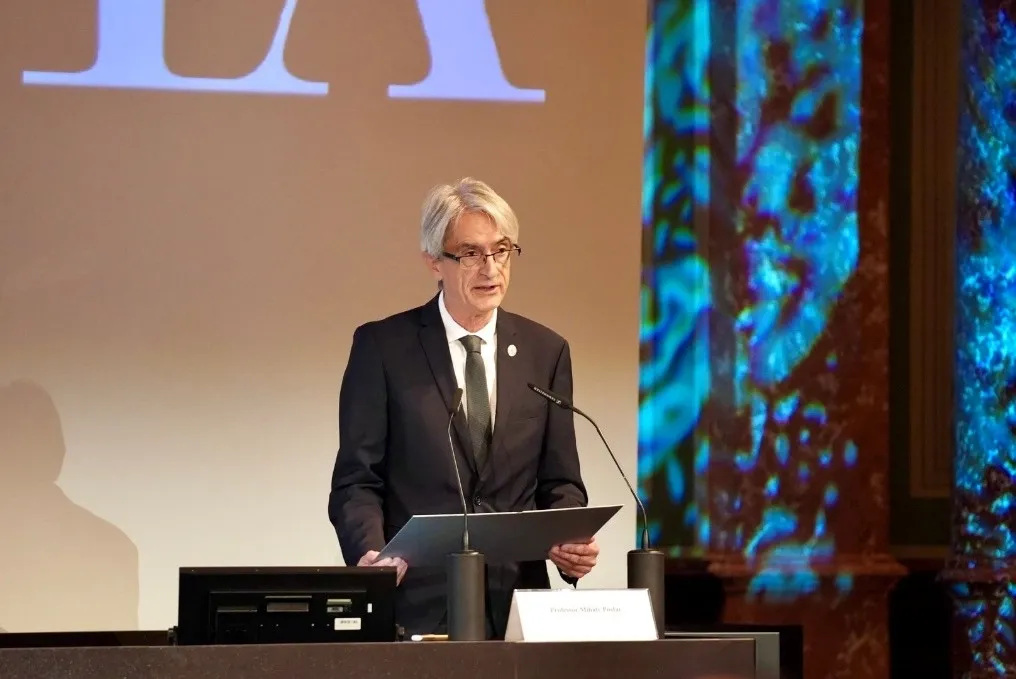
Mihály Pósfai, President of the Hungarian Academy of Sciences
At the conference, Zoltán Tarr, Minister for Social Relations and Culture, emphasised that dialogue should not be the final step in bringing a crisis to an end, but rather one of the first steps in preventing conflict. He added that culture can be regarded as a form of “soft power” that can help to establish and maintain peace.
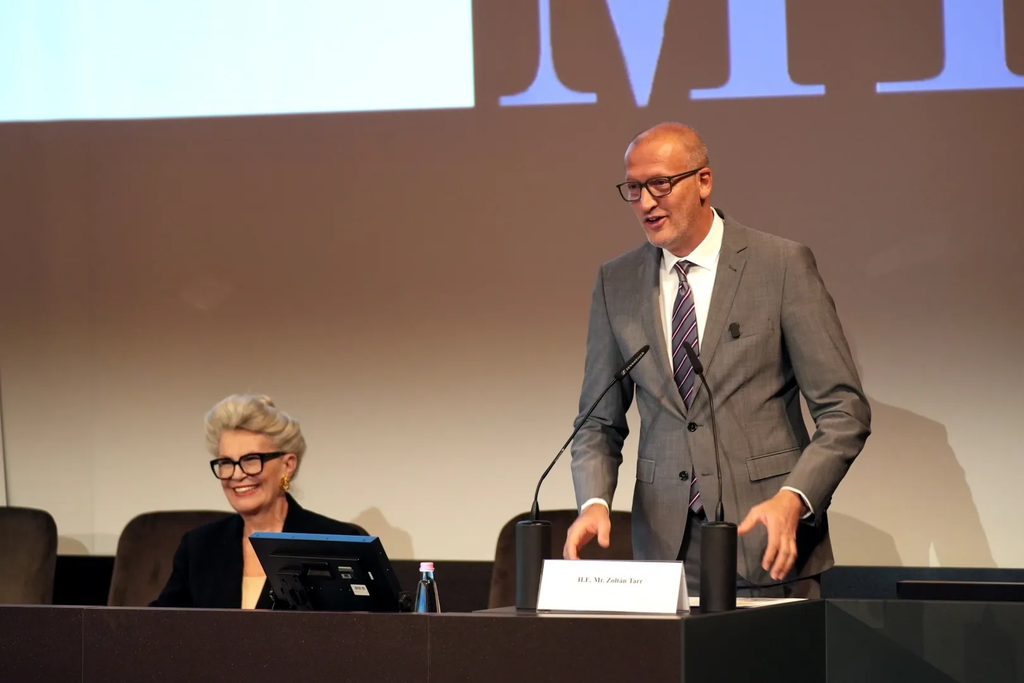
Zoltán Tarr, Minister for Social Relations and Culture
Ambassador Khondker M. Talha, President of the 43rd Session of the UNESCO General Conference, focused on the potential of art to foster peace. “Can a work of art stop a war? Perhaps not. But it can be the first step towards peace,” he stated. He added that dialogue can begin not only at the negotiating table, but: it can also start with a painting, a melody, a performance or an image. In his view, political and economic agreements do not build trust between people in themselves; meanwhile artists, scientists and educators can create spaces where people have the opportunity to meet, exchange ideas and encounter new perspectives.
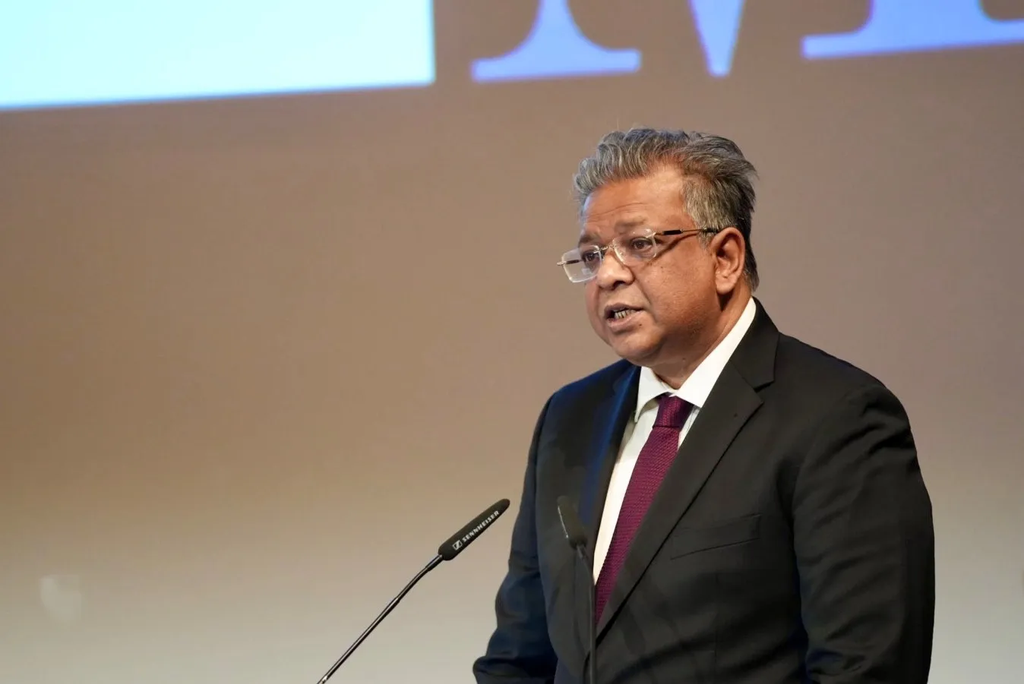
Ambassador Khondker M. Talha, President of the 43rd Session of the UNESCO General Conference
The keynote speaker at the conference was Hedva Ser, a sculptor recognised as a UNESCO Artist for Peace and a UNESCO Goodwill Ambassador for Cultural Diplomacy. A defining symbol of her work is the Tree of Peace. Bringing together a series of intertwoven symbols, the sculptor expresses the idea that lasting peace is built not on uniformity, but on the coexistence of differences and the continuous nurturing of relationships.
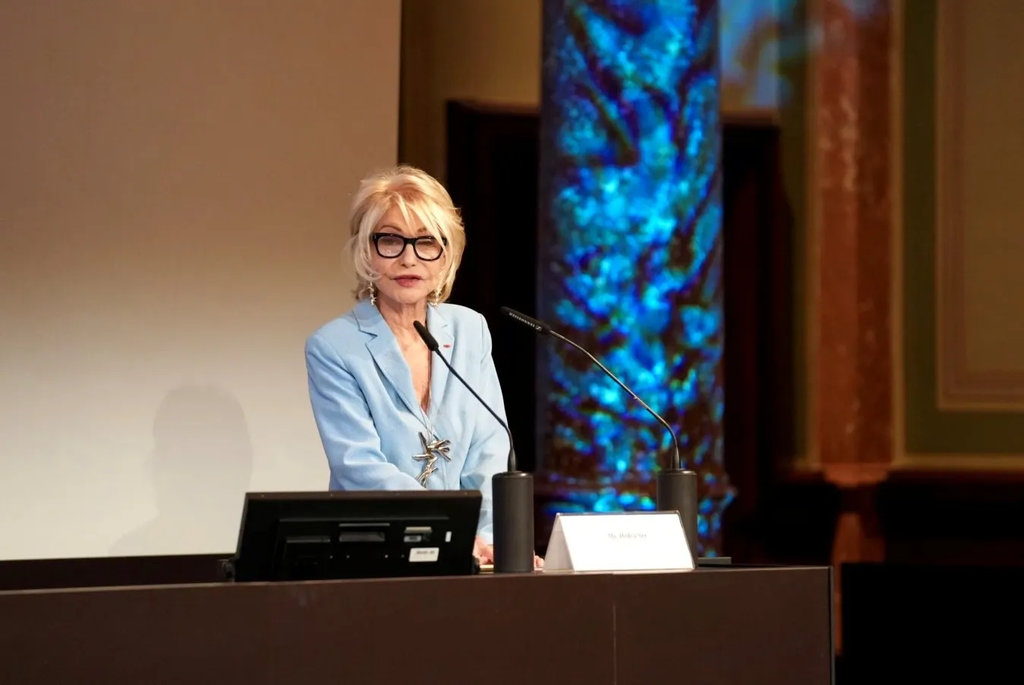
Hedva Ser, sculptor and UNESCO Goodwill Ambassador for Cultural Diplomacy
The conference’s first panel discussion, entitled “Investing in Peace: For Everyone, Everywhere, Every Day”, was chaired by Professor Eszter Lukács, Vice-President for International Affairs and Strategic Relations at Széchenyi István University. The session was opened by Dr István Lakatos, Deputy State Secretary for International Cooperation at the Ministry of Foreign Affairs and a member of the Executive Board of the United Nations Association of Hungary. Dr Réka Varga, Dean of the Faculty of Political Science and International Studies at the University of Public Service, Dr Anikó Szalai, Director of Institute at the University of Szeged, and Péter Balogh, Hungary’s Senior Youth Delegate to the United Nations, shared their thoughts on the role of universities, research, education and the younger generations in peacebuilding. A key point of the discussion was that, alongside professional knowledge, higher education can also foster openness, a sense of responsibility, and respect for other cultures and perspectives.
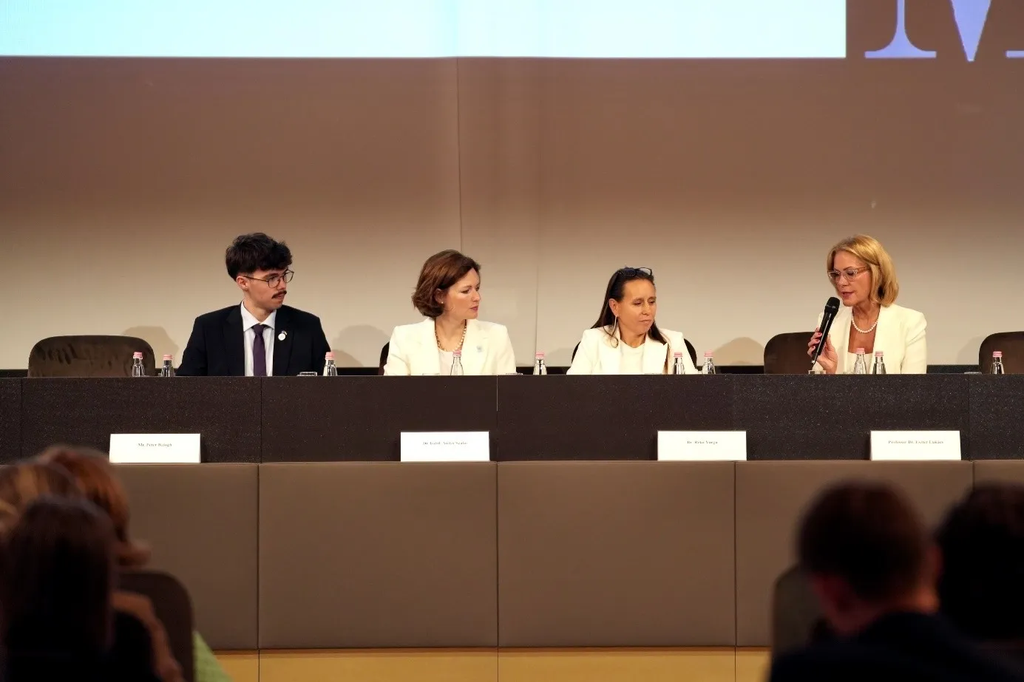
The conference’s panel discussion entitled “Investing in Peace: For Everyone, Everywhere, Every Day” was chaired by Professor Eszter Lukács, Vice-President for International Affairs and Strategic Relations at Széchenyi István University (far right).
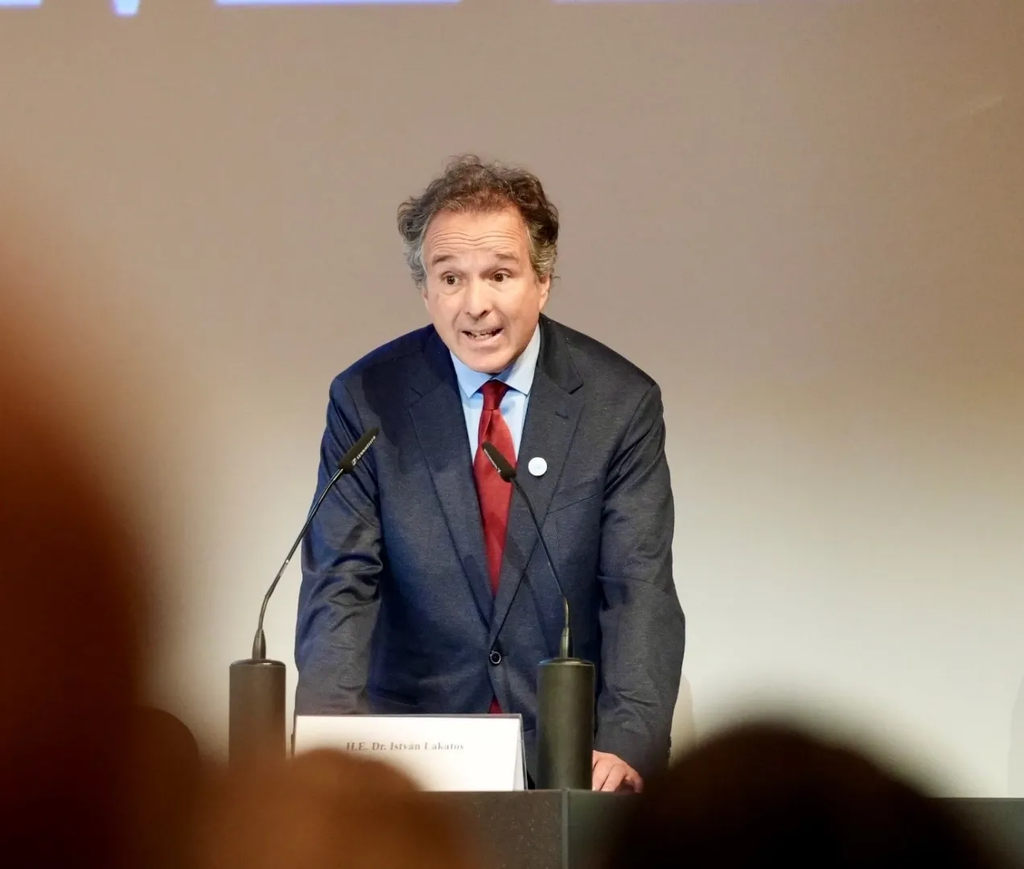
Dr István Lakatos, Deputy State Secretary for International Cooperation at the Ministry of Foreign Affairs
The second panel was introduced by Dr Csaba Gábor, Deputy State Secretary for Cultural Diplomacy at the Ministry of Foreign Affairs, with reflections on the power of Béla Bartók’s art to connect nations. The discussion, moderated by Widad Brimo, Secretary-General of the United Nations Association of Hungary, featured Dr Ivan Ivanov, Associate Professor at the International Balkan University in North Macedonia, Professor Andrea Meláth, Head of the Department of Vocal and Opera Studies at the Liszt Ferenc Academy of Music, Zeever Zahra Baqar, UN Policy Representative for the International Association of Applied Psychology and founder of the Baqar Foundation, and Dr Judy Kuriansky, a clinical psychologist, UN Member State adviser, journalist and co-founder of Women4Diplomacy International. Exploring the community-building power of art, music, psychology and education, they considered of how empathy and mutual understanding can become the foundation of peace.
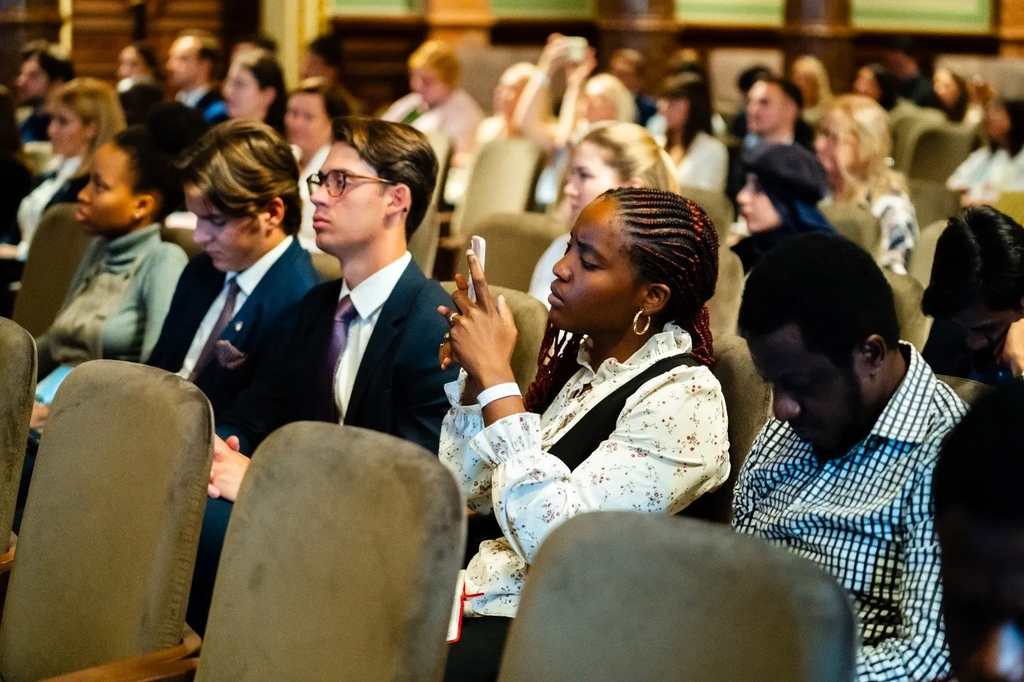
International students from the university also took part in the conference.
In one of the event’s symbolic moments, Nobel Peace Prize-winning activist Dalma Bíró presented a memento to an international student at Széchenyi István University as a symbol of the hoped-for Palestinian–Israeli reconciliation. This gesture gave personal expression to the underlying theme of the conference: that peace can be built on relationships that bridge differences and on reaching out to one another.
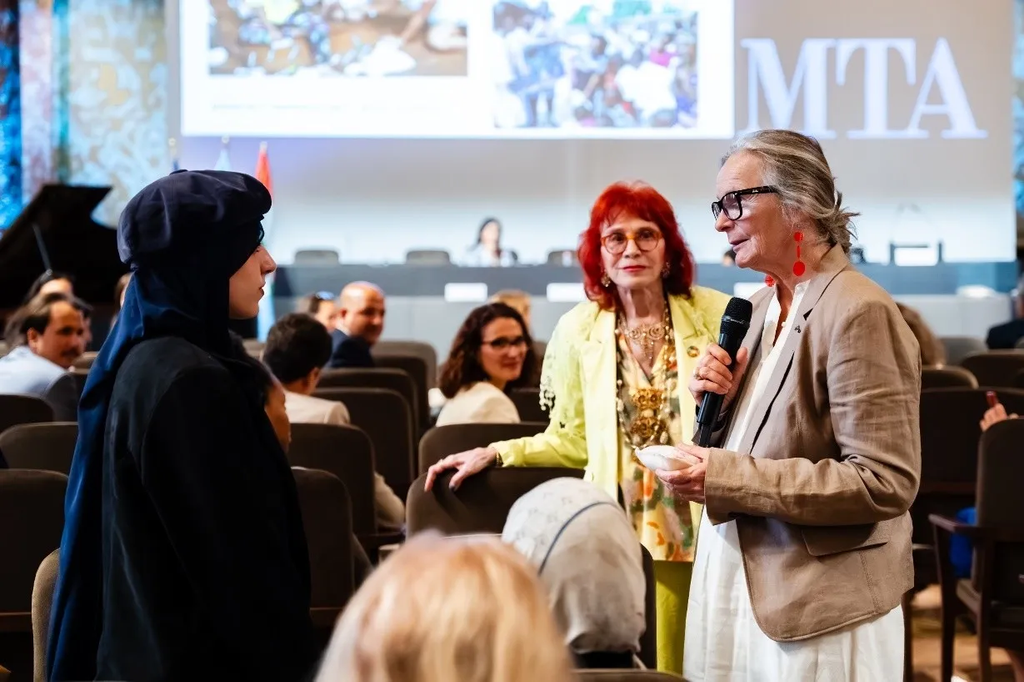
A symbolic moment of gift-giving.