
Created: 2026.07.24. 12:46
Between 14 and 17 July, Széchenyi István University hosted the Tempus Public Foundation’s Youth Work Summer University, welcoming more than one hundred participants, including youth workers, educators, students and non-formal education trainers from across Hungary. The four-day programme focused on the values underpinning youth work, making its social impact more visible, and ensuring its long-term sustainability.
The Tempus Public Foundation, which coordinates international education, training and youth programmes to support cooperation both in Hungary and across Europe, organises its Youth Work Summer University annually as one of the most important professional forums in the field. This year’s event, the fourth of its kind, was hosted by Széchenyi István University for the first time.
Opening the event, Dr Eszter Lukács, Vice President for International Affairs and Strategic Relations at the University, emphasised that this year’s gathering is especially timely, as all Hungarian universities are expected to regain full access to the Erasmus+ programme in the near future. „International mobility has always been one of the most powerful tools enabling our students, academics and staff to gain new experiences, build networks and bring home good practices from other countries to enrich our communities. For this reason, we are particularly pleased that these opportunities may soon become fully available once again,” she noted.
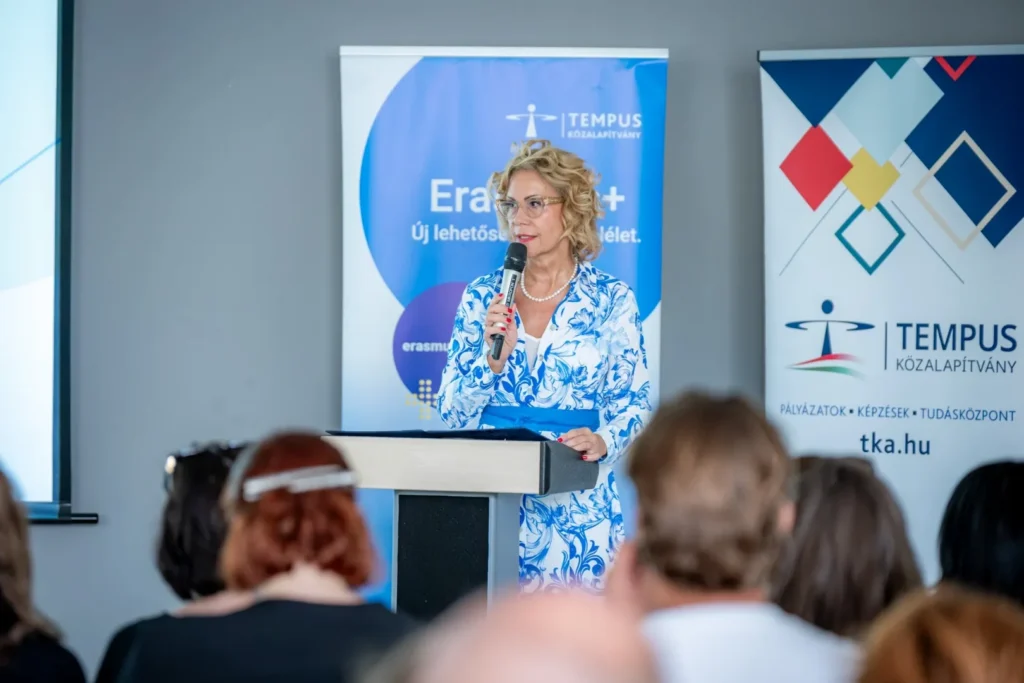
Dr Eszter Lukács highlighted that higher education institutions and youth professionals share a responsibility to prepare young people for the challenges of a rapidly changing world, which requires not only up-to-date knowledge but also openness and international experience (Photo: András Adorján)
In his welcome address, Richárd Bodrogi, Director General of the Tempus Public Foundation, stressed that the event’s primary objective is to create a community built on shared learning and professional dialogue, where theoretical knowledge and practical experience reinforce one another and contribute to the development of youth work. He also pointed out that, building on the recommendations of the 2025 European Youth Work Convention, this year’s programme placed particular emphasis on values and ethics, monitoring and evaluation, visibility, and the sustainability of youth work. „The results of youth work are often not immediately visible and cannot always be measured through simple indicators. The real impact of a conversation, a community experience or an opportunity provided to a young person frequently becomes apparent only much later. This is precisely why it is so important for the youth sector to be able to interpret, evaluate and communicate its work in a thoughtful and accessible way,” he explained.

According to Richárd Bodrogi, the Summer University has retained its curious, experimental and self-reflective character since its inception (Photo: András Adorján)
Dr Attila Pongrácz, Dean of the Apáczai Csere János Faculty of Education, Humanities and Social Sciences at Széchenyi István University, underlined that the most important question in youth work does not primarily concern the methods applied, but rather the values that guide professionals. As he noted, these values provide the foundation for all authentic relationships, communities and sustainable development initiatives.
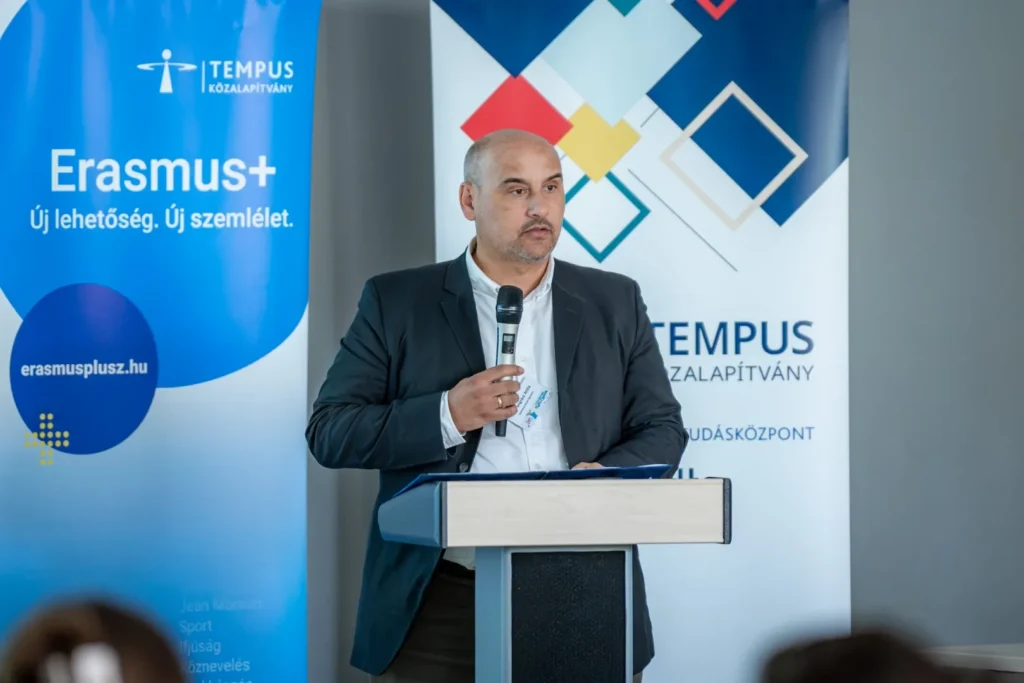
Dr Attila Pongrácz also pointed out that youth work is closely linked to many of the Faculty’s degree programmes, as they prepare students to support communities, promote social responsibility and contribute to the development of young people (Photo: András Adorján)
The four-day programme featured presentations, workshops, roundtable discussions and reflection sessions. Participants explored topics including the measurement of youth work’s impact, communication strategies, presenting professional achievements in an accessible manner, and the development of sustainable partnerships. The organisers also placed special emphasis on ensuring that the event would foster lasting professional relationships and collaborations extending well beyond the Summer University.
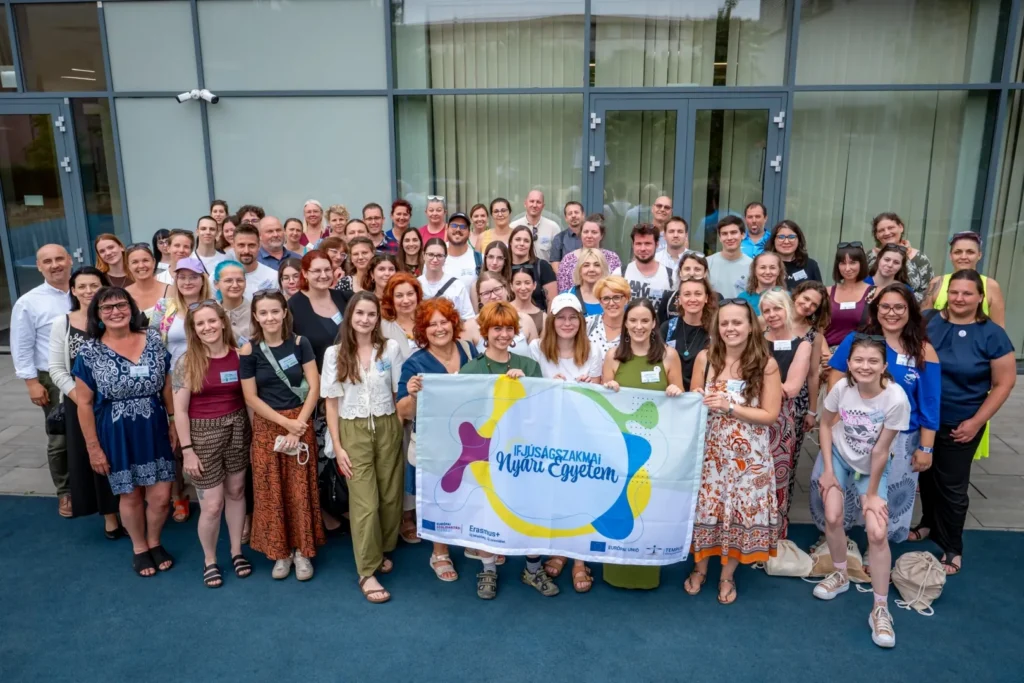
Participants of the Youth Work Summer University arrived at Széchenyi István University from a wide range of institutions across Hungary (Photo: András Adorján)
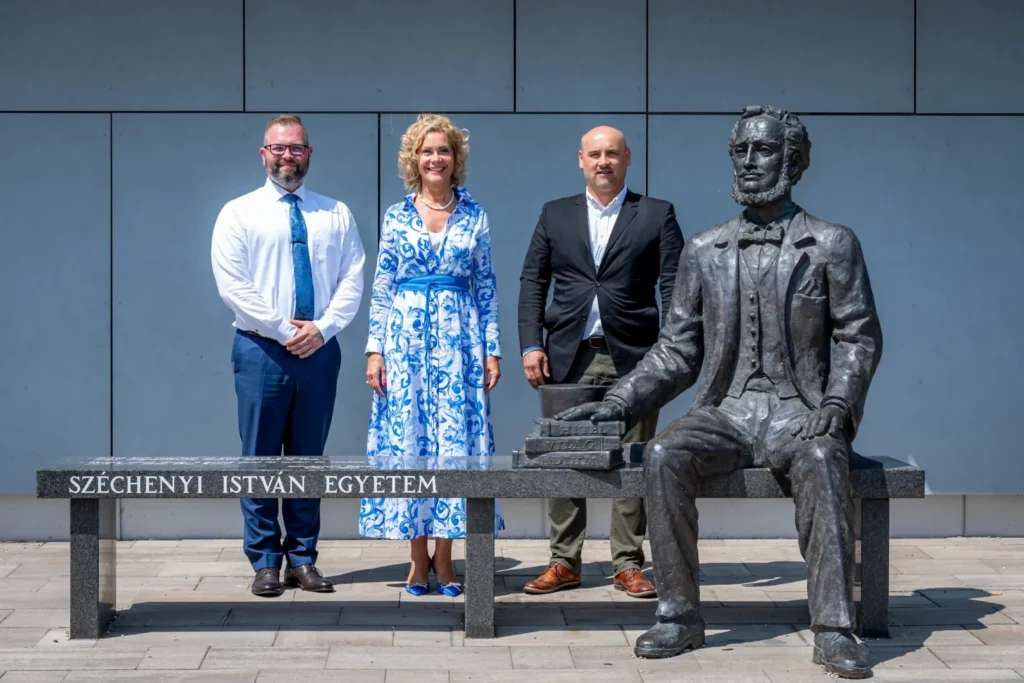
Richárd Bodrogi, Dr Eszter Lukács and Dr Attila Pongrácz in front of the Management Campus building of Széchenyi István University (Photo: András Adorján)