
Created: 2026.06.25. 15:56
Following a highly successful opening day in Győr, the QS Higher Ed Summit: Europe 2026 continued in Budapest, with Széchenyi István University serving as this year’s host institution. The principal theme of Europe’s foremost higher education forum was how to strengthen the continent’s competitive advantage in talent and innovation. The programme, which concluded on 25 June, brought together more than 600 leaders from academia, industry and government representing around sixty countries worldwide.
The competitiveness of European higher education, international student mobility, university–industry collaboration, artificial intelligence, innovation, and the societal role of universities were among the key themes explored during the QS Higher Ed Europe Summit, Europe’s leading higher education conference, held on 24 and 25 June. The summit was organised by Széchenyi István University, with the opening programme taking place in Győr on 23 June.
The conference then moved to Budapest for its second and third days. The event attracted more than 600 representatives from higher education, industry and government, alongside experts from approximately sixty countries worldwide. Representatives of embassies accredited to Hungary were also present in significant numbers.
The Budapest programme began with an opening address by András Báló, Head of Unit for Cross-border Higher Education and International Affairs, Hungarian Ministry of Education and Children, who emphasised that international rankings are not merely league tables but also valuable opportunities for development, the exchange of experience and mutual learning.
„Hungarian universities have significantly improved both their positions and their global visibility in recent years. This reflects the strong international presence of our institutions, the continued expansion of their research activities, and their ongoing development,” he said.
He added that, while rankings alone cannot provide a comprehensive picture of a country’s higher education system, events such as the QS Higher Ed Summit: Europe 2026 provide an excellent opportunity to gain a deeper understanding of the strengths of individual institutions.
He further observed that one of the Hungarian government’s key responsibilities today is not only to secure the reopening of European Union funding opportunities for all Hungarian higher education institutions, but also to ensure that Hungarian higher education plays its rightful role in the global exchange of knowledge, talent and innovation.
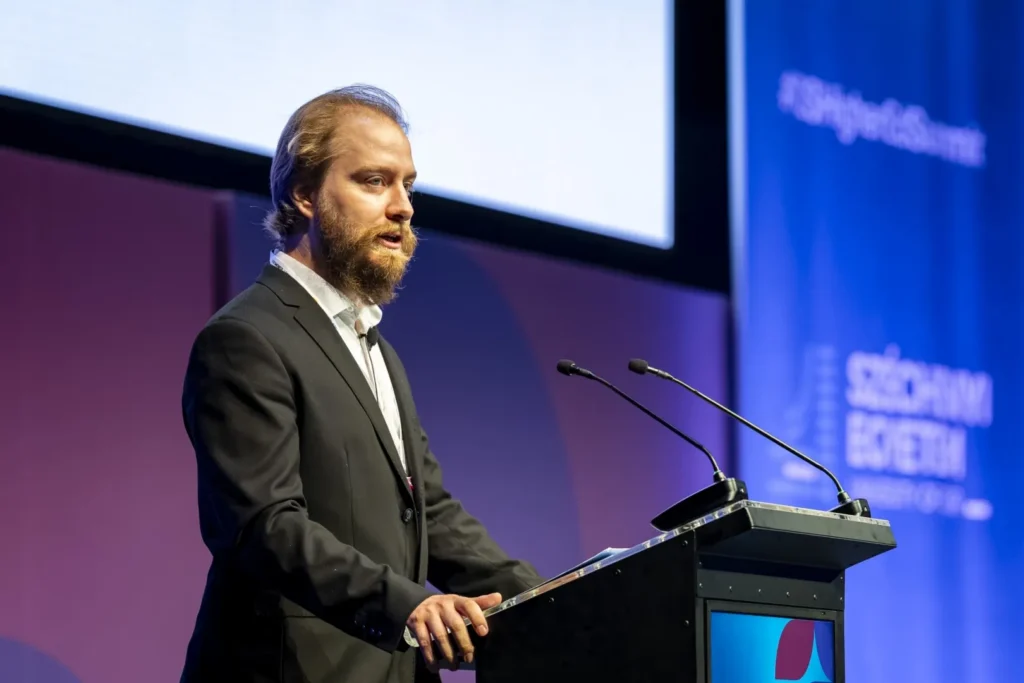
András Báló, Head of Unit for Cross-border Higher Education and International Affairs, Hungarian Ministry of Education and Children (Photo: Máté Dudás)
Dr Eszter Lukács, Vice-President for International Affairs and Strategic Relations at the host institution, Széchenyi István University, noted that the institutions occupying the top positions in the QS World University Rankings, published on 18 June, are globally recognised universities that have established themselves as powerful international brands and, in many cases, are the best-known higher education institutions in their respective countries. „It is a tremendous honour for us that several of these outstanding institutions are represented here today, including Harvard University, Trinity College Dublin, Politecnico di Milano, together with many other excellent universities,” she explained. She pointed out that it is particularly significant for Széchenyi István University to host the conference, as one of the greatest priorities for Hungarian higher education is to enhance its visibility within the international higher education landscape.
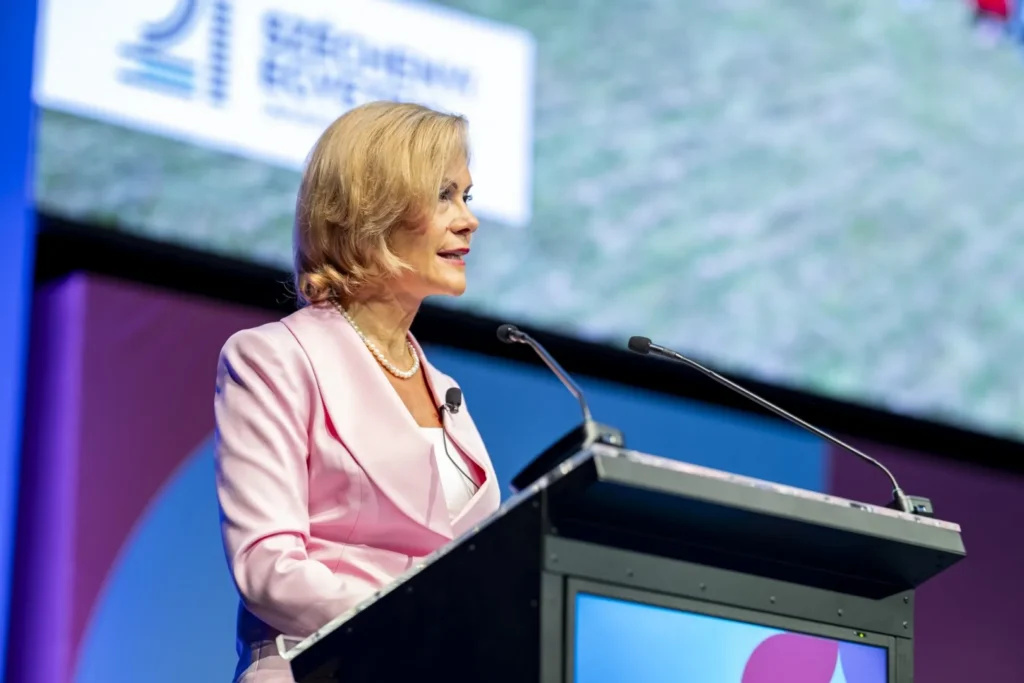
Dr Eszter Lukács, Vice-President for International Affairs and Strategic Relations at Széchenyi István University (Photo: Máté Dudás)
„During our discussions with QS experts, we received two key recommendations: to further strengthen our international research collaborations and to showcase the quality of our education and research more prominently on the international stage. This is precisely where the value of this summit lies: it provides a platform for the exchange of ideas and for building partnerships between institutions that share similar ambitions,” she stated.
In his keynote address, Andrew Plant, Executive Director for Europe at QS, observed that the international higher education landscape has become increasingly challenging in recent years. The regulatory environment is evolving rapidly, while student expectations and technological advances continue to reshape the sector, requiring institutions to respond with agility. He emphasised that competitive advantage in fostering talent and innovation lies not in individual excellence alone, but in collective strength. „Europe has a centuries-long tradition of collaboration, and its geographical setting makes such cooperation considerably easier than in many other parts of the world. The continent possesses exceptional potential through its academics, its students and the long-standing partnerships that have developed over decades. Individual institutions may not be able to conquer the world on their own, but by working together and building on strategic partnerships, we certainly can,” he concluded.
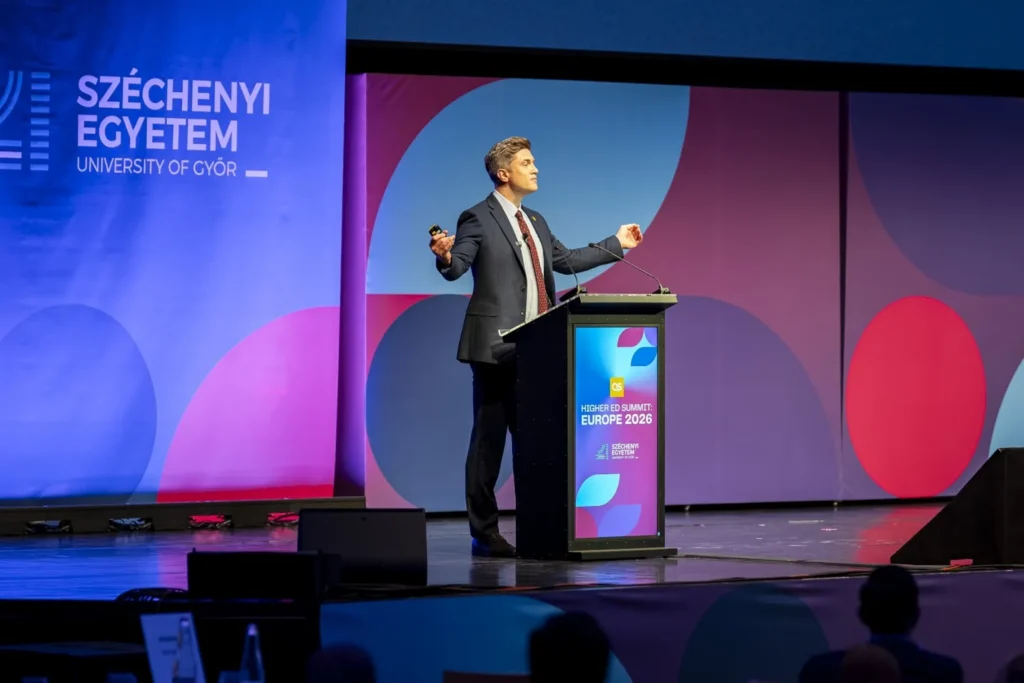
Andrew Plant, Executive Director for Europe at QS (Photo: Máté Dudás)
In the opening keynote, Ben Sowter, Senior Vice-President at QS, outlined the current state of European higher education and the key challenges facing the sector. He highlighted forecasts indicating that by 2100 more than 315 million Europeans will hold a higher education qualification, making it increasingly important to attract talented individuals and develop a highly skilled future workforce. Focusing on Europe, he noted that the continent continues to occupy a leading position globally, with the highest concentration of high-performing higher education institutions relative to its size. At the same time, he emphasised that a strong international reputation is essential for attracting talent, both from the perspective of industry and that of prospective students.
„Through our research, we have identified 1,890 distinct job profiles encompassing around 40,000 individual skills. This enables us to develop a much deeper understanding of labour market trends and, in turn, to better support higher education institutions. The interpretation of these data varies considerably across industries and countries, as different economic sectors shape the competencies that are most in demand,” he explained. He added that one of the highlights of the summit’s opening day in Győr was witnessing first-hand the exceptionally close relationship between Széchenyi István University and Audi Hungaria. „What began as a partnership shaped by geographical proximity has evolved into a truly symbiotic collaboration, creating remarkable value and mutual benefits for both organisations,” he observed.
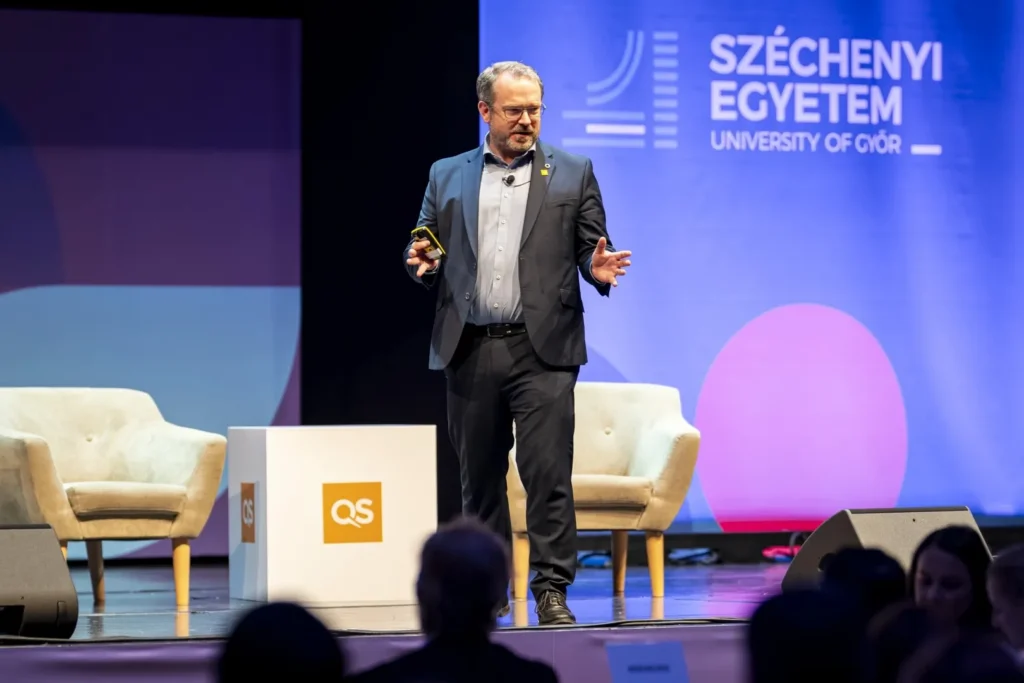
Ben Sowter, Senior Vice-President at QS (Photo: Máté Dudás)
Throughout the Budapest programme of the QS Higher Ed Europe Summit, academics, professional staff and students from Széchenyi István University contributed to a wide range of discussions reflecting the institution’s strategic priorities. The conference sessions explored, among other topics, opportunities for strengthening collaboration between higher education and industry, the relationship between the defence sector and innovation, the impact of artificial intelligence on higher education, and the role of information technology and digital transformation in shaping the future of the sector. The programme also addressed the importance of international partnerships, science diplomacy, skills development aligned with the evolving needs of the future labour market, and the sharing of best practices aimed at strengthening universities’ competitiveness and socio-economic impact.

The opening ceremony of the European higher education summit featured a special performance by Attraction, the shadow theatre company that won the 2013 series of Britain’s Got Talent…

…while the world-renowned Győr Ballet delighted the audience with a spectacular dance performance (Photos: András Adorján and Máté Dudás)
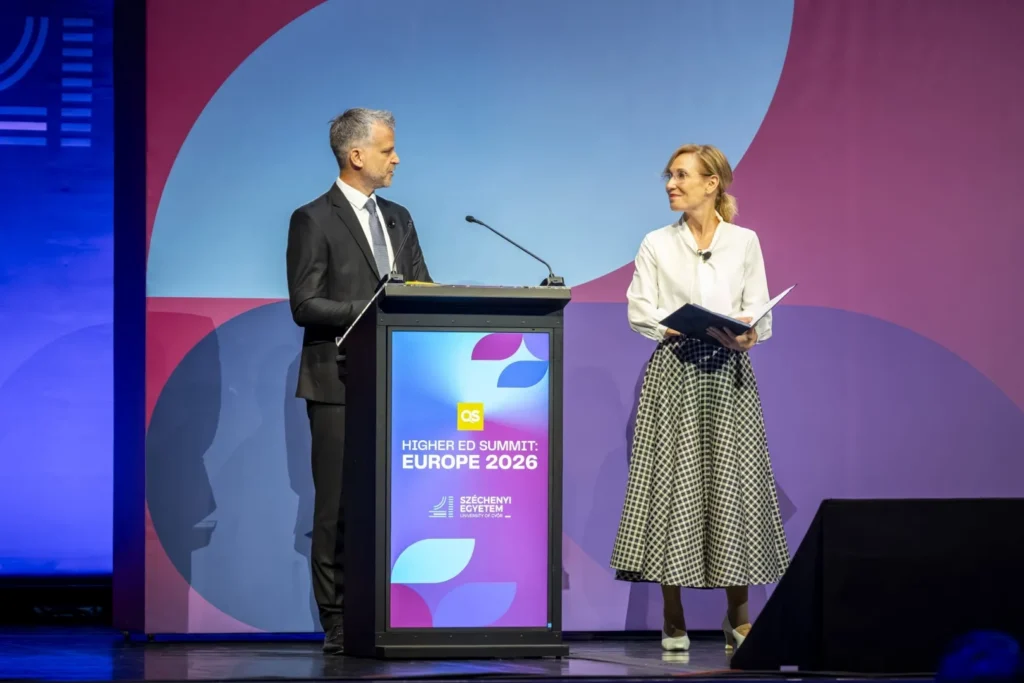
The conference was moderated by Krisztina Bombera, a renowned media professional, and Máté Haumann, whose screen credits include the Academy Award-winning Oppenheimer (Photo: András Adorján)

Participants had the opportunity to attend a wide range of panel discussions (Photo: András Adorján)