
Created: 2026.06.22. 13:56
A major milestone in the history of the Arrabona Racing Team (ART) came last year when, after more than a decade of competing with internal combustion powertrains, the team switched to an electric drivetrain. Although the first car of the electric era featured numerous impressive technical innovations, its full potential remained unrealized due to initial reliability issues. In response, the Széchenyi István University student team significantly simplified and thoroughly tested the vehicle, aiming to move closer to the front of the field this season.
The year 2024 marked the greatest success in ART’s history, as the team claimed overall victory at Formula Student East with an internal combustion car. While all conditions were in place to continue with the existing concept, the team opted for change. In line with the majority of the Formula Student field and broader trends in the automotive industry and motorsport, ART embarked on the transition to electric propulsion.
The ART_12, introduced last year, was the team’s first development of the new era and its debut entry in the electric category. Although the car incorporated a high level of innovation, it also suffered from various teething problems. This year’s development efforts focused primarily on eliminating those shortcomings and creating a stable, reliable vehicle capable of unlocking its true performance potential. These topics were among those discussed during the team’s annual rollout event, where the new car was officially unveiled.
In his welcome address, Sven Richter, Head of Vehicle Development at Audi Hungaria, emphasized that Arrabona Racing Team is the most successful talent-development initiative with which the company collaborates. “More than 24 former ART members are currently among our colleagues. This clearly demonstrates the success of a practice-oriented approach. You learn by doing, and you acquire knowledge that can be directly applied in industry,” he noted.
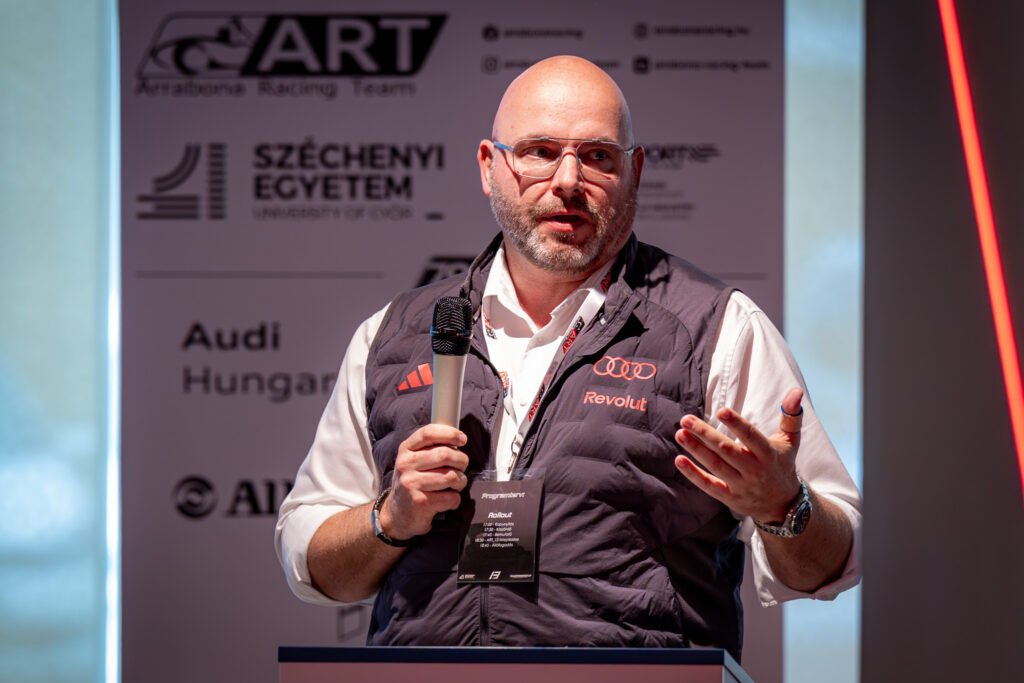
According to Sven Richter, in addition to the importance of engineering education, Audi and ART are also united by their shared passion for motorsport (Photo: András Adorján)
Beyond the support of Audi Hungaria, Széchenyi István University represents the team’s other key pillar. On behalf of the institution, Dr Csaba Tóth-Nagy, Associate Professor at the Department of Vehicle Propulsion Technology and Power Electronics, welcomed the guests. “Success requires many things: financial support, workshop facilities, fundamental knowledge, the experience of former members, and an enormous amount of work. It requires dedicating a significant part of your life to this competition and making it your top priority. Those of you standing here today are designing the mobility of the future. You will become ambassadors of Hungarian engineering expertise,” he told the students.
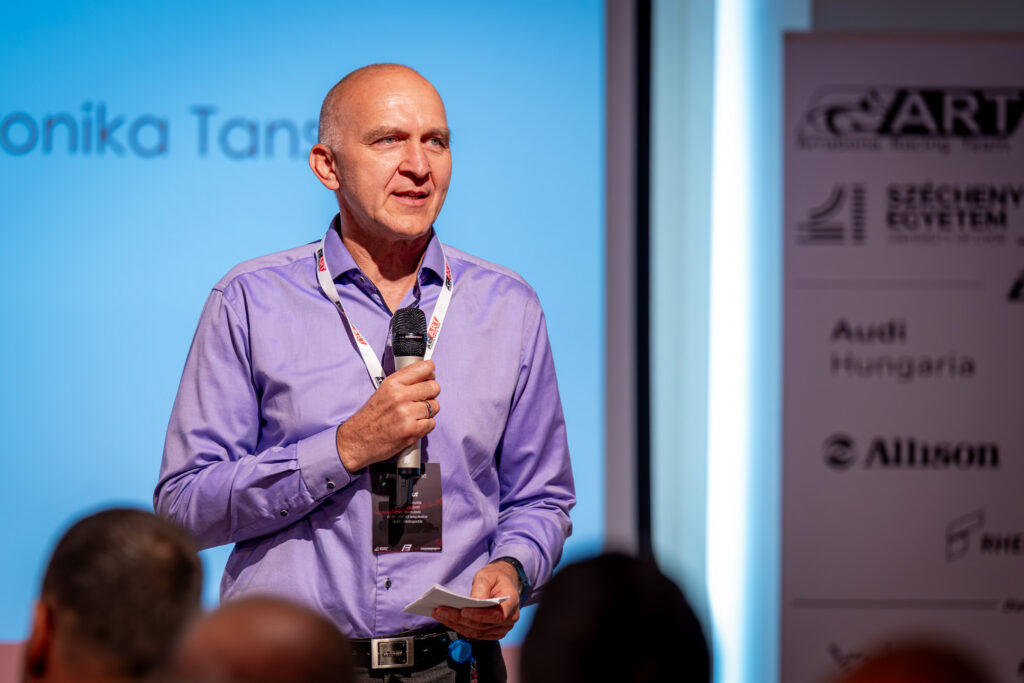
“One person cannot build a Formula Student car. It takes the work of fifty or sixty people. That’s what we call a team,” reminded Dr Csaba Tóth-Nagy, Associate Professor in the Department of Vehicle Propulsion Technology and Power Electronics. (Photo: András Adorján)
Reflecting on the team’s objectives for the season, Team Leader Gergely Vojnits stated that ART aims to secure a place among the top ten in the dynamic events, which assess on-track performance, while targeting podium finishes in the static events, where teams present their engineering concepts. “What do we need to achieve this? At least 250 test kilometres, a car weighing less than 190 kilograms, and acceleration from 0 to 100 km/h in under 3.8 seconds. We have achieved all of these targets, so we are optimistic,” he said.
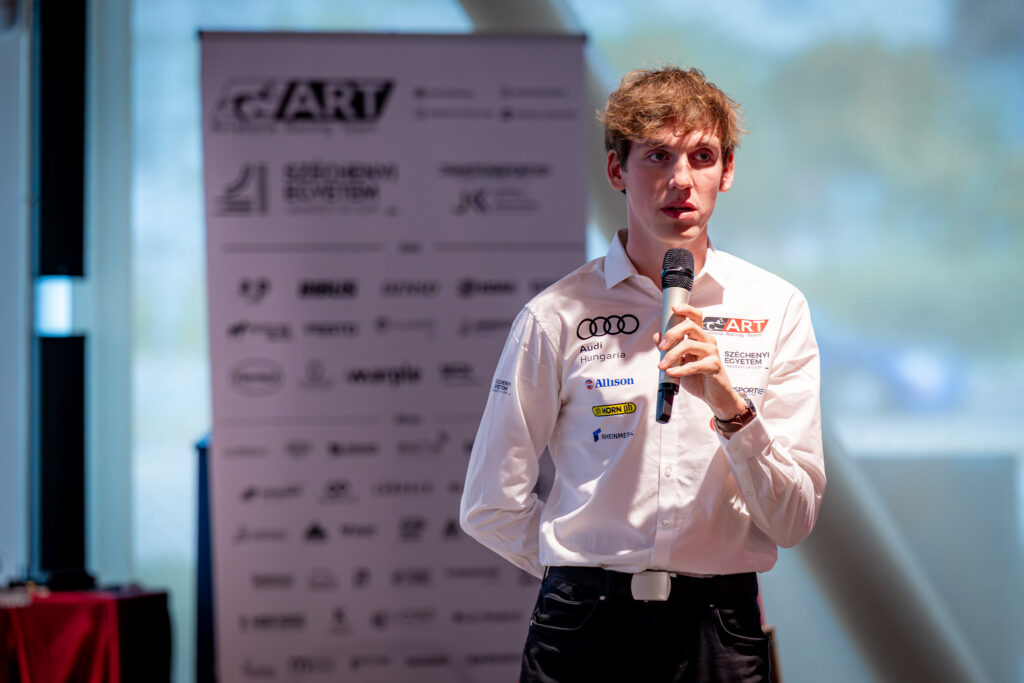
Gergely Vojnits, team leader of ART, said that the team reached a record size this year, with 65 members working on the car (Photo: András Adorján)
The audience also had the opportunity to learn about the vehicle’s technical details during a roundtable discussion.
“The car weighs 180 kilograms, delivers 190 horsepower, reaches a top speed of 128 km/h, and accelerates from 0 to 100 km/h in just three seconds,” explained Technical Director Mátyás Frech. According to him, improving reliability was the team’s primary objective this year, achieved through more testing than ever before. In addition, the team simplified the previous concept wherever possible.
Balázs Czetin, Head of Vehicle Dynamics, highlighted the growth of the team’s knowledge base, noting that increasingly advanced technologies and professional solutions are being applied during the design and construction phases. “We came across a video in which the engineers of the legendary 1988 McLaren MP4/4 Formula One car explained every detail of the vehicle. We managed to incorporate roughly 70 percent of the suspension concept used on Ayrton Senna’s car into our own chassis,” he revealed.
Perhaps the most significant development this year was in materials technology. Numerous components of the vehicle are made from carbon composites, with students frequently manufacturing bodywork elements themselves. This year, however, the team reached a new level by integrating advanced materials developed by leading researchers worldwide. “We visited JEC World in Paris, one of the world’s largest composite industry exhibitions. There we became acquainted with numerous technologies and established contacts with many companies. Ultimately, we travelled as far as Rome to source materials used for various body components,” said Péter Frazon, Head of Composites.
In addition to the Hungarian preparatory event FS Easter, ART will compete this season at Formula Student Alpe Adria in Croatia and, for the first time in the team’s history, at Formula Student Spain in Barcelona.
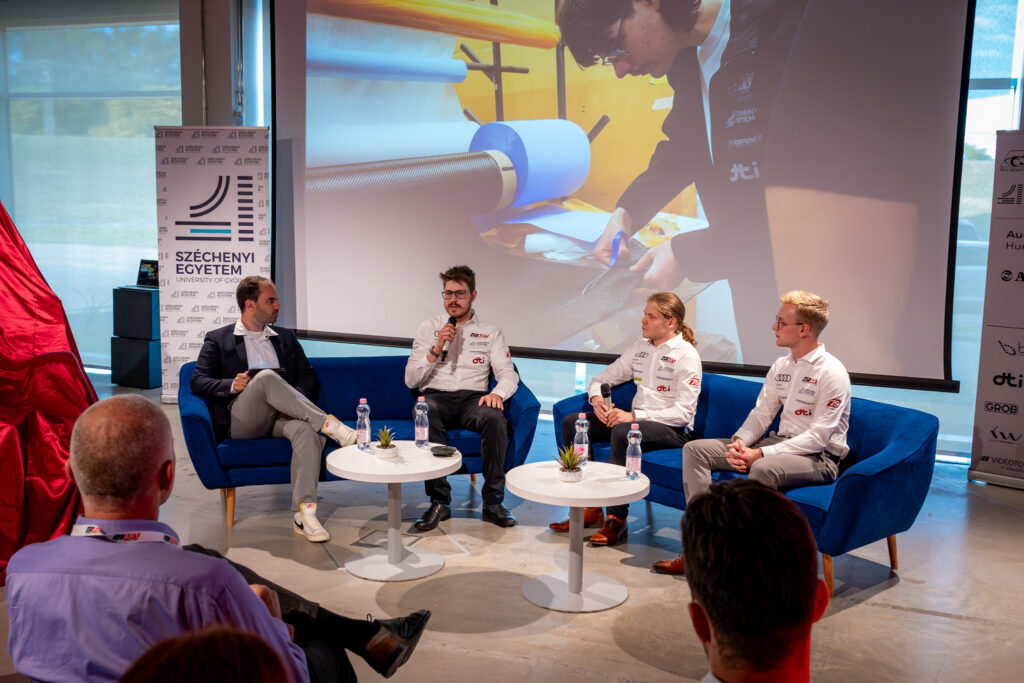
The roundtable discussion featured moderator János Kun, together with Mátyás Frech, Balázs Czetin and Péter Frazon (photo: András Adorján)
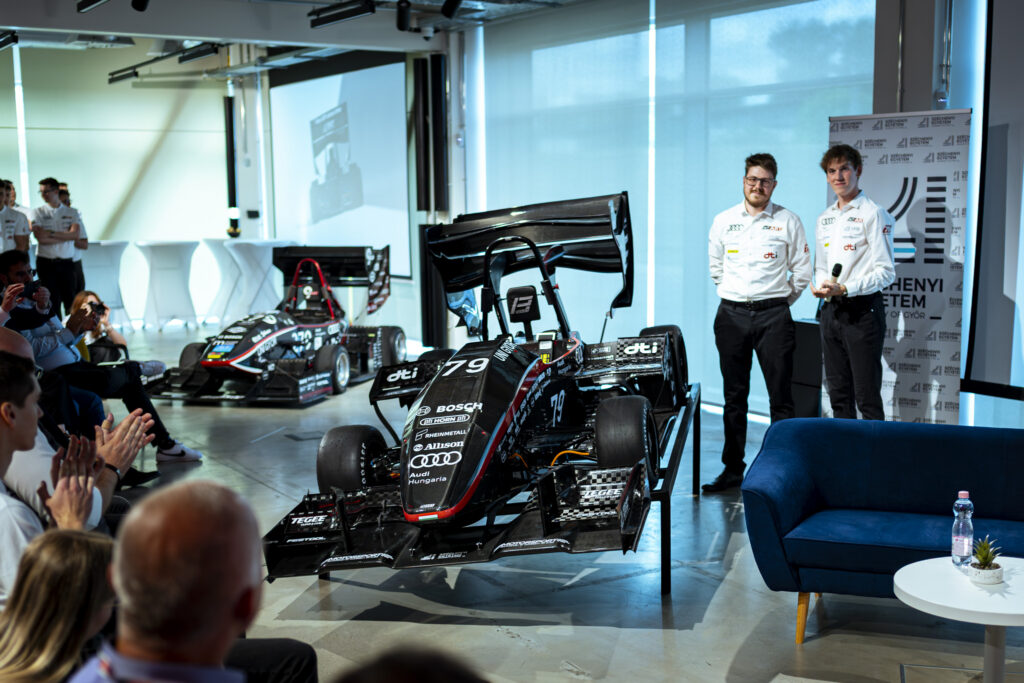
In the foreground stands the ART_13, while one of the team’s earlier cars can be seen in the background (Photo: Máté Dudás)
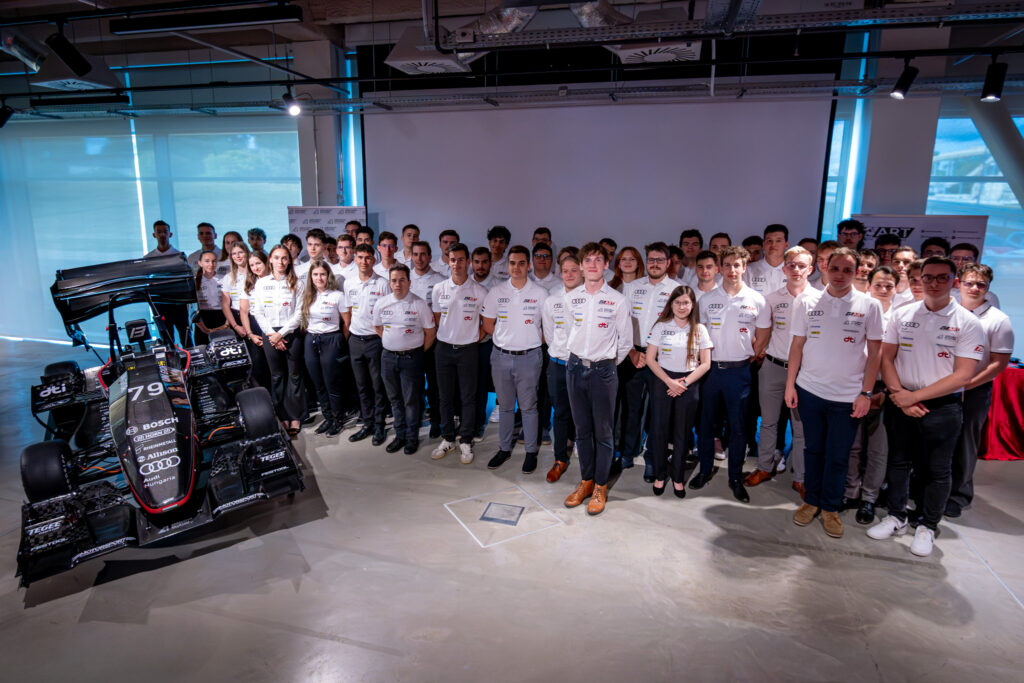
The Arrabona Racing Team with the ART_13 (Photo: András Adorján)